Case Study: Yollaberry Farm, West Devon
About the farm
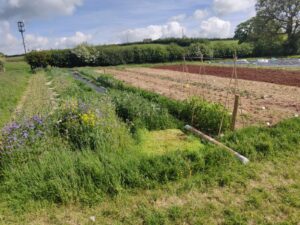
Yollaberry Farm is a new market garden in West Devon, run by Jen and Paul Howarth. They are experienced growers who have recently set up a new farming business on 9.5 acres of land spread across three fields.
The farm is being developed carefully and in stages. One sheltered field is planned for growing vegetables, another will be planted with fruit and nut trees as part of a community focused growing space, and a third, steeper field will be managed mainly for wildlife and biodiversity.
From the beginning, Jen and Paul wanted to farm in a way that looks after the soil, supports wildlife and shares knowledge with others, while also building a business that can provide a reliable income.
Client’s Goals:
Jen and Paul’s aim was to create a successful market garden that produces healthy food while also benefiting the local environment and community
- Grow vegetables and seeds using regenerative farming methods
- Improve soil health from the outset
- Put the right infrastructure in place, including polytunnels and storage
- Build strong links with the local community and support local food supply
Support received
Through the Agri Innovation Programme, Jen and Paul received adviser support to help shape their plans and identify practical next steps.
This included visits to the farm to look at the land in detail and talk through issues such as water flow, soil condition, field layout, infrastructure placement and possible routes to market. The advice helped them prioritise actions and make decisions that fit the land and their long-term aims.
Specialist soil testing was also funded using two different approaches. One set of tests looked at nutrients, organic matter, soil structure and pH, while a second focused on the biological health of the soil. Together, these results showed that the soil was generally in good condition, but that some nutrients and beneficial soil fungi were limited.
Based on the findings, practical recommendations were made to improve soil health over time. These included making compost on site, reducing soil compaction, and using planting methods that help crops access water and nutrients more effectively. Funding was also used to purchase specialist equipment to support these improvements from the start.
Additional support was provided around funding opportunities and the planning process, including preparing a detailed letter to support applications for polytunnels and a storage building.
What has changed
As a result of the programme, Jen and Paul now have a clear understanding of their soil and how to manage it to support healthy crops and long-term resilience. The soil testing has given them confidence in their approach and directly influenced how they are preparing beds, composting and planting.
The support has also helped them navigate planning and infrastructure decisions and take a more structured approach to setting up the business. With the groundwork now in place, Yollaberry Farm is ready to move from planning into action.
The farm is being developed with strong foundations for a market garden that produces food, supports wildlife, and provides benefits for the local community, while remaining financially sustainable.
Client comments:
“It’s been very supportive to have the soil tests funded; we really wanted them but may have struggled to prioritise paying for them ourselves with all the other outgoings involved in setting up this new venture.
We spent yesterday marking out beds and planting the beginnings of an edible shelter belt 😊”
Jen Howarth, Yollaberry Farm
Want to learn more about Devon’s Farmers? Read Sara’s story here