A Devon health visitor is calling for child passenger safety to become part of the conversation with families during the early years of a child’s life, following a parliamentary roundtable at the Houses of Commons.
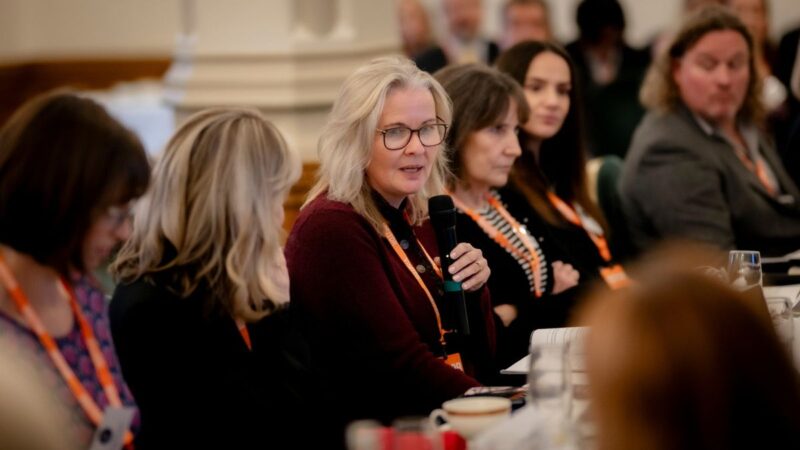
Victoria Howard, our Deputy Head of Public Health Nursing and Best Start Family Hubs in Devon and a Fellow of the Institute of Health Visiting, took part in the roundtable on child passenger safety in Parliament’s Churchill Room.
She said:
“It was a real privilege to attend the Houses of Commons for the first time and take part in a parliamentary roundtable on child passenger safety, held in the grandeur of the Churchill Room.”
The discussion included the experience of a mother whose son had been involved in a serious car accident shortly before his third birthday. He had been travelling in a rear-facing car seat, which his mother described as helping to save his life.
Victoria said:
“It reinforced a simple but profoundly important message: the right child passenger safety information, shared at the right time, can save lives.”
Evidence supports keeping young children rear facing for longer.
RoSPA recommends children remain rear facing for as long as possible within the height and weight limits set by the seat manufacturer.
Under UK rules, height-based R129 seats must remain rear facing until a child is over 15 months old.
The experience prompted Victoria Howard to consider the role health visitors could play in helping parents access trusted information.
Health visitors already talk to families about issues including safer sleep, feeding, accident prevention and child development.
She said:
“This is not about health visitors becoming car seat experts. It is about using those trusted relationships to raise awareness, reinforce consistent, evidence-based messages and signpost families to trusted specialist information.”
She also stressed that advice alone may not be enough. Cost, access to specialist advice, transport, language and other circumstances can affect the choices available to families.
She said:
“Our approach must help reduce, rather than widen the health inequality gap, ensuring that families facing the greatest barriers can access the practical support and specialist advice they need to keep their children safe.”
Reflecting on taking the discussion from Parliament back into her work in Devon, she added:
“Sometimes prevention starts with something very simple: the right conversation, with the right information, at the right time. Sometimes that conversation can help save a child’s life.”