“There are many jobs available, but as a migrant, I often feel overlooked. Even when I have the skills and experience, employers seem hesitant to trust me. It’s frustrating to see others get better opportunities while I have to prove myself twice as much just to be considered. I have a PhD and years of experience in my field, yet my qualifications are often undervalued. It feels like no matter how much I achieve, I am still not given the same recognition and opportunities as others.”
A survey providing insights into the challenges faced by refugees and migrants working in Devon
Dr. Omid Afghan
June 2025
Foreword
Last year, in 2024, our Migration and Resettlement Team was given the opportunity to recruit someone to join us on a six-month work placement. At the time, there were several pieces of work that we aspired to do, which a work-placement would give us the capacity to undertake.
One of the top priorities on our list was to dig deeper into the question of why so many refugees and other migrants living in Devon struggle to find a job at all and, when they do find employment, so often end up in a posts which do not reflect their qualifications, expertise or experience: a qualified and experienced doctor working as a taxi driver; a civil engineer working as gardener; a highly qualified accountant working as a cleaner.
Late in 2024, we were lucky enough to be joined by Dr Omid Afghan, himself a refugee, who had recently arrived in Devon, along with his family. Dr Omid had previously held tenure as a professor of sociology at Kabul Education University and was an ideal match for our aspirations as he had a particular interest in the issue of refugee employment.
Over the past few months, Dr Omid has succeeded – way beyond our initial expectations – in getting 325 refugees and other migrants who are resident in Devon to complete the employment survey he put together.
The results, which you can read about below, are not unexpected in many ways: the survey confirms what we already knew from anecdotal evidence, that refugees and other migrants face many barriers and considerable challenges in finding the “right” job in Devon – i.e. a job that offers security to them and their family, a chance to develop their career in the future and which is a good match for the skills, qualifications and experience they bought with them to the UK.
What is new though is the breadth and depth of evidence that the survey offers along with profound insights into the experiences of migrants arriving in Devon and the many practical recommendations that emerge, backed up by solid quantitative and qualitative data.
Dave Wright
ESOL and Engagement Lead
Migration and Resettlement Team
ESOL@devon.gov.uk
Acknowledgements
I would like to express my deepest gratitude to all the migrants who generously shared their time, experiences, and personal stories for this research. Their courage, resilience, and honesty provided invaluable insights and gave life to this study. Without their openness and participation, this research would not have been possible.
I am sincerely thankful to colleagues within partner organisations – including South Hams District Council, the Pickwell Foundation, St Sidwell’s Centre and the Devon Ukrainian Association – who have provided input and helped to facilitate the completion of survey questionnaires and participation in focus groups.
Special thanks must go to colleagues within the ESOL and Engagement team, part of DCC’s Migration and Resettlement, who have provided thoughtful guidance and critical feedback throughout the process. Their encouragement and constructive advice have significantly enriched this research.
Finally, I am personally grateful to my family and friends for their unwavering support and patience during this journey.
This work stands as a testament to the strength, potential, and dignity of migrants in Devon. It is my sincere hope that this research will contribute in some small way to building more inclusive, supportive, and equitable communities.
Dr Omid Afghan
Executive Summary
Introduction
This summary synthesizes findings from a comprehensive mixed-methods study involving 325 migrants residing in Devon. The research sheds light on the systemic barriers facing migrants in finding secure employment and career development opportunities. Despite their strong motivation, prior professional experience, and willingness to contribute economically, migrants in Devon are being underserved by current systems.
Key issues include cultural barriers, the fragmentation of accessible support resulting from the geography and the two-tier system of local government in Devon, insufficient access to job-specific English language training, non-recognition of foreign credentials, housing instability, mental health challenges, and discrimination. Without immediate, coordinated action, these challenges risk compounding long-term exclusion and underutilization of a highly capable population.
1. Labour Market Integration And Employment Barriers
- 88.9% of participants were employed in their home country, many in professional roles such as teachers, doctors, engineers, and accountants. Yet, only 52.0% are currently employed in the UK.
- Among those employed, just 0.9% hold permanent contracts, and 14.2% are in full-time roles, indicating high levels of underemployment and job precarity.
- Only 32.0% of respondents reported receiving any career development or training support in the UK.
- 61.5% lack professional references, a critical barrier to employment in formal sectors.
- 89.3% of respondents hold at least a bachelor’s degree and many arrived in UK with Master’s and PhD qualifications but the majority can only access unskilled jobs that do not utilize their qualifications.
“I have a PhD and years of experience in my field, yet my qualifications are often undervalued. It feels like I must prove myself twice just to be considered.”
2. Language Proficiency And Communication Barriers
- 61.8% of migrants cite language as their primary employment barrier.
- 91.4% are interested in work-focused English courses.
- Writing (26.2%) and speaking (19.4%) are the top communication skills migrants wish to improve.
“Translating my experience into a UK-style CV was like rewriting my whole identity. Some things just don’t translate.”
3. Social And Cultural Integration Challenges
- 61.5% of survey respondents report that they lack social support networks.
- 45.5% report facing discrimination in the job market.
“Back home, I was respected. Here, none of that matters because my English isn’t perfect. I’ve lost my identity.”
4. Skills Development And Training Needs
- 65.2% of respondents indicated they need English language training.
- 54.8% reported lacking technical skills required for UK jobs.
- High demand exists for training in mechanics, IT, construction, childcare, and healthcare.
“I wanted to do a course in care work, but the sessions were all during my work hours. There was no flexibility. I just missed out.”
5. Housing And Health
Concerns about housing and accommodation instability and poor access to health care support have significant impacts on the ability to focus on long-term employment and career development.
- 29.5% of participants struggle with high rent.
- 13.2% are actively seeking new housing, indicating instability.
- 5.8% report living in poor-quality housing conditions.
- 31.7% report unmet dental care needs; 24.6% lack access to general care.
- Only 27.7% said they receive all needed healthcare services.
- 30.8% reported that mental or emotional challenges significantly hinder job-seeking.
“Even with a steady income, landlords still didn’t trust me. I had to earn twice as much as a local to be seen as reliable.”
“When I get sick, my first worry isn’t seeing a doctor – it’s figuring out how to get an appointment.”
Recommendations
- Improve information sharing, networking and partnership work among local authorities, education providers and VCSE organisations in Devon. Many initiatives aimed at tackling the issues identified by this survey have been launched over the past four years and have had positive local impacts, but the fragmentation of Devon’s services, the challenges of geography and transport, gaps in cultural competence and inconsistencies of funding have left too many refugees and migrants without the level of support they need.
- Invest in employer engagement, including clear guidance on legal issues, cultural competence training and ongoing English language development support. Collaborate with employers to tailor job-specific English curricula.
- Fast-track foreign credential recognition systems and invest in recognition of informal and experiential skills through assessment-based qualifications.
- Fund sector-specific upskilling and certification (e.g healthcare, construction, IT).
- Continue to develop local culturally competent migrant-focused employment hubs for CV support, job matching, and employer engagement.
- Expand Devon’s ESOL and ESP (English for Specific Purposes) offer to address gaps in access, and integrate vocational English into job training schemes.
- Develop evening/weekend hybrid ESOL and skills-development courses to support working parents and enable career progression.
- Improve access to affordable housing and rent subsidies for migrant families and promote housing support services for those transitioning from temporary accommodation.
- Widen access to culturally and linguistically appropriate mental health services.
- Integrate health navigators to help migrants understand and access services.
- Continue, and expand, programmes of funding for grassroots social inclusion programs and intercultural events.
- Improve access to vocational certifications, especially for women and low-income migrants.
Conclusion: An Urgent Call To Action
This research reveals not a population in crisis, but one full of potential. Refugees and other migrants in Devon have brought with them a wealth of professional experience, ambition, and resilience. However, despite the efforts of local authorities and many other organisations, the support systems that migrants need to integrate, thrive and contribute are too fragmented, leaving many gaps and systemic barriers in credential recognition, access to language support, housing support, etc that prevent them from contributing fully to the local economy and society.
Strategic, coordinated investment in migrant-focused support services will not only transform individual lives but also enrich Devon’s economy, strengthen public services, and foster cohesive communities. The time to act is now.
Full Survey Report
Chapter One: Research Fundamentals
1.1 Introduction
There is an increasing need for local government and partners to adopt more effective measures to support the integration of migrants into society, and especially into the labour market. This action research project aims to identify the needs, challenges, and opportunities related to migrant employment, to develop strategies to improve the economic and social status of migrants and enhance the efficiency of the local labour market.
One of the major issues faced by migrants in Devon is the limited and fragmented access to suitable employment and career development opportunities. Challenges, including language barriers, cultural differences, lack of technical skills, and unfamiliarity with the local job market, contribute to significant difficulties in securing and maintaining employment (Migration Observatory, 2024). This problem not only adversely affects the personal and economic lives of migrants but also acts as a barrier to regional economic growth. Despite the large number of job vacancies in Devon, many employers are hesitant to recruit migrant workers because of concerns or lack of knowledge about cultural differences, language issues, and legal complexities. In Devon, these challenges are further compounded by geographic dispersion and limited infrastructure in rural areas, hindering effective service delivery (Devon County Council, 2023).
Recent policy shifts, such as the extension of residency requirements for settlement and increased English language proficiency standards, underscore the need for localized strategies to support migrant integration and improve employment opportunities (Home Office, 2025a).
Various studies on migration and labour markets have highlighted that “technical and English language training” are crucial factors that can improve migrant employment outcomes. Additionally, evidence from other countries has shown that “government support programs”, such as establishing “career counselling centres” and “internship programs”, can lead to increased migrant employment.
UK immigration laws, particularly the “Immigration Act 2014” and “migrant employment policies”, provide a clear legal framework for migrant entry into the labour market. However, there are still gaps in access and a need for improved support infrastructure.
This research is significant for local government and relevant institutions for several reasons:
- Economic productivity. Providing suitable job opportunities for migrants not only improves their livelihood and social status but also can increase regional economic productivity. Migrants can contribute to the diversity and development of industries by bringing skills and experiences from their countries of origin.
- Reduction in social service pressure. Sustainable employment for migrants reduces their reliance on social benefits and support services. As migrant households’ income increases, the need for government financial aid decreases, which results in reduced local government costs and better allocation of resources to other sectors.
- Strengthening social integration. Employment is a key factor in social integration. Migrants who have access to suitable jobs can interact better with the local community and integrate more rapidly both culturally and socially. This leads to reduced social tensions and increased community cohesion.
- Addressing local workforce shortages. Like many other regions, Devon faces workforce shortages in certain industries. Migrants can act as a crucial resource for filling these gaps. By training and empowering migrants, local labour market needs can be better met, and productivity across various industries can be improved.
- Combating discrimination and racism. This research can help identify and address issues such as discrimination or racism in the workplace. By developing educational and promotional programs for migrants and employers, it is possible to improve Devon’s cultural competence and enhance community cohesion.
1.2 Theoretical Framework
This research is based on the theories of “social integration”, “migrant labour markets”, and “social justice”. The theory of social integration posits that for a sustainable society, migrants must actively participate in the labour market and other social institutions (Berry, 1997). While the migrant labour market theory examines the challenges and opportunities for migrants in local economies and emphasizes the importance of improving skills and opportunities. Finally, the “social justice” approach argues that migrants should have equal access to labour market opportunities and welfare services (Rawls, 1971). By analysing data in the light of these theories, this research aims to propose solutions that contribute to equalising opportunities and better integrating migrants into society.
Additionally, the study employs an intersectional lens to understand how overlapping identities such as ethnicity, gender, and immigration status affect migrants’ employment experiences (Crenshaw, 1989).
1.3 Policy Context
The UK’s immigration policy has undergone significant changes aimed at reducing net migration and prioritizing domestic workforce development. Key reforms include:
- Extending residency requirements for settlement from five to ten years (Home Office, 2025a).
- Raising English language proficiency requirements for migrants (Home Office, 2025b).
- Restricting skilled worker visas to graduate-level occupations (Home Office, 2025a).
At the local level, Devon County Council has implemented various initiatives to support migrant integration and access to employment, such as the Refugee Employability Programme and the establishment of work clubs in libraries across the county (Devon County Council, 2023). These programs aim to enhance employability skills and provide tailored support to migrants navigating the local labour markets.
1.4 Utility Of The Proposal For The Devon Government And Executive Bodies
This research provides the Devon government and executive bodies with an opportunity to address migrant labour market issues effectively and scientifically. Key aspects of the proposal’s utility include:
- Sustainable regional development. Enhancing migrant workforce capabilities and improving access to suitable job opportunities can contribute to sustainable economic development in the Devon region.
- Improved public policy efficiency. With more accurate information about migrant needs and challenges, executive bodies can implement more effective strategies to support migrants.
- Enhancing employer-migrant relations. By identifying challenges faced by employers in hiring migrant workers, the research can improve workplace relations and create a more positive working environment.
- Promoting social justice. The research proposals can contribute to achieving social justice and creating equal opportunities.
1.5 Research Objectives
1.5.1 Main Objective
The overarching goal of this study is to provide evidence-based insights that can guide policymakers in developing more effective strategies for the integration of migrants into the local labour market. By addressing key barriers to employment, we aim to not only improve the economic prospects of migrants but also contribute to the broader economic development of the region.
1.5.2 Specific Objectives
- Uncover employment barriers facing migrants. By highlighting these challenges, the research will lay the foundation for targeted interventions.
- Examine the role of language proficiency in employment outcomes. A critical aspect of migrant employment lies in language proficiency. This research explores the correlation between language skills and employability; assesses the effectiveness of current English language programs; and advocates for tailored, job-specific language courses to help bridge the communication gap in the workplace.
- Assess the importance of social and professional networks. The integration of migrants into both social and professional networks is vital for their success in the labour market. This research highlights the importance of building strong social support systems, which can significantly enhance migrants’ ability to find employment and integrate into the local community.
- Evaluate the recognition of foreign qualifications. A prevalent issue for many migrants is the non-recognition of foreign qualifications. This study examines the impact of this challenge on employment prospects and proposes actionable solutions to facilitate the recognition of international qualifications.
- Investigate healthcare access challenges for migrants. Research shows that healthy people are more likely to be employed and progress their careers, while people experiencing health issues are more likely to struggle in finding a new job or to hold on to an existing one.
- Provide actionable policy recommendations. Drawing from the research findings, this study presents a set of concrete, actionable policy recommendations designed to improve the employment landscape for migrants in Devon.
1.6 Scope And Research Methodology
1.6.1 Geographical Scope
The primary focus was on Devon, Torbay and Plymouth.
1.6.2 Time Scope
Data collection for this study began in November 2024 and was concluded by May 2025.
1.6.3 Research Method
This study employed a mixed-methods research design, integrating both quantitative and qualitative approaches. Data was collected through a researcher-developed questionnaire (completed by 325 participants), semi-structured interviews, and focus group discussions with over 150 individuals. The questionnaire gathered structured data on employment barriers, language proficiency, and job market integration, while the qualitative tools explored lived experiences and perceptions in greater depth. Quantitative data were analysed using Excel and SPSS for descriptive and inferential statistics, while qualitative data underwent thematic analysis to identify recurring patterns and deeper meanings within participant narratives.
The research was grounded in critical and postcolonial theoretical frameworks, allowing for the examination of systemic inequalities, power dynamics, and structural barriers in labour market access. Ethical standards were strictly followed, with informed consent obtained from all participants, and measures taken to ensure anonymity, confidentiality, and cultural sensitivity.
Chapter Two: Data Analysis
2.0 Introduction
The effective integration of migrants into Devon’s social and economic fabric is not only a moral imperative, but also a strategic necessity for the county’s sustainable development. This chapter presents a detailed analysis of the quantitative and qualitative data collected during the research, offering critical insights that are directly relevant to policymakers, executive leaders, and local authorities. Each section uncovers dimensions of migrant experience that are deeply interconnected with the county’s broader goals of economic vitality, social cohesion, and public wellbeing.
Beginning with an overview of demographic trends, the analysis progresses to illuminate pressing challenges across cultural adaptation, social integration, economic participation, health and wellbeing, housing stability, and skills development. These findings reveal both urgent needs and untapped opportunities. They demonstrate that employment and integration barriers are not isolated issues, but part of a complex ecosystem requiring coordinated, informed, and compassionate leadership.
This chapter is not merely descriptive; it is a call to action. By understanding the real barriers faced by migrants and recognizing their potential contributions, Devon’s leaders have the opportunity to craft solutions that strengthen the entire community. In addressing these challenges systematically, decision makers can ensure that Devon becomes not only a more inclusive society but also a more resilient and prosperous one.
2.1 General Information
This section presents data that explores the demographic, social, and economic characteristics of the refugees and other migrants who took part in the survey, focusing on variables such as gender, age, nationality, length of stay, legal status, education level, native language, internet access, and mobility.
2.1.1 Gender Distribution Of Respondents
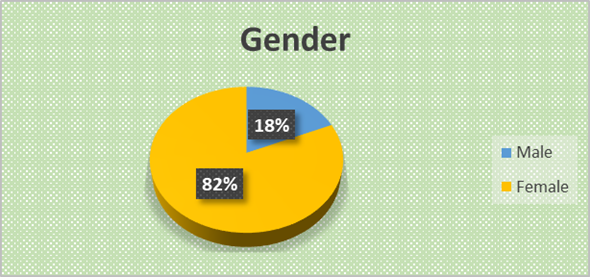
The gender distribution of respondents reveals a significant disparity, with female participants (n = 265) representing 81.5% of the total sample, while male participants (n = 60) account for only 18.5%. This imbalance is directly related to the fact that the majority of respondents to our survey were Ukrainian and local government data shows that the vast majority (around 65%) of Ukrainians resident in Devon under the Homes for Ukraine scheme are female.
Figure 1: Gender
2.1.2 Age Distribution Of Respondents
The age distribution of the 325 respondents presents a clear concentration of participants in the 30 to 49 age range, which collectively comprises 77.9% of the total sample, with the largest subgroup falling within the 40–49 age bracket (46.8%), followed by those aged 30–39 (31.1%). This demographic concentration indicates that the majority of migrants represented in this study are individuals in their prime working years – those who are most likely to be actively seeking employment, career advancement, or reskilling opportunities.
Table 1
| Age range | Frequency | Percent | Cumulative percent |
|---|---|---|---|
| 17-19 | 6 | 1.8 | 1.8 |
| 20-29 | 28 | 8.6 | 10.5 |
| 30-39 | 101 | 31.1 | 41.5 |
| 40-49 | 152 | 46.8 | 88.3 |
| 50-59 | 32 | 9.8 | 98.2 |
| 60+ | 6 | 1.8 | 100.0 |
From a policy standpoint, this age profile has important implications. The concentration of working-age adults in the sample reinforces the need for employment policies that are attuned to mid-career professionals who may face unique barriers to integration, such as credential recognition, career transition support, and access to advanced language or vocational training. The relatively low participation of youth and older adults may also highlight the need for targeted outreach efforts and age-specific programming, particularly in enhancing access to entry-level employment, apprenticeships, or pre-retirement planning support for older migrants.
This pattern aligns with the study’s emphasis on social integration and labour market theory, emphasizing the importance of tailoring interventions not only to migrant status but also to life stage and career trajectory.
2.1.3 Nationality Of Respondents
The nationality distribution reveals a highly concentrated sample, with an overwhelming majority of participants 93.5% (n = 304) identifying as Ukrainian nationals. Other nationalities represented in the sample include Afghanistan, Hong Kong and a few individual respondents from Germany, Albania, India, and Turkey. Future studies or complementary efforts might aim to increase outreach to smaller migrant communities to ensure a more inclusive and representative analysis of Devon’s migrant labour market dynamics.
2.1.4 Duration Of Stay In The UK
The data on the duration of stay presents a clear profile of a predominantly recent migrant population. A substantial 80% (n = 260) of respondents have been in the UK for between 1 to3 years, with a further 10.2% (n = 33) having arrived within the last six months. Combined, over 97% of the sample have been in the UK for fewer than 3 years, indicating that the majority are in the early stages of resettlement and integration.
Table 2
| Duration of stay in the UK | Frequency | Percent | Cumulative percent |
|---|---|---|---|
| Less than 6 months | 33 | 10.2 | 10.2 |
| 6 months to 1 year | 25 | 7.7 | 17.8 |
| 1 to 3 years | 260 | 80.0 | 97.8 |
| 3 to 5 years | 5 | 1.5 | 99.4 |
| Over 5 years | 2 | 0.6 | 100.0 |
This demographic pattern has important policy implications as the short duration of stay strongly correlates with common employment barriers such as:
- Limited English proficiency
- Lack of familiarity with UK job market norms
- Non-recognition of foreign qualifications
- Dependency on public or charitable support networks
From a social integration and labour market access perspective, this group is likely still in the transition phase, requiring targeted interventions such as:
- Induction programs for new arrivals
- Intensive English language training focused on workplace vocabulary
- Career orientation services and job readiness workshops
- Fast-track skills assessment and qualification recognition schemes
This finding strongly supports a time-sensitive strategy prioritizing newcomers’ needs while planning for their long-term integration and economic participation.
2.1.5 Legal Status Of Respondents
The vast majority of respondents, more than 90%, were refugees from Ukraine and Afghanistan.
Legal status is important in the context of eligibility for, and access to, work, benefits, and public services. Anyone with refugee status is entitled to work and access many public services, but may face trauma-related barriers, limited documentation challenges and may struggle with bureaucratic navigation, qualification recognition, and language barriers. However, some cohorts – such as Hongkongers arriving under the BN(O) Visa Scheme – although refugees in principle, are not given refugee status. Hongkongers under this scheme have the right to work but have an NRPF (No Recorse to Public Funds) condition on their visa.
2.1.6 Education Level Of Respondents
Table 3
| Level of education | Frequency | Percent | Cumulative percent |
|---|---|---|---|
| No formal education | 8 | 2.5 | 2.5 |
| High School | 9 | 2.8 | 5.2 |
| Diploma | 11 | 3.4 | 8.6 |
| Bachelor’s | 113 | 34.8 | 43.4 |
| Master’s | 151 | 46.5 | 89.8 |
| Doctorate | 26 | 8.0 | 97.8 |
| Foundation degree | 7 | 2.2 | 100.0 |
This dataset clearly demonstrates that the common public narratives that often depict displaced populations or migrants as low-skilled and poorly educated, is fundamentally wrong, with a striking 89.3% of respondents holding at least a bachelor’s degree; 46.5% of these with a Master’s and 8% with a Doctorate.
This high level of academic qualification suggests strong professional backgrounds and massive untapped potential and implies that barriers to employment are likely not rooted in a lack of qualifications or experience, but more in systemic and structural challenges.
A small portion of respondents reported no formal education: 2.5% (n = 8). Some of this small sub-group will require specialist ESOL support in pre-literacy classes.
2.1.7 Native Language Of Respondents
Top native languages: Ukrainian, Russian, Dari, Pashto.
2.1.8 Access To The Internet At Home
Nearly universal access. 98.5% of participants reported having access to the internet at home, indicating that digital infrastructure is not a major barrier. It also suggests high potential for online learning, virtual mentoring, job coaching, remote work, building social support networks via social media.
The small minority (1.5%) without internet access still warrants attention. These individuals may face significant exclusion from essential services, including online job searching, access to ESOL, virtual healthcare, etc.
To some extent, this data supports the shift towards digital service delivery that we have seen over the past few years, with both ESOL and Employability support providers offering more and more of their services online. E.g. the majority of Learn Devon’s ESOL classes are now delivered online; the national REP – Refugee Employment Programme – is an online service. However, we do need to be careful not to rely too exclusively on online services (a) because some migrants lack the digital skills required (b) because, in terms of building a strong, local social support network, there is no substitute for meeting people face-to-face.
2.1.9 Driving License And Car Access Among Migrants
Table 4
| Driving status | Frequency | Percent | Cumulative percent |
|---|---|---|---|
| A valid licence and access to a car | 80 | 24.6 | 24.6 |
| No valid driving licence of any description | 133 | 40.9 | 65.5 |
| A valid Ukrainian driving licence | 86 | 26.5 | 92.0 |
| A valid UK driving licence, but no access to car | 26 | 8.0 | 100.0 |
Limited mobility for many migrants. The largest group (40.9%) lacks both a driving licence and access to a car, suggesting restricted mobility, especially in rural parts of Devon where public transport is limited. This constraint restricts job accessibility.
Over-reliance on foreign driving licences. A significant portion of respondents (26.5%) hold driving licences acquired overseas which are valid for 12 months. This may solve the problem temporarily but often simply delays the challenges of converting licences or passing the UK driving test due to language barriers or financial constraints.
2.1.10 Willingness To Share Personal Information For Employment And Training Opportunities
Table 5
| Consent provided | Frequency | Percent | Cumulative percent |
|---|---|---|---|
| Yes | 325 | 100.0 | 100.0 |
| No | 0 | 0 | 100.0 |
Universal consent: a strong signal of willingness to engage. The unanimous agreement (100%) from respondents to share their personal information for follow-up on employment and training opportunities is highly significant and reflects a high level of motivation to improve employment prospects and a readiness to engage with support programs.
2.1.11 Recommendations
- Interventions should be tailored not only to refugee/migrant status but also to life stage and career trajectory.
- Interventions need to be time-sensitive, prioritising newcomers’ needs with induction programmes, fast-track skills assessments and intensive English language learning opportunities at the earliest possible stage.
- Trauma informed. Job readiness programs aimed at supporting refugees should be trauma-informed.
- Utilise high engagement levels to leverage the establishment of/ or expansion of a referral system linking migrants to employment, training, and mentoring opportunities.
- Navigational assistance. Many recent arrivals lack familiarity with their rights and entitlements, making a strong case for developing legal literacy workshops about visa-related employment rights.
- Credential recognition programs. Fast-track systems for recognizing foreign are critical. Without them, highly educated individuals may end up in low-skill or precarious jobs despite their academic backgrounds.
- Employer engagement and support. The complexities of this heterogeneity can also prove challenging for employers, pointing towards the importance of strengthening engagement with local employers and providing clear guidance.
- Skilled employment matching. Given the latent talent pool, programs should move beyond generic job placement and instead focus on sector-specific placements (e.g., healthcare, engineering, IT, education).
- Engagement and collaboration with local employers to identify skill gaps and match candidates accordingly.
- Support services must be multilingual and a translation-ready system should be in place.
- Expand subsidized driving support schemes. Offering ESOL and driving courses, funded driving lessons and translation support for the theory test.
- Digital resources. Given the high % of internet access, digital resources can also help overcome geographical barriers for those living in more rural or isolated districts of Devon.
- The high levels of engagement in this survey and the willingness to share information suggest that future outreach, employment assistance, or skills development programs will be met with strong initial uptake if designed appropriately. Points towards the potential of direct communication strategies like newsletters, job alerts, personalized guidance, or invitations to job fairs and training programs.
2.2 Culture And Work – Cultural Challenges And Discrimination
“Because of our skin colour, native employees don’t want to have relationships with us.”
“As a migrant, I frequently feel that local people and organizations don’t fully trust us. Even when I try to engage in community activities or look for job opportunities, I sense hesitation from others. It sometimes feels like I must prove myself more than a local person would, just to be seen as capable and reliable.”
“It is very difficult for us as immigrants to put on a mask and hide our inner sadness and fake happiness. This situation makes our mental and emotional state more vulnerable. After all, we are human beings and we need comfort and empathy in any situation.”
“Differences in cultural and religious ceremonies, with natives on one side and immigrants from other countries on the other, have marginalized us. There are also no broad programs at the county level to bring natives and immigrants together on one platform.”
“Because of the rapid speech of others, style of communication among themselves and my lack of understanding of terminology, I cannot communicate with others.”
2.2.1 Cultural Challenges In The Workplace Faced By Migrants
This section explores the cultural challenges experienced by migrants within the UK workplace. The findings highlight communication barriers, experiences of discrimination, unfamiliarity with workplace norms, and the emotional toll of cultural adjustment. Notably, nearly half of the survey participants reported experiencing some level of discrimination during their job search, suggesting that these cultural challenges are often compounded by systemic exclusion in the labour market. Despite the limited access to formal training in intercultural adaptation, the overwhelming willingness of participants to receive support underscores the urgent need for targeted interventions.
These findings point to the importance of understanding not only institutional practices but also subtle, everyday forms of marginalization that shape migrant experiences in both employment access and workplace integration. This analysis aims to inform inclusive workplace practices and policy development by aligning statistical trends with the lived experiences of migrants.
The table outlines the range and prevalence of cultural challenges reported by migrants working in the UK.
Table 6
| Cultural challenges faced in the UK workplace | Frequency | Percent | Cumulative percent |
|---|---|---|---|
| Communication styles | 28 | 8.6 | 8.6 |
| Language and accent differences | 59 | 18.2 | 26.8 |
| Interactions with colleagues | 12 | 3.7 | 30.5 |
| Work hours and leave expectations and norms | 7 | 2.2 | 32.6 |
| Expressing opinions | 9 | 2.8 | 35.4 |
| Workplace rules and regulations | 8 | 2.5 | 37.8 |
| Non-verbal behaviour | 7 | 2.2 | 40.0 |
| Dealing with cultural biases | 51 | 15.7 | 55.7 |
| Styles of teamwork | 8 | 2.5 | 58.2 |
| Participation in work-related social activities | 4 | 1.2 | 59.4 |
| Managing the work/life balance | 35 | 10.8 | 70.2 |
| All of them | 6 | 1.8 | 72.0 |
| No cultural challenges | 30 | 9.2 | 81.2 |
| Not Applicable | 61 | 18.8 | 100.0 |
Key findings:
Language and communication difficulties. The most frequently cited cultural challenge was language and accent differences (18.2%). Body language, speed of speaking and use of idioms and phrases were all cited by respondents.
- Participants identified speaking during meetings (33.5%) as the top skill they wished to improve, followed by writing emails (15.4%), and understanding workplace-specific vocabulary (14.5%).
- Smaller groups highlighted challenges with phone communication (8%) and cultural etiquette (11.4%), while 11.1% indicated a need for improvement in all areas.
- Only 6.2% felt confident in their current communication skills in the workplace , emphasizing widespread feelings of inadequacy.
Dealing with cultural biases or stereotypes was the second most commonly reported issue (15.7%), indicating that beyond language, migrants often face subtle or overt forms of exclusion or prejudice in workplace settings. Many participants reported facing racism when seeking employment and during the hiring process.
Unfamiliarity with local culture and customs. Many migrants are not fully familiar with the local culture and customs, making integration difficult.
Managing the balance between work and personal life also emerged as a significant concern (10.8%), which may reflect cultural mismatches in expectations around working hours, family roles, or employer flexibility.
2.2.2 Relationships With Colleagues
The figure below explores language education engagement, perceived communication barriers, skill development needs, and interpersonal dynamics. Responses from 325 participants reveal a nuanced picture of both challenges and aspirations related to workplace integration and personal development.
Figure 2: Relationships With Colleagues
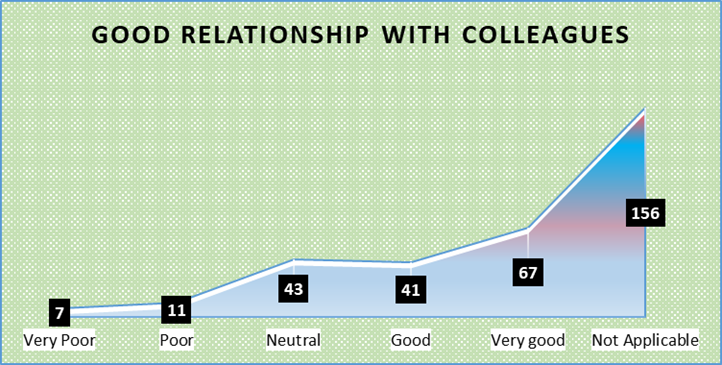
- Just over one-third (33.2%) reported good or very good relationships with colleagues, and 13.2% described relationships as neutral.
- Only a small minority (5.6%) reported poor or very poor relationships, suggesting that negative social experiences, while present, are not widespread among those actively engaged in workplace environments.
2.2.3 Experience Of Discrimination In The Job Market
This table presents migrant workers’ experiences of discrimination in the UK job market. The data provides insight into how frequently individuals perceive or encounter discriminatory behaviour during the employment process, offering a window into structural and interpersonal barriers that may affect labour market access.
Table 7
| Frequency of discrimination faced in the job market | Frequency | Percent | Cumulative percent |
|---|---|---|---|
| Never | 177 | 54.5 | 54.5 |
| Rarely | 76 | 23.4 | 77.8 |
| Sometimes | 63 | 19.4 | 97.2 |
| Often | 9 | 2.8 | 100.0 |
Key findings:
On the positive side, a majority (54.5%) of participants reported never experiencing discrimination in the job market, which may reflect the prevalence of genuinely inclusive environments in Devon, though underreporting due to normalization may also be a factor
However, 45.5% of respondents reported experiencing discrimination at least rarely, suggesting that nearly half of the migrant population encounters exclusionary practices at some level during job seeking or hiring processes.
Frequency of Discrimination
- Rarely (23.4%) and sometimes (19.4%) were the most common responses among those who had experienced discrimination.
- A smaller yet significant portion (2.8%) reported experiencing discrimination often, pointing to a persistent and systemic challenge for this group.
2.2.4 Discrimination Experiences Among Migrants In The UK
Following the multiple choice question above, the survey asked “If you have faced discrimination and your answer is yes, then please explain.”
The lived experiences of migrants in the Devon reveal a layered and persistent pattern of discrimination that cannot be fully understood through statistics alone. Drawing from a set of open-ended responses, this analysis sheds light on how migrants navigate everyday challenges rooted in language, nationality, gender, visa status, and broader social exclusion. Though many reported fair treatment, a significant number described deeply personal and painful encounters that speak to systemic and cultural biases.
Language as a Tool of Othering
Language barriers go beyond mere communication difficulties. For many respondents, their accents and non-native fluency became a source of ridicule and exclusion. “People mockingly copied my accent in meetings. I wasn’t sure if I should laugh or walk out. It made me feel small like I didn’t belong.”
Another added “Sometimes they pretend not to understand me, even though I speak clearly. It feels deliberate, like they’re reminding me I’m not one of them.”
The Burden of Nationality
Respondents reported being stereotyped as unskilled or backward despite having relevant qualifications or experience.
One participant said “The British think Ukrainians are poorly educated and incompetent. That’s simply not true, but I feel like I always have to prove I’m not what they assume I am.
Another reflected “Even when I applied to work in a supermarket or the NHS, I wasn’t even called for an interview. My CV was checked by professionals. What more could I do?”
The Invisible Cost of Motherhood
Female migrants with caregiving responsibilities face a unique intersection of discrimination. One woman shared:
“As a single mother of a disabled child, I can’t work full-time. But instead of understanding, employers see me as unreliable. I’ve been rejected just for needing flexible hours.”
Another noted “The employer told me they couldn’t proceed with my application because of my childcare situation. I wasn’t even asked what I could manage.”
These stories underscore how structural inflexibility punishes vulnerability rather than accommodating it.
Workplace Exclusion and Role Downgrading
Even when migrants find secure employment, they often find themselves marginalized or underutilized.
“I’ve been working for almost a year, but they only started inviting me to meetings recently. Before that, I was just… invisible.”
Others recounted being asked to perform tasks beneath their qualifications. “I’m a trained painter. But at one job, they asked me to wash dishes instead. Why? Because I’m a foreigner, I guess.”
Lack of UK Work Experience
“I was not taken because of lack of experience in this country.”
“Not experienced as I haven’t worked in the UK.”
Visa Status and Social Stigma
Even legal residency does not shield migrants from suspicion or social distancing. One participant remarked:
“People avoid you when they hear you might need a visa in the future. It’s like you’re seen as a problem waiting to happen.”
This reflects a broader tension between immigration status and perceived stability – where bureaucracy becomes a barrier that causes employers to hesitate about employing refugees.
Age, Health, and Being Unseen
Some individuals described being sidelined due to health conditions or age.
“They see you’re older, or hear about your mental health, and they just write you off.”
Other Afghan migrants mentioned being treated as inferior.
“They act like we have never seen a better life, like we came from nothing. It’s humiliating.”
Such experiences, though quietly endured, point to deeper cultural assumptions about who belongs and who does not.
2.2.5 Workplace Training
The data indicates a significant gap in formal support provided to migrants for adapting to cultural expectations in the UK workplace.
Figure 3: Training Received on Adapting to UK Workplace Culture or Managing Cultural Differences
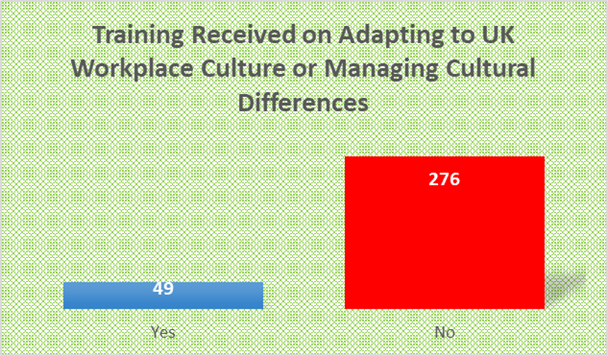
- Only 15.1% (49 out of 325) respondents reported that they had received training on adapting to UK workplace culture or managing cultural differences.
- A staggering 84.9% (276 individuals) said they did not receive such training.
2.2.6 Desire For More Training
The data reveals a strong demand for training and support among migrants in the UK workplace:
- A significant 84% (273 out of 325) expressed willingness to receive more training or support related to adapting to workplace culture or managing cultural differences.
- Only 16% (52 individuals) were not interested in additional support.
Table 8
| Willingness to receive more professional training and support | Frequency | Percent | Cumulative percent |
|---|---|---|---|
| Yes | 273 | 84.0 | 84.0 |
| No | 52 | 16.0 | 100.0 |
In our group discussion, participants were asked to speak about support they need.
Desire for specific focussed ESP (English for Specific Purposes) courses. Many participants expressed interest in courses tailored to specific fields, including:
- Teaching at a university
- Teaching in schools and colleges
- Teaching children at home
- Interpreting
- Translating specialized texts
- Conducting social research
- Collecting data information
- Analyzing quantitative and qualitative data
- Driving
- Taxi driving
- Bus driving
- Tailoring
- Coaching a football team
- Coaching a volleyball team
- Hospitality
- Cooking
- Embroidery
- Needlework
- Hairdressing
- Nursing
- Security Guard
- Family counselling
- Educational consulting
- Painting
- Carpet weaving
- Running a shop
- Childcare
- Elderly care
- Managerial position
- Leading position
- Childcare
- Sewing
- Construction
- Healthcare
2.2.7 Culture And Work: Recommendations
- Prioritise engagement with local employers to improve information sharing, dispel myths, raise awareness of potential of migrant job-seekers, encourage the creation of work-experience opportunities and offer expert guidance and training.
- Cultural competence training. These results underscore the importance of cultural competency training for both migrants and employers. A relatively small investment in cultural competency training has the potential to have a significant impact.
- Policy development. Public and private sector employers should be encouraged to adopt diversity-sensitive HR practices and support systems tailored for migrant workers – particularly in regions like Devon where migrant labour is essential to the economy.
- Raise awareness and improve reporting mechanisms. Many migrants may normalize discriminatory behaviour or feel disempowered to report it. Culturally sensitive education about employment rights, coupled with accessible grievance mechanisms, could help mitigate this issue.
- Target work-related language education. The strong demand for job-specific English and improvement in key communication areas signals the need for tailored ESP (English for Specific Purposes) programs that focus on workplace scenarios, technical vocabulary, and confidence-building in meetings or written communication.
- Continue to utilise flexible learning models. The popularity of blended learning models suggests that language providers and local authorities should continue offering flexible, accessible options combining in-person interaction with digital learning.
- Holistic support programs. Beyond language, initiatives supporting technical, digital, and vocational skill-building can empower migrants to pursue a wider range of employment opportunities.
2.3 Social And Integration Challenges
“I was excited to start a new life in the UK, but making friends has been much harder than I expected. I have joined social groups… but I still struggle to build meaningful relationships. People are polite, but I often fell like an outsider, as if there’s an invisible barrier preventing deeper connections.”
“Central government has scattered all the immigrants so far that geographical distances have caused us to lose friends from our own country and have no contact whit them”.
“The new society in which I have settled, on the one hand, and the pressure of work from the organizations such as the job centre, have taken away so many opportunities for me to continue my life that I can’t make friends and stay in touch with them.”
“I have been living here in Exeter for a year now, I came across some (Afghan Community Devon) through the Directory of Services of Devon County Council and although I tried to contact this organization, none of its communication channels were active. And I do not see any other specific program or organization that works to integrate Afghan immigrants.”
2.3.0 Introduction
Building a strong, local social support network can help refugees and other migrants can help not just with integration into the local community but with finding the right job and with integrating successfully into the workplace.
The picture of social support for refugees, migrants and established ethnically diverse communities in Devon is a complex one. The past 20 years have seen significant growth, often led by the voluntary and community sector, in the number of charitable organisations offering support to Devon’s ethnically diverse communities. Some specializing in offering support to refugees (e.g. Refugee Support Devon in Exeter, Devon and Cornwall Refugee Support in Plymouth, the Pickwell Foundation in Barnstaple), others growing organically out of diaspora communities (e.g. Hongkongers in Exeter, Devon Ukrainian Association, Afghan Community Exeter, Exeter Kurdish Association). Networking has also improved.
However, much of the support is still Exeter-centric and Plymouth-centric and there are huge gaps in support in many parts of rural Devon, exacerbated by the size of the county and limited transport links. In addition, limited funding means that these community organisations – though they share similar objectives – are often competing rather than collaborating.
This section presents both quantitative and qualitative findings regarding the social and integration challenges faced by migrants in Devon, highlighting key issues such as lack of social networks, limited access to support programs, feelings of mistrust from local communities, and difficulties forming meaningful connections.
2.3.1 Social Or Network Support in Devon
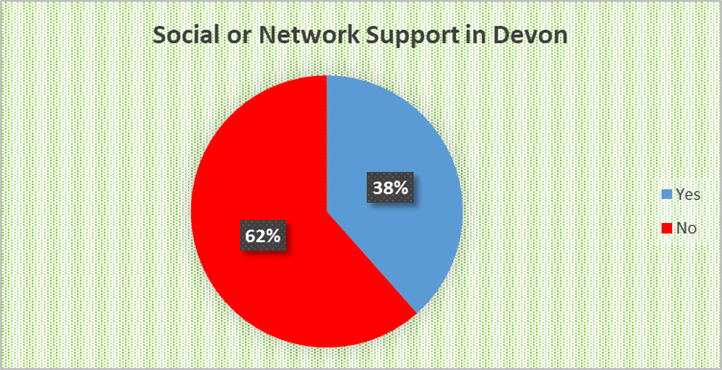
The figure presents a summary of whether respondents reported having access to any form of social or network support while residing in Devon. Out of 325 participants, a clear divide emerges between those who benefit from such support and those who do not.
Figure 4: Social or Network Support in Devon
Key findings:
High rate of social isolation. A substantial 61.5% of participants indicated that they do not have any social or network support in Devon. This high level of disconnection may hinder migrants’ ability to navigate daily life, access public services, or integrate into local communities.
Minority with support networks. 38.5% of respondents stated that they do have some form of support network. These support systems could include family, friends, ethnic community groups, or institutional providers.
The binary nature of responses underscores the polarization in experiences among migrants in Devon.
2.3.2 Type Of Social Or Network Support In Devon
The following table illustrates the distribution and types of social or network support accessed by migrants residing in Devon, shedding light on patterns of community connection, levels of social isolation, and the role of both informal and institutional support systems in the region.
Table 9
| Social or network support received | Frequency | Percent | Cumulative percent |
|---|---|---|---|
| Friends and family | 14 | 4.3 | 4.3 |
| Local VCSE organisations | 23 | 7.0 | 11.3 |
| Friends and local community | 72 | 22.7 | 34.0 |
| All of them | 2 | 0.6 | 34.6 |
| Host sponsors | 6 | 1.8 | 36.4 |
| State organization for assistance to Ukrainian | 1 | 0.3 | 36.7 |
| Support from work | 1 | 0.3 | 37.0 |
| Church | 4 | 1.2 | 38.2 |
| National Career Service | 1 | 0.3 | 38.5 |
| No social or network support | 200 | 61.5 | 100.0 |
Key findings:
Strong reliance on informal support networks. The figures indicate a heavy reliance on personal networks over formal institutions – not a surprising finding considering that this is common feature of communities across the world, where trust and cultural familiarity play critical roles.
Limited reach of formal support systems, fragmentation and niche access. Findings suggest that while formal support systems do exist, they are either not well-known, not accessible, or not perceived as relevant or helpful
Although the findings provide clear evidence of the importance of the work of Devon’s VCSE sector, the diversity of responses (e.g. Phoenix Charity, Pickwell Foundation, Free Movement Group in Torquay, Devon Ukrainian Association were all mentioned) implies a scattered and uncoordinated support landscape. Most community-specific sources of support were only mentioned once or twice
This fragmentation reflects the absence of a centralized or clearly structured support system that can effectively serve newcomers across the region. Devon’s two-tier system of government is a relevant factor here, with different districts taking very different approaches to supporting resettlement.
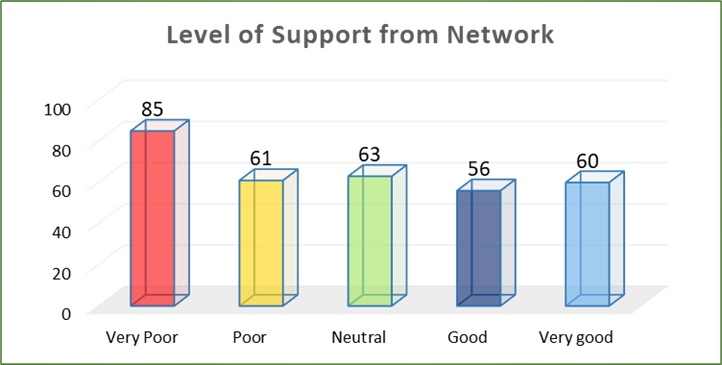
2.3.3 Level Of Support From Network
The figure explores how participants evaluate the quality of social or network support available to them in Devon. While the previous table assessed the presence or absence of support, this data provides a more nuanced view by categorizing respondents’ perceptions of their support systems into qualitative tiers.
Figure 5: Level of Support From Network
Key findings:
Predominantly negative perceptions. A significant 26.2% of respondents rated their level of support as “very poor”, while an additional 18.8% selected “poor”. combined, these figures indicate that 45% of the sample perceive their available support as inadequate or ineffective, suggesting that, even when support structures are present, they may lack accessibility, consistency, or relevance to migrants’ lived experiences.
Moderate levels of satisfaction. Approximately 19.4% of respondents chose a “neutral” rating, suggesting ambivalence or inconsistent experiences with their support networks. One Ukrainian participant said “we are fortunate to have the opportunity to come together and continue our networking and share our programs. At the same time, we know of other Ukrainian immigrants who do not have the same opportunities in other areas. Lack of such opportunities or facilities has negatively impacted the advancement and integration options of immigrants.”
Positive experiences of support. On a more encouraging note, 17.2% rated their network support as “Good”, and 18.5% selected “very good”, together comprising 35.7% of the sample, showing that a significant proportion of migrants are benefiting from Devon’s active support systems.
2.3.4 Interpretive Insights
Quality vs. availability. These results complement earlier findings by revealing that having a support network is not synonymous with receiving meaningful or reliable assistance. Some participants may have access to support but still rate it poorly due to unmet needs or weak interpersonal bonds.
Disparities in support experience. The almost even spread across the five categories suggests a highly uneven distribution of support quality across Devon, reinforcing the message that Devon’s two-tier system of local government, the geography of the county and the unevenness of infrastructure development are key barriers to consistency of support.
2.3.5 Integration Into The Local Community
This table provides insight into the extent to which migrants feel integrated into the local community in Devon.
Table 10
| Reported level of integration into the local community | Frequency | Percent | Cumulative percent |
|---|---|---|---|
| Very poor | 54 | 16.6 | 16.6 |
| Poor | 62 | 19.1 | 35.7 |
| Neutral | 95 | 29.2 | 64.9 |
| Good | 77 | 23.7 | 88.6 |
| Very good | 37 | 11.4 | 100.0 |
Key findings:
Mixed levels of integration. Interestingly, the distribution of responses is relatively balanced: with 35.7% reporting negative integration experiences, 35.1% reporting positive ones, and the remainder (29.2%) remaining undecided or indifferent.
Social cohesion challenges. The fact that nearly one in five participants describe their integration as “poor” or “very poor” indicates that many migrants are still experiencing barriers – whether due to cultural differences, language limitations, discrimination, or lack of effective outreach programs.
Local engagement opportunities. The strong showing in the “neutral” category suggests that many migrants are at a transitional point – neither fully integrated nor entirely disconnected – implying a key opportunity for community-led initiatives to build stronger, more inclusive ties.
Resilient positives. The segment of respondents reporting “good” or “very good” integration reflects encouraging pockets of success.
2.3.6 Social Integration Challenges: Recommendations
- Facilitate integration pathways. These findings emphasize the need for local councils and community organizations to proactively facilitate integration – not only through events, but by fostering everyday interactions and shared spaces.
- Focus on early interventions. New arrivals may particularly benefit from orientation programs, intercultural events, and local mentorships that encourage participation and reduce the sense of “otherness.”
- Build bridges. Community-led collaborations that involve both locals and migrants in mutual activities (e.g., language exchanges, volunteer projects, and cultural festivals) can promote shared understanding and sustained integration
- Target outreach to isolated groups. Efforts should focus on identifying and supporting the 61.5% of migrants who report no network connections.
- Foster collaboration and partnership. Local authorities and other funders need to take more consistent responsibility for strengthening networks and encouraging collaboration rather than competition. The extensive mapping of community support (see DCC’s Directory of Services for Ethnically Diverse Communities) and network building carried out since 2022 by DCC’s Migration and Resettlement team has had significant impacts but recent history shows that this needs to be a long-term commitment as progress can too easily be reversed: the Directory referred to above was first launched by the Safer Devon Partnership in 2010 but had to be abandoned in 2013 when local government funding was slashed during the austerity years.
- Investing in rural Devon, not just in the cities, is essential as ethnically diverse communities are now distributed widely across the county.
- Investing in community outreach and improving visibility of support. The findings point to the need for improved access to information hubs where migrants can easily learn about and access available support services. The fact that such hubs already exist, for example DCC’s Directory and Migration and Resettlement webpages, suggests that the key issue is poor signposting – the fragmentation of support services for migrants means that there is a lack of clarity about where best to turn for information and support
- Establish mechanisms for regular monitoring and feedback. Regular feedback loops should be established to allow migrants to report on the quality of support received, helping organizations adapt more responsively.
- Utilise peer-led and community-based models. Empowering migrants to support one another through peer networks, mentoring, and cultural groups may increase the sense of ownership and authenticity in the support experience.
- Tailor approaches. Recognizing that support needs vary by background, a one-size-fits-all approach should be avoided. Targeted interventions can better address the needs of those who report “very poor” or “poor” support levels.
2.4 Experiences In The Job Market: Progress And Challenges
“Back home, I was successful. I had a good job, people respected me. But here, none of that seems to matter because my English isn’t perfect. I’ve had to take jobs I never imagined myself doing. It feels like I’ve lost my identity, my dignity, everything I worked so hard for.”
“Living in Okehampton comes with many transportations challenge. Taxi services here are very miserable, and bus connections are limited. I was recently offered an evening shift job from 5pm to 10pm in Exeter, but I had to turn it down because there is no transport available to get back to Okehampton at that time. Losing this opportunity was devastating, as I truly wanted to work and support my family. To make things worse, my Afghan driving license has expired, and despite driving safely for a year without any violations, I have failed practical driving test four times. Each attempt is expensive and emotionally exhausting. I know I am a capable driver, but the system feels unfair and discouraging. Without proper transport options, I feel stuck, unable to take steps toward a better life for myself and my children.”
“I am in my second month of coming to Exeter. We have just moved here through the ACRS scheme. Although I have a master’s degree in IT, I currently work as a cleaner in a supermarket. It was shocking to me to receive a letter from the Council Tax saying that you have to pay £240 a month in Tax. The council tax is a big burden on us. Every month, a large portion of my salary goes towards it, leaving little for other essential expenses, we contribute to society just like everyone else, and we hope for a fairer system that considers our financial difficulties.”
“The money the government gives and the salary we earn is enough to survive, not to live”.
2.4.1 Job Applications In The UK
Figure 6: Previous Job Applications in the UK
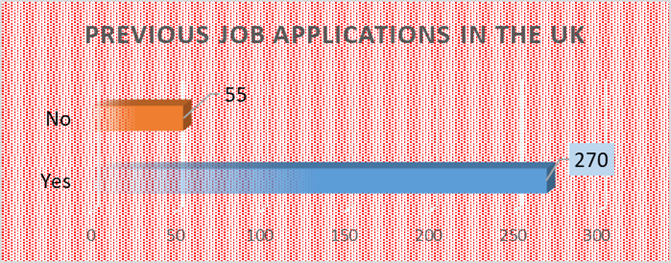
A significant majority (83.1%, or 270 individuals) reported that they have applied for jobs in the UK. This high percentage reflects a strong willingness among migrants to participate actively in the UK labour market.
Only 16.9% (55 individuals) indicated that they have not applied for any job positions. This group may include new arrivals, individuals without work permits, or those who may face barriers such as family/childcare commitments.
2.4.2 Job Search Support
Participants were asked, “Which organizations or agencies have helped you in finding a job?”
The most frequently mentioned response was ‘none,’ appearing 180 times. The platform ‘Indeed’ was referenced 16 times, ‘Job Centre’ 15 times, the ‘STEP for Ukraine’ program 8 times and ‘friends’ appeared 24 times. Numerous other organizations and individuals were mentioned by just one or two respondents, including: National Career Service, Rees, Princess Trust, BHSU, Volunteers, Resettlement Officer, Bideford Work Club, my sponsor, Blue Arrow, Archway Facilities, Foundever.
2.4.3 Currently Employed In The UK
The table presents the employment status of respondents. Out of 325 participants, 52.0% reported that they are currently employed, while 48.0% indicated that they are not employed.
Table 11
| Currently employed in the UK | Frequency | Percent | Cumulative percent |
|---|---|---|---|
| Yes | 169 | 52.0 | 52.0 |
| No | 156 | 48.0 | 100.0 |
High rates of unemployment among migrant communities. The 48.0% unemployment rate highlights the barriers, explored in this survey, that migrants face when seeking employment.
High unemployment rates among migrants have broader implications, not only for individual well-being but also for social integration, economic productivity, and community cohesion.
2.4.4 Migrants’ Job Roles In The UK
We asked the participants, “If you are employed in the UK, please describe your job role.”
Hospitality and Catering:
- Kitchen Staff (Kitchen Assistants, Chef, Catering Assistants)
- Hotel staff (Housekeepers, Cleaners, Reception staff)
- Restaurant and Café staff (Waiters, Bar staff, Waiters)
Health and Social Care:
- Health and Social Care Assistants
- Care Home Assistants
- Nursing Home Workers
- Community Support Worker
Science, Research, and Education:
- Researcher
- Finance Administrator
- Science Technician
- Honorary Fellow (Exeter University)
- Teacher in Ukrainian Saturday School
- ESOL Teacher (Part-time)
Administration and Office Work:
- Helpdesk Administrator
- Office Administrators
- Admin and Clerical Roles
- Marketing Office Assistant
- Accountant, Finance Assistants, Financial Analyst
- Data Technician Apprentice
- Credit Controller
Retail, Sales, and Customer Support:
- Customer Assistant, Checkout assistant
- Specialist (Apple Store)
- Customer Support Assistant (South West Water)
- Delivery Driver (UPS)
- Marketing Manager
- Barista (Johns of Instow Cafe and Shop)
Self-Employment and Entrepreneurship:
- Self-employed Video Content Creator (for small businesses and influencers)
- Self-employed (Internet Shop – littlethumper.co.uk)
Industrial and Technical Work:
- Technician
- Assembly Operative
- Warehouse Operative
2.4.5 Type Of Employment Contract
This figure outlines the type of employment contracts held by migrant workers currently or previously engaged in employment in the United Kingdom.
Figure 7: Type of Employment Contract
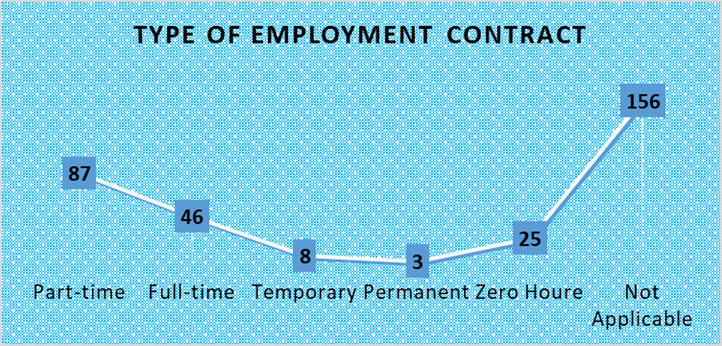
Prevalence of part-time employment. Among those employed, part-time contracts were the most common type, reported by 26.8% of participants, reflecting a significant reliance on part-time work, which may be influenced by limited access to full-time positions or personal constraints such as childcare or language barriers. Only 14.2% of respondents were engaged in full-time work
Temporary and zero-hour contracts. Temporary contracts (2.5%) and zero-hour contracts (7.7%) highlight the precarious nature of employment for many migrants. Zero-hour contracts, in particular, are often associated with economic insecurity..
Low rate of permanent employment. A mere 0.9% of participants had permanent employment contracts, indicating significant challenges for migrants in securing stable and long-term job security.
2.4.6 Satisfaction With Current Job
This table presents the levels of job satisfaction
Table 12
| Reported level of satisfaction with current job | Frequency | Percent | Cumulative percent |
|---|---|---|---|
| Very satisfied | 14 | 4.3 | 4.3 |
| Satisfied | 33 | 10.2 | 14.5 |
| Neutral | 82 | 25.2 | 39.7 |
| Unsatisfied | 25 | 7.7 | 47.4 |
| Very unsatisfied | 15 | 4.6 | 52.0 |
| Not applicable | 156 | 48.0 | 100.0 |
The responses present a mixed picture, showing an even balance of job satisfaction and dissatisfaction. The largest single category among responses was “neutral,” with 25.2% of participants. Roughly similar percentages expressed overall satisfaction (“very satisfied” + “satisfied = 14.5%) and overall dissatisfaction (unsatisfied + very unsatisfied = 12.3%)
2.4.7 Willingness To Apply For A Different Role In The UK
Figure 8: Willingness to Apply for a Different Role in the UK
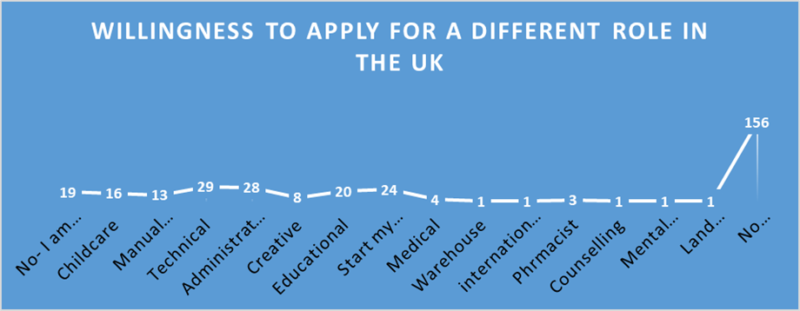
Exploring new opportunities. Among those employed, a significant number expressed an interest in shifting roles:
Technical roles (8.9%) and administrative roles (8.6%) were the most commonly considered sectors, indicating a trend toward skill-based and office-related employment aspirations.
Starting their own business (7.4%) was also a popular option,.
Contentment with current jobs. Only 5.8% of participants stated that they were happy with their current jobs and not willing to apply for different roles
2.4.8 Challenges Faced In The UK Job Market
This table outlines the various challenges migrants encounter when attempting to integrate into the UK job market.
Table 13
| Challenges faced in the UK job market | Frequency | Percent | Cumulative percent |
|---|---|---|---|
| None | 8 | 2.5 | 2.5 |
| Language barriers | 201 | 61.8 | 64.3 |
| Lack of job opportunities | 39 | 12.0 | 76.3 |
| Lack of UK work experience | 42 | 12.9 | 89.2 |
| Recognition of qualifications | 17 | 5.2 | 94.5 |
| Received many rejections | 2 | 0.6 | 95.1 |
| Size of family | 1 | 0.3 | 95.4 |
| Overqualified | 2 | 0.6 | 96.0 |
| No sponsorship | 2 | 0.6 | 96.6 |
| All of them | 4 | 1.2 | 97.8 |
| Short term of UK Visa | 5 | 1.5 | 99.4 |
| Lack of networking opportunities | 2 | 0.6 | 100.0 |
Key findings:
Dominance of language barriers. A striking 61.8% of participants identified the language barrier as their primary obstacle.
Experience and opportunities. A considerable proportion faced challenges related to a lack of UK work experience (12.9%) and lack of job opportunities (12.0%).
Recognition of foreign qualifications. About 5.2% of respondents reported that non-recognition of qualifications from their home countries limited their employment opportunities.
2.4.9 Career Goals For The Next Five Years
Participants were asked, “What are your career goals for the next 5 years?”
- Gaining New Qualifications
Responses included some specific examples, including radiography degree, dental nurse qualifications, echocardiography, accountancy, TESOL, ICT. For many migrants, obtaining new qualifications in the UK is an essential step toward rebuilding their professional identities and gaining recognition in a new labour market. This reflects not only a pragmatic understanding of the UK’s credential-driven system but also a deeper emotional effort to bridge the gap between past achievements and new beginnings. - Advancing in Current Field
Those aiming to advance within their current professions demonstrate resilience and confidence in their existing skills. Rather than viewing migration as a career break, they see it as an opportunity to continue their career journey at a higher level.
- Transitioning to a New Career Path
Transitioning to a new career path represents profound adaptability and openness to change. Often driven by the challenges of re-qualifying in old professions, this shift reveals a willingness to reinvent oneself in the face of necessity.
- Starting Own Business
Some respondents had specific entrepreneurial aspirations, including: opening a garage, opening a dance studio, starting a restaurant, self-employed videographer. Entrepreneurship offers migrants autonomy and dignity when traditional employment paths are blocked or too slow. Building one’s own business is an act of independence and creativity, reflecting a strong desire to contribute economically while asserting control over one’s destiny.
- Developing Specific Skills
Skills development, especially language proficiency and technical skills is key for migrants aiming to stay competitive and relevant. It also marks a deep willingness to invest in themselves, to overcome barriers, and to fully participate in modern professional environments.
- Academic and Educational Goals
e.g Finish Degree, Take IELTS exam, Complete Master’s Programme, Work Towards Phd
The search for stable work is about more than income; it is about restoring personal dignity, building community roots, and ensuring a future for one’s family. Migrants’ focus on stable, meaningful employment highlights their resilience and their deep yearning for normalcy and security.
- Personal Development Goals
Beyond survival, many migrants set their sights on leadership positions, entrepreneurship, and broader societal impact. Their long-term ambitions show not just a desire to integrate but to contribute meaningfully, to lead, and to leave lasting legacies.
- Improving English proficiency
- Learning Spanish (B2 level)
- Developing financial literacy
- Mental health support qualifications
- Professional development of psychology or sales manager
These long-term plans shared by migrants in the UK reflect a striking portrait of resilience, ambition, and adaptability. At their core, these aspirations tell a story of individuals who, despite displacement and uncertainty, choose to act as agents of their own future rather than victims of circumstance.
Across all categories whether seeking new qualifications, advancing current careers, transitioning into new fields, or starting businesses migrants, demonstrate a profound commitment to rebuilding their professional identities while redefining personal success within a new social and economic environment. Their goals emphasize not only survival but also meaningful contribution, growth, and a strong desire for dignity.
The emphasis on skill development, language acquisition, and cultural adaptation reveals the strategic understanding migrants have of the barriers they must overcome to be seen and valued. Meanwhile, the widespread concern over visa and legal instability highlights a painful vulnerability that can limit long-term vision and investment, making flexibility a necessity rather than a choice.
What emerges most clearly is a holistic and forward-looking approach to integration: migrants are not merely looking for jobs they are envisioning careers, communities, and legacies. They aim not just to fit into British society but to help shape it, contributing skills, leadership, creativity, and resilience to its future. These five-year plans show that migrants, often perceived through narratives of need, are in fact powerful drivers of renewal and innovation if only the systems around them recognize and support the extraordinary potential they are offering.
2.4.10 Progress And Challenges In The Job Market: Recommendations
- Strengthen job support services. Local governments and community partners should enhance advisory and support programs aimed specifically at helping migrants navigate the job market effectively.
- Target employment support at entry points, including work-placement schemes, mentoring programs, and workshops on navigating the UK job market.
- Improve recognition of qualifications. There is a clear need for faster and more transparent mechanisms to recognize the professional qualifications and skills that migrants bring from their home countries.
- Language and communication training. Continue to expand access to ESOL and ESP
- Support access to stable employment. Promote access to more stable and secure employment opportunities for migrants
- Monitor employment conditions. There is a need for stronger monitoring and regulation to prevent the exploitation of migrant workers.
- Increase focus on career pathways development. Refugee and migrant support programmes need to focus not just on getting people into employment but also on longer-term career development so that more migrants in work have opportunities to continue building skills and improving English proficiency in order to progress their careers.
- Employer engagement. Initiatives encouraging employers to invest in the long-term development of migrant employees would be beneficial for workforce stability, for social integration and Devon’s economy.
- Research and monitoring. Further investigation into the specific reasons behind job dissatisfaction among migrants could inform more targeted support measures.
- Entrepreneurship support. Given the strong interest in starting businesses, partners should offer targeted training and access to start-up finance for migrant entrepreneurs.
- Sector-specific training. Tailored vocational training could help migrants bridge qualification gaps, particularly in healthcare, education, and technical sectors.
- Employment satisfaction programs. Efforts to improve job satisfaction and job retention among migrants should be prioritised.
2.5 Health And Wellbeing Challenges
Individual health and wellbeing issues, or concerns about family health and well-being, can have a significant impact on a refugee’s ability to focus clearly on applying for a job, holding down a job and on career development.
The analysis of the health and wellbeing data reveals significant challenges faced by migrants in Devon when navigating the UK healthcare system and maintaining their overall emotional resilience. Quantitative findings demonstrate that while a proportion of participants are able to access needed services, many report unmet healthcare needs, particularly for dental care, general medical support, and specialized services. Emotional and mental health challenges also emerge strongly, with many individuals indicating that their psychological state substantially impairs their ability to engage in job seeking and broader integration efforts.
2.5.1 Impact Of Mental Or Emotional State On Job Search Ability
This figure explores the impact of mental and emotional wellbeing on migrants’ ability to engage in job searching activities within the Devon region.
Figure 9: Impact of Mental or Emotional State on Job Search Ability
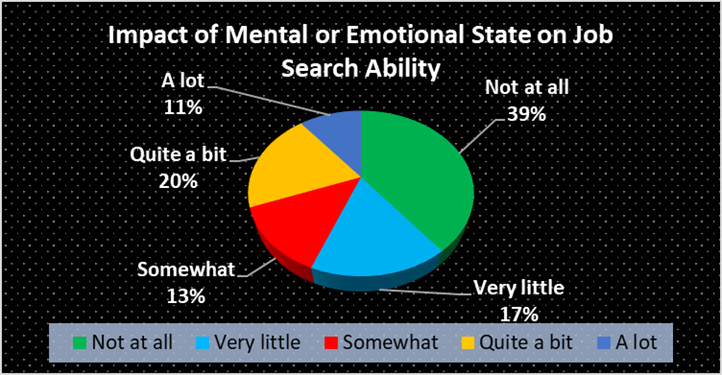
Significant psychological barriers. Altogether, 30.8% of the migrant respondents reported facing serious emotional challenges, potentially resulting in diminished motivation, reduced self-confidence, and heightened job search fatigue.
High levels of emotional resilience. 39.4% of respondents indicated that their mental or emotional state did not affect their job search efforts at all, suggesting a significant segment of the migrant population maintains strong psychological fortitude.
One participant who has 21 years of experience in teaching and researching at university level, shared her thoughts and feelings “Back home, I was successful. I had a good job, people respected me. But here, none of that seems to matter because my English isn’t perfect. I’ve had to take jobs I never imagined myself doing. It feels like I’ve lost my identity, my dignity, everything I worked so hard for.”
2.5.2 Healthcare Services Needed But Not Received
This table examines the gaps between healthcare needs and service access among migrants residing in Devon, highlighting critical areas where healthcare provisions fall short.
Table 14
| Healthcare services needed but not received | Frequency | Percent | Cumulative percent |
|---|---|---|---|
| None | 12 | 3.7 | 3.7 |
| I receive the services I need | 90 | 27.7 | 31.4 |
| General care | 80 | 24.6 | 56.0 |
| Psychotherapy | 10 | 3.1 | 59.1 |
| Specialized services | 29 | 8.9 | 68.0 |
| Dental services | 103 | 31.7 | 99.7 |
| Obtaining insulin | 1 | 0.3 | 100.0 |
Respondents reported difficulty in booking a GP appointment and felt frustrated by receptionists asking too many questions and trying to diagnose over the phone. They also highlighted translation issues in healthcare, which made communication harder over the phone than in person.
“When I get sick, my first worry isn’t seeing a doctor-it’s figuring out how to get an appointment! I call the GP, but before they even book me in, I have to answer a bunch of questions, like they are diagnosing me over the phone. And if your English isn’t perfect, explaining symptoms like this is even harder. It feels like the system puts up barriers instead of helping.”
Key findings:
High demand for dental care. 31.7% of respondents reported an unmet need for dental services, making it the most commonly cited gap in healthcare access.
General healthcare needs. 24.6% indicated they were unable to obtain general healthcare services
Specialized and mental health services. 8.9% needed specialized medical services, and 3.1% indicated a need for psychotherapy that went unmet.
While these figures highlight the fact that the majority of migrants encounter some form of difficulty in accessing necessary healthcare services, it is important to see this in the context of general satisfaction with access to healthcare in the UK. E.g. a Care Quality Commission survey of 1600 people in 2024 found that 59% experienced difficulty in getting appointments with their GP.
2.5.3 Challenges Accessing Healthcare
Table 15
| Challenges accessing healthcare | Frequency | Percent | Cumulative percent |
|---|---|---|---|
| None – I find access easy | 73 | 22.5 | 22.5 |
| Language barriers | 80 | 24.6 | 47.1 |
| High costs | 36 | 11.1 | 58.2 |
| Unfamiliarity with UK medical system | 39 | 12.0 | 70.2 |
| All challenges apply | 7 | 2.2 | 72.3 |
| Long wait for attention | 38 | 11.7 | 84.0 |
| Lack of medical options | 36 | 11.1 | 95.1 |
| NHS dental help | 16 | 4.9 | 100.0 |
Language barriers as a leading issue. 24.6% of respondents identified language barriers as the main challenge when accessing healthcare, echoing patterns seen re employment and other services
Significant accessibility and cost issues. 11.1% of participants cited high prescription costs, while 11.7% reported long waiting times for medical attention.
Lack of familiarity with the healthcare system. 12.0% indicated difficulty navigating the healthcare system due to unfamiliarity, suggesting a need for better orientation programs or community health connectors.
2.5.4 Additional Support Services Needed
This Figure explores the additional support services that migrants in Devon feel they require.
Figure 10: Additional Support Services Needed
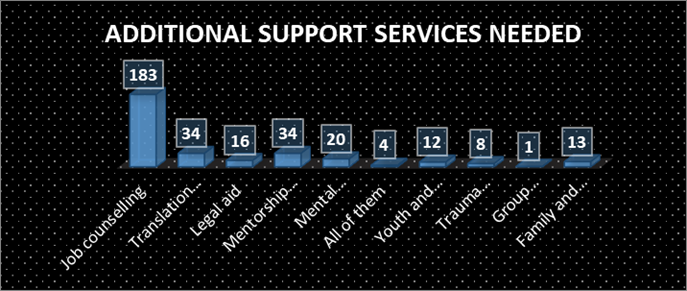
Strong demand for job counselling. A significant majority 56.3% of respondents indicated that job counselling is the most needed service.
The importance of translation and mentorship services. Both translation services and mentorship programs were cited by 10.5% of respondents each. These figures demonstrate a dual need: the continued barriers in language proficiency and the importance of helping migrants understand cultural, professional, and social norms in the UK.
Family and parenting support was requested by 4.0% of respondents, highlighting the additional strain migration places on family dynamics.
2.5.5 Health And Wellbeing: Recommendations
- Improve access to mental health support. Psychological counselling, stress management workshops, and peer support systems can play a crucial role in improving employment outcomes.
- Targeted programs that provide psychotherapy and specialized health services within community settings could address the current service gaps.
- Culturally competent mental health initiatives are particularly vital given the combined emotional and practical challenges migrants face.
- Trauma informed services. Job search support initiatives must recognize emotional well-being as a core factor influencing labour market engagement. Services should be trauma-informed and culturally sensitive, ensuring migrants receive both emotional and practical support.
- Improve access to dental services. There is an urgent need to improve affordable dental care access, possibly through mobile clinics, community dentistry programs.
- Strengthen primary healthcare access. Ensuring easier registration processes, offering translation services, and increasing outreach to migrant communities.
- Interpreting and translation. Healthcare providers should prioritize offering professional translation and interpretation services.
- Healthcare orientation and navigation programs. Tailored induction sessions, healthcare literacy programs, and community health workers can empower migrants to navigate the system more effectively.
- Child and family support. Initiatives to create youth and family-friendly spaces including counselling, educational support, and recreational programs would address the distinct needs of migrant children and families adapting to a new environment.
- Integrated service models. Given the interconnected nature of these needs, a holistic service approach offering multi-faceted support under one roof would appear to be an effective solution. However, Devon is one of the largest counties in the UK and this geography needs to be taken into account: launching a support hub in any single location could actually be counter-productive.
2.6 Housing And Accommodation Challenges
“I work full-time, I never miss a payment, but still, every landlord asks for a UK guarantor, something I just don’t have. Last month, I found the perfect flat, but they told me I needed a guarantor earning over £40,000 a year. Who is supposed to sign for me? I even offered to pay extra upfront, but they refused. It’s like they don’t care how responsible I am – if I don’t fit their system, I don’t get a home.”
“As a single mother, finding a job that fits around childcare is almost impossible. Most employers want you to work evenings or weekends, but nurseries close early, and babysitters are too expensive. And when it comes to housing, landlords see ‘single mother’ and assume I won’t be able to pay rent, even though I have a stable income. I once got rejected for a flat because the landlord said he ‘preferred a couple.’ It feels like no matter how hard I try, the odds are stacked against me.”
Securing safe and adequate housing, for individual migrants and for their families, is always going to be a fundamental priority and the absence of secure housing has significant impacts on many migrants ability to focus on job-seeking and career development.
Housing challenges are a significant concern for migrants in Devon. According to our survey of 325 participants, a notable proportion of migrants face high rent and poor housing conditions, while a smaller but still concerning percentage struggle with issues such as distance from work or school, and lack of essential amenities.
While recognising the importance of housing in relation to employment, it is important to put the challenges faced by migrants into context: as the 2024 report of the Devon Housing Commission makes clear “the evidence accumulated .. shows, there is indeed a real housing crisis in this county”. So, the challenges faced are not unique to refugees and other migrants.
2.6.1 Housing Problems Identified By Respondents
Table 16
| Housing problems identified by respondents | Frequency | Percent | Cumulative percent |
|---|---|---|---|
| None – my housing is adequate | 145 | 44.6 | 44.6 |
| High rent | 96 | 29.5 | 74.2 |
| Poor condition of housing | 19 | 5.8 | 80.0 |
| Distance to work / school | 16 | 4.9 | 84.9 |
| Lack of amenities | 5 | 1.5 | 86.5 |
| All problems apply | 1 | .3 | 86.8 |
| Seeking new housing | 43 | 13.2 | 100.0 |
Adequate housing conditions. The fact that nearly half of respondents (44.6%) reported that their housing was adequate, indicates that existing housing support mechanisms are at least partially effective
Prevalence of high rent issues. High rent emerged as the most commonly reported housing problem among those facing challenges, with 29.5% of participants identifying it as a key issue.
Poor conditions. 5.8% of participants cited the poor condition of their building, reflecting concerns over safety and health,13.2% of respondents were actively seeking new housing, suggesting a significant level of dissatisfaction or instability in current living arrangements.
Renting difficulties. Participants found renting difficult, especially without a guarantor. This was a major concern for many, making them feel that a higher salary was needed to show reliability for renting properties.
2.6.2 Plan To Stay Or Move From Current Location
This table presents the respondents’ future intentions regarding their residential location Participants were asked whether they planned to stay in their current location or move to another region.
Table 17
| Plan to stay in current location or move to another region in the UK | Frequency | Percent | Cumulative percent |
|---|---|---|---|
| Stay | 221 | 68.0 | 68.0 |
| Move | 104 | 32.0 | 100.0 |
Majority intend to stay. A significant majority of respondents (68.0%) indicated their intention to stay in their current location, suggesting a relatively high level of satisfaction or stability within their present living environment.
Considerable minority plan to move. About one-third of the participants (32.0%) expressed plans to move to another region within the UK, likely motivated by aspirations for better employment opportunities, education, housing conditions, or quality of life.
2.6.3 Housing And Accommodation: Recommendations
- Affordable housing initiatives. Local governments and housing associations need to prioritize affordable rental schemes
- Housing quality standards. Improving regulatory oversight on rental properties could address concerns about the poor physical condition of housing units. (New legislation due to come into force in August 2025 may address this issue)
- Location-sensitive housing programs. Policies encouraging the development of affordable housing near employment hubs and educational centres could mitigate issues related to commuting distances.
- Long-term housing stability. Addressing systemic issues in housing affordability and quality will be critical to ensuring that migrants can settle and contribute effectively to local economic and social life.
2.7 Skills Challenges
“Every time I go to the Job Centre, they just hand me a generic list of jobs – cleaning, warehouse work, the same thing every time. They don’t ask about my skills or try to help me find something better. It feels like they just want to get me off their list, not actually help me move forward.”
“I studied veterinary medicine in Afghanistan, and I’m good at maths – I even trained others. But when I applied for an apprenticeship, they told me I didn’t have GCSE maths, so I wasn’t eligible. How does that make sense? I have a higher qualification, but because it’s not from here, it doesn’t count. It feels like all my knowledge means nothing.”
“I really want to start my own business, maybe an online store, but finding the right training is impossible. There are so many courses out there – some seem fake, just taking your money without teaching anything useful. I don’t know where to go for something real, something that actually helps.”
“I am a physiotherapist with 18 years of experience in this field. Every time I went to the Job Centre, they offered me jobs that I had no experience in. on the other hand, I had to sign a journal stating that I was committed to following the instructions and program that the work coach sets. At the same time, the language courses are progressing so slowly that our language level and the Job Centre’s expectation that we enter the market as soon as possible do not match.”
“I wanted to take the ‘working in healthcare’ course because I have experience in care work. But all the sessions were during the day, when I have to work and take care of my kids. There was no flexibility, if you can’t attend at their times, you just miss out. How are we supposed to improve our lives if the system isn’t built for people like us?”
“I heard that local councils offer apprenticeships, but I don’t know how to apply or if they even accept people like me. There’s no clear information, and when I ask, I just get sent to different websites that don’t help. If they really want people to apply, they need to make the process easier to understand.”
The findings illuminate the complex interplay between formal qualifications, skills, access to professional development opportunities, and the structural challenges faced in navigating the labour market.
2.7.1 Employment History In Country Of Origin
Figure 11: Employment in County of Origin
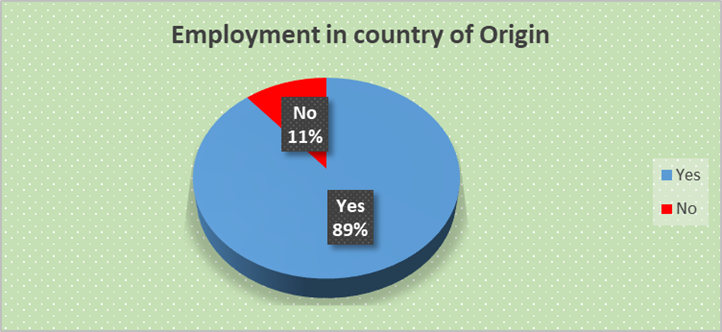
Key findings:
High pre-migration employment rate. The data reveals that nearly 9 out of 10 migrants came to the UK with a history of prior employment.
This high employment rate challenges common stereotypes that portray migrants as lacking professional or labour market experience. It suggests that many migrants are not economic dependents, but rather economically active individuals who bring work ethic, skills, and diverse occupational backgrounds from their home countries.
Human capital potential. These findings underscore the untapped human capital within the migrant population. This gap between pre-migration employment and post-migration underemployment reflects a critical area of policy failure and missed economic opportunity.
Minority without work history. The 11.1% of migrants who were not employed in their countries of origin may include students, homemakers, individuals from marginalized communities, or those with health limitations. This subgroup may require more intensive, foundational support, to ensure inclusive employment strategies. Cultural backgrounds and expectations can be a factor here e.g. women from some countries who never had a chance to go to school and who were never expected to work outside the home may find it particularly challenging to find a job in the UK
2.7.2 Previous Employment Roles
Participants were asked “If you were employed in your country of origin, please specify your roles and how long you worked? The following categorised list, paints a powerful picture of untapped, wasted potential.
Education and Training
- University Lecturers, Head of Department at University
- Teachers (Maths, Biology, English, Primary, Music)
- School Management
- Teaching Assistants
- Career Advisors
- Motivational School for Teens (Program Author)
- Speech Therapist,
Medical and Health
- Medical Doctor / General Practitioner
- Pediatrician
- Cardiologist and Sonographer
- Nurses (2–10 years experience)
- Dentist
- Obstetrician/Gynecologist
- Psychologist / Art Therapist
- Paramedic-
- Laboratory Assistant
- Care Worker / Mental Health Support
- Massage Therapist
- Clinical Lab Biologist (28 years experience)
- Pharmacist / Pharmacy Worker
Business, Finance and Management
- Accountants, (incl Chief Accountants (10–25 years), Payroll accountant)
- Finance Director / Financial Consultant (10+ years)
- Business Coach / Corporate Trainer
- Tax Inspector
- Finance Assistant
- Treasury / Government Finance
- Barrister
- Lawyers
- Project Manager
- HR Manager
- Office Manager
- Procurement / Purchases Department Head
- Deputy Director (UTEM Group, 2016–2023)
Administrative and Government Roles
- Administrative Assistant (2 years)
- Receptionist (4 years)
- Manager in Local Government
- Social Services Head (13 years)
- Assistant Judge (Supreme Court)
- Air Traffic Controller
- Assistant Forester
Sales, Marketing, and Retail
- Sales Managers
- Marketing Director
- Sales Representative
- Business Client Manager at Bank
- Retail Deputy Manager (Adidas)
- Online Shop Owner (10 years, baby clothes)
- Shop Assistant
- Casino Administrator (4 years)
- Customer Care Assistant (UK)
- Nanny
Creative and Content Roles
- Graphic Designer
- Art Museum Department Head
- Social Media Videographer (UK)
- Content Manager (MGID)
- Digital Content Creator
- Author of Training Programs
- Theater / TV Producer and Director
Technical, IT and Skilled Trades
- IT Specialist / Self-Employed (7+ years)
- IT Project Manager
- Engineer-Technologist (Garment Factory, 1998–2005)
- Car Repair / Body Painter (20 years)
- Builder
- Maintenance (4.5 years)
- Chef (10 years)
- Printing Production Manager
- Logistics (University Department)
- Driver / Taxi Driver
- Warehouse Manager
- Fleet Coordinator (Honda Ukraine)
Other Specialized Roles
- Beekeeper / Entrepreneur (14 years)
- Lecturer in Transport Logistics
- Dance Teacher
- Recruitment consultant
- Land Management Specialist
- Massage Therapist
- Scientist / Researcher
- Travel Agent
Policy and Practice
Implications:
- Labour market integration strategy. The data strongly advocates for designing employment pathways based on prior work history, allowing for accelerated integration of experienced migrants into roles that match their competencies.
- Credential recognition reform. Government and professional bodies should expedite the recognition of foreign qualifications
- Targeted support programs. For the minority with no prior work history, local councils and job centres should develop onboarding programs that blend skills training with social support, particularly for women, elderly migrants, and refugees from crisis regions. A good example of such an initiative is the education programme, funded by DCC, currently being run by St Sidwell’s Centre in Exeter for women refugees who arrived in Devon with low levels of literacy in their first languages, and no qualifications.
2.7.3 Possession Of Work-Related Qualifications
This table presents the distribution of work-related qualifications among the 325 surveyed migrants.
Table 18
| Possession of work related qualifications | Frequency | Percent | Cumulative percent |
|---|---|---|---|
| Yes | 183 | 56.3 | 56.3 |
| No | 142 | 43.7 | 100.0 |
Key findings:
Majority with recognizable skills or training. Over half of the migrants surveyed arrived in the UK with work-related qualifications, challenging the narrative of migrants as low-skilled workers and highlighting their potential for contributing across a range of occupational sectors, where shortages exist.
Significant minority lacking formal credentials. However, a substantial 43.7% of participants indicated they lacked work-related qualifications. This may reflect a number of realities: either their skills were acquired informally and never certified, or they had limited access to education and training systems in their country of origin due to socio-economic, political, or gender-based barriers.
The binary “yes/no” nature of this question may mask the nuances of skill acquisition. Many migrants acquire technical and practical competencies through life experience, family businesses, or on-the-job training. These may not meet formal UK qualification standards but nonetheless represent valuable, transferrable skill sets
Intersection with previous employment. When cross-referenced with the earlier table showing 88.9% had employment history, it is noteworthy that not all employed migrants had qualifications, and not all qualified individuals may have been employed. This raises critical questions around the alignment (or misalignment) between qualifications and actual employment opportunities, both before and after migration.
2.7.4 Availability Of An English CV To Share
This figure provides insights into how prepared migrants are in terms of job-search readiness – specifically whether they have an English-language CV to share with potential employers. Among 325 respondents, 76.9% (n=250) reported having an English CV, while 23.1% (n=75) indicated they did not.
Figure 12: Availability of an English CV to Share
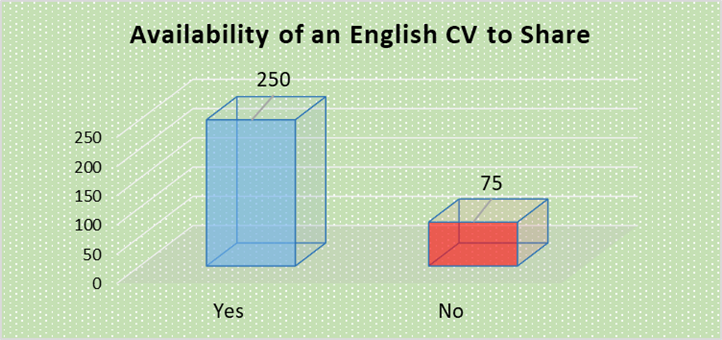
Key findings:
“Even though I have an English CV, I always worry if it’s good enough. Does it show who I really am and what I can do? I just don’t know.”
“Translating my experience into a UK-style CV was like rewriting my whole identity. Some things just don’t translate – how do you explain years of hard-earned skill with just a title?”
High proportion of prepared job seekers. The fact that more than three-quarters of participants possess an English CV may demonstrate a strong degree of motivation and initiative in adapting to the UK job market. However, it is also a reflection of the prevalence of support for CV writing– from ESOL teachers and from employability support programmes
Significant minority still lacking this basic tool. The 23.1% without an English CV face a notable barrier to labour market entry. These individuals may lack the language skills, digital literacy, or guidance required to create a CV that meets UK norms – or may simply not understand its necessity, especially if coming from informal or non-Western job search cultures. Some migrants, especially older adults or those from rural backgrounds, may not have access to support networks that can assist with CV writing.
2.7.5 Willingness To Receive Help In Writing Or Editing CV
Out of 325 respondents, 55.7% (n=181) indicated they would welcome help in writing or editing their CV, while 44.3% (n=144) said they would not.
“I don’t just want help fixing grammar – I want someone to understand my story and show me how to tell it properly.” Another participant shared her experience: “Sometimes when people offer help, they rewrite my CV so much it doesn’t feel like me anymore. It’s like I disappear in the process.”
Table 19
| Willingness to receive help in writing or editing CV | Frequency | Percent | Cumulative percent |
|---|---|---|---|
| Yes | 181 | 55.7 | 55.7 |
| No | 144 | 44.3 | 100.0 |
Key findings:
Majority open to assistance. This openness indicates that most migrants acknowledge the importance of a well-crafted and culturally appropriate CV
Substantial minority declining help. However, the 44.3% who declined assistance should not be overlooked. Their reluctance may stem from various reasons, including overconfidence in their current CV, pride, lack of trust in available services, past negative experiences, or even fear of being judged for language or educational shortcomings.
In some cultures, asking for help may be perceived as a sign of weakness or failure. Others might assume that help is only offered to those in dire situations. These cultural perceptions could deter otherwise capable individuals from accessing services
2.7.6 Availability Of Professional References
This is a major issue for many migrants seeking employment. Only 38.5% reported having professional references available, while a substantial 61.5% indicated they did not.
Immigrants face very different problems when it comes to professional references. Participants at the focus group expressed their feelings and experiences as follows:
“They ask for UK references, but I’ve only worked in informal jobs here. How can I prove myself if no one wants to vouch for me?”
“Even when I do good work, it’s often for cash-in-hand roles or short gigs. No one writes a reference. It’s like I never existed professionally.”
“How can I have references when no one will give me a first chance? It’s a cycle – I need experience to get a job, but I need a job to get experience. No one wants to be your first reference.”
“In my home country, I had people who could vouch for my skills and integrity. Here, I have no one. It feels like I’m a ghost in the professional world – no proof of who I am or what I can do.”
Figure 13: Availability of Professional References
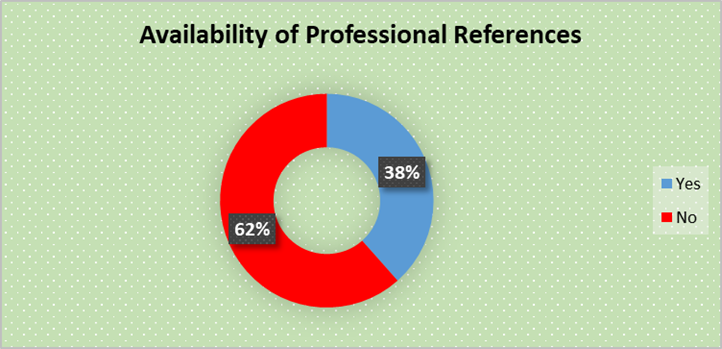
Majority lack professional references. Nearly two-thirds of respondents are unable to provide professional references, a significant barrier to employment,
Disconnect between experience and documentation. This gap is particularly notable given previous data: 88.9% of respondents had prior employment in their country of origin, and over half possessed work-related qualifications. The lack of references despite these qualifications and work histories points to systemic disconnection – many refugees are professionally experienced but lack the formal tools to prove it.
Cultural and logistical challenges. In many non-Western countries, formal written references are not a standard practice, and former employers may not be reachable, willing, or equipped to provide them. Additionally, language barriers, time zone differences, or geopolitical instability may further impede the verification process.
Consequences for employability. Employers unfamiliar with these complexities may interpret the lack of references as a red flag, rather than a structural issue. As a result, capable candidates may be filtered out early in the hiring process, regardless of their actual skills
2.7.7 Possession Of Specific Technical Skills
This table explores whether participants possess specific technical skills – a key factor in employability,. Of the 325 respondents, only 45.2% (n=147) reported having such skills, while 54.8% (n=178) stated they did not.
Table 20
| Possession of specific technical skills | Frequency | Percent | Cumulative percent |
|---|---|---|---|
| Yes | 147 | 45.2 | 45.2 |
| No | 178 | 54.8 | 100.0 |
Skill deficit among majority. The fact that over half of the participants do not possess specific technical skills points to a critical mismatch between labour market demands and the skills migrants bring with them. This is particularly relevant in an economy increasingly reliant on technical expertise across sectors, from construction to IT to manufacturing.
It also suggests that a significant portion of the migrant workforce may be limited to lower-skilled, lower-paid roles, regardless of broader potential.
Broader context of underutilization. This finding complements earlier data: although 88.9% of participants had employment in their country of origin, many of those roles may have involved non-technical or general labour, or technical skills that are non-transferable or unrecognized in the UK system.
Hidden skills and recognition gaps. It’s possible that many migrants do in fact have technical abilities, but lack the certification or terminology to identify them as such. Migrants may also possess informal or experiential technical skills gained through practical work, family businesses, or apprenticeships. However, without formal recognition, these skills often go.
1. Software and IT Skills
- Microsoft Office (Word, Excel, PowerPoint)
- Advanced Excel (macros, pivot tables, data analysis)
- Google Workspace (Docs, Sheets, Meet, Forms)
- Adobe Photoshop, Illustrator, Acrobat, Premiere
- ABBYY FineReader
- Asana
- 1C software
- KOBO reporting system
- CRM systems
- Content management tools
- Artificial Intelligence (basic familiarity)
- Windows and Linux administration
- Oracle CRM
- McAfee Orchestrator
- Digital and GeoSee2 (land management software)
- ArcGIS (ArcMap)
- MicroStation
- MapInfo
- UiPath
- Tableau
- Power BI
2. Programming and Technical Computing
- HTML, CSS, Python
- MATLAB
- SQL
- Coding training (“She Coding”)
- Computational modeling
- Numerical analysis
- Familiarity with quantum mechanics and statistical mechanics
3. Accounting and Finance
- Accounting and bookkeeping (e.g. AAT Level 3 Accounting)
- Proficient in accounting software (QuickBooks, Microsoft Dynamics)
- Knowledge of IFRS
- Tax reporting, financial forecasting, budgeting tools
- Cash flow and P and L analysis
4. Engineering and Technical Work
- AutoCAD drafting
- AutoCAD knowledge
- Electrical device repair, service, and installation
- Car repair techniques (painting, polishing, color selection)
- Driver’s license – Categories B and C
5. Digital Marketing and Communication
- Digital marketing
- Public speaking / communication with large audiences
- Problem solving in customer service contexts
- Content creation (video editing, advertisements)
6. Science and Research
- Science technician
- Theoretical physics applications
- Coding and simulations in physics
- ARO/AIS officer training
- Pseudo-pilot training in ATCO certification center
7. Project and Workflow Management
- Project management
- Supervision training (social work)
- Self-organized learning space methodology
- Conflict resolution techniques
- Multitasking and task prioritization tools
8. Creative and Design Tools
- Adobe Creative Suite (Photoshop, Illustrator, Premiere, Acrobat)
- Procreate
- Canva
- Figma (basic)
9. Miscellaneous Practical Skills
- Cooking skills
- Working with customers
- Experience with printing/scanning equipment
2.7.8 Support Or Training Received For Career Development
This figure examines whether migrant participants have received any form of career development support or training in the UK.
Figure 14: Support or Training Received For Career Development
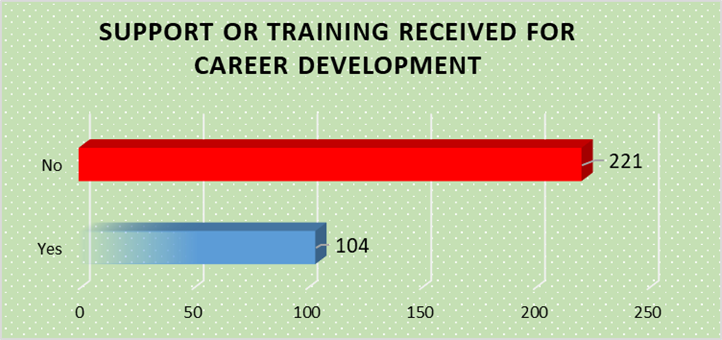
Significant lack of career development support. The most immediate and concerning observation is that more than two-thirds of the respondents had no access to training or support aimed at enhancing their career prospects.
Potential underinvestment in migrant upskilling. This result may reflect a broader issue: career development pathways for migrants are either underfunded, poorly communicated, or too difficult to access due to language, digital literacy, or eligibility criteria. It suggests that while migrants are entering the UK labour market, they are often doing so without structured pathways to improve, grow, or adapt their skills over time.
Vulnerability to job stagnation. Without formal development support, migrants are likely to remain in entry-level or low-wage roles, regardless of their potential. Over time, this creates barriers to economic mobility, further entrenching inequalities between native and migrant workers. The long-term effect is not just individual disempowerment, but also a loss of economic potential for the UK workforce.
Disparity between motivation and opportunity. Previous tables showed that most migrants are willing to receive help with their career tools (e.g., 55.7% are open to CV writing/editing support).
2.7.9 Skills: Recommendations
- Credential evaluation systems. Ensuring a clear pathway is available for recognizing foreign qualifications – including fast-track assessment – is essential
- Bridging and conversion programs. For those whose qualifications are not immediately transferable, the government and employers should invest in bridging courses, top-up certifications, and practical placements that help migrants meet local licensing or registration requirements.
- Support for the unqualified group. The 43.7% without formal qualifications should not be seen as unemployable but rather as a target group for vocational training, apprenticeships, and adult learning initiatives. Flexible, culturally aware programs that validate prior learning and support skill development could open doors to upward mobility.
- Build trust through outreach. For those hesitant to accept help, proactive engagement strategies are needed. Support services should be introduced through trusted community figures, bilingual outreach workers, or in informal settings to reduce barriers of fear or stigma.
- Offer more digital literacy training. Basic IT training should be considered an essential service for employability support.
- Employer engagement. Employers could be encouraged to recognize alternative forms of applicant expression – such as oral interviews or digital portfolios – especially for candidates from low-literacy or non-Western backgrounds. This flexibility can help reduce systemic bias.
- Tailor help to skill level. A one-size-fits-all approach will not work. Differentiated services, from basic template support to advanced job-market-tailored editing, will better meet the varied needs of migrants with different education and work backgrounds.
- Develop reference bridging programs. Establish work-experience programs where trusted employers provide work-experience opportunities, thereby helping migrants to build local references over time.
- Employer education. HR departments should be sensitized to the realities of international reference barriers. Emphasizing skills and performance over documentation could reduce unintentional bias and open doors to underutilized talent.
2.8 ESOL And Other Skills Development Needs
Understanding the training and skill development needs of migrant workers is essential to fostering equitable access to employment and supporting successful integration into the UK workforce. This section explores the self-reported areas where migrants feel they require further training, highlighting the significant demand for English language proficiency alongside technical, IT, and vocational skills. These findings not only reflect individual aspirations for professional growth but also point to broader systemic gaps in support structures that could enable migrants to fully participate and thrive in the labour market.
2.8.1 Attendance In ESOL (English For Speakers Of Other Languages) Classes
The data highlights the level of engagement with formal English instruction, which plays a critical role in employment integration and communication in the UK workforce.
Table 21
| Attending English class | Frequency | Percent | Cumulative percent |
|---|---|---|---|
| Yes | 192 | 59.1 | 59.1 |
| No | 133 | 40.9 | 100.0 |
Majority attendance. A clear majority of respondents (59.1%, n = 192) reported attending English classes, showing that most migrants are proactive in addressing one of the primary barriers to employment – language proficiency.
Significant non-attendance. However, a notable 40.9% of respondents (n = 133) indicated not attending English classes. The reasons behind this non-attendance are not explored in this table but may include lack of access, financial constraints, family commitments and other time limitations, lack of awareness of available classes and/or confidence in existing English language proficiency.
2.8.2 Interest In English Classes Focused On Work-Related English
This figure presents data regarding interest in participating in English classes specifically designed to address work-related language needs.
Figure 15: Interest in English Classes Focused on Work-Related English
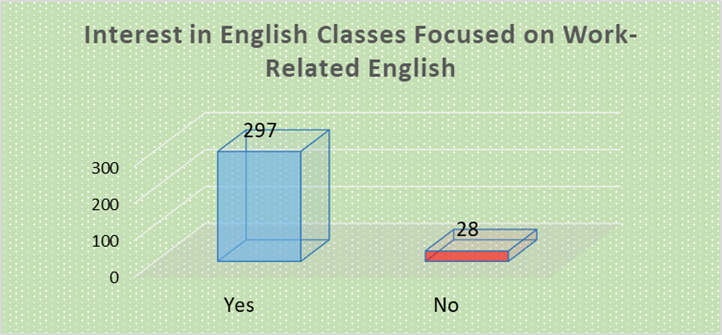
Key findings:
Overwhelming interest in work-oriented language training. A striking 91.4% (n = 297) of participants expressed interest in English classes focused on work-related topics..
2.8.3 Preference For Online Or In-Person Classes
This table provides insights into the preferred mode of delivery for English language instruction among the 325 migrant participants. Understanding these preferences is crucial for designing inclusive and accessible language programs that align with the diverse needs of learners.
Table 22
| Preference for online or in-person classes | Frequency | Percent | Cumulative percent |
|---|---|---|---|
| Online | 77 | 23.7 | 23.7 |
| In-person | 49 | 15.1 | 38.8 |
| Both | 199 | 61.2 | 100.0 |
Key findings:
Strong preference for flexible learning modes. The majority of respondents (61.2%, n = 199) indicated a preference for both online and in-person classes. This suggests a desire for hybrid or blended models that combine the convenience of online learning with the interactive benefits of face-to-face instruction.
Significant preference for online-only provision. 23.7% (n = 77) preferred online classes exclusively. Contributing factors may include flexibility in scheduling, ease of access from home, or the ability to learn at one’s own pace.
2.8.4 English As A Barrier In Job Applications Or At Work
This figure presents a detailed breakdown of which different aspects of the English language pose barriers for migrants in professional settings.
Figure 16: English as a Barrier in Job Applications or at Work
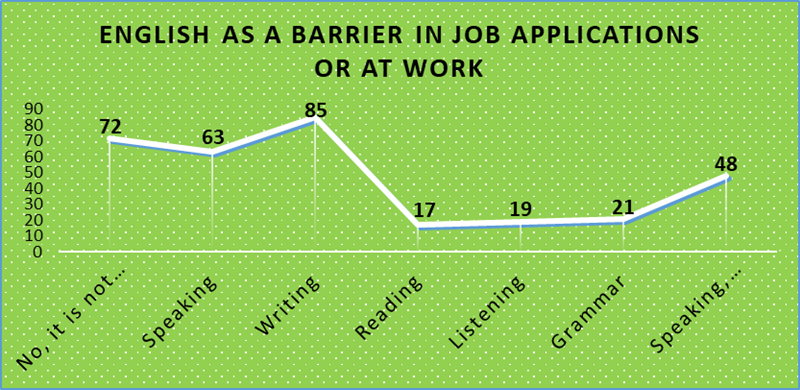
Key findings:
Language is a significant barrier for most migrants. Only 22.2% (n = 72) of participants reported that English is not a barrier in job applications or at work,
Active language skills most common barriers. Not unexpectedly, it is the active language skills, Writing (26.2%) and Speaking (19.4%), rather than the passive skills, Reading and Listening, that appear to be the most challenging.
Compound language difficulties. A notable 14.8% (n = 48) of participants indicated that all core skills – speaking, writing, reading, listening, and grammar – were barriers.
2.8.5 Communication Skills You Would Like To Improve
This dataset explores the specific areas of communication that migrants identify as requiring improvement in the context of their professional life. It highlights not only functional language concerns but also social and cultural integration elements within the workplace.
Table 23
| Communication skills respondents would like to improve | Frequency | Percent | Cumulative percent |
|---|---|---|---|
| Speaking during meetings | 109 | 33.5 | 33.5 |
| Writing emails | 50 | 15.4 | 48.9 |
| Understanding industry-specific vocabulary | 47 | 14.5 | 63.4 |
| Handling phone calls | 26 | 8.0 | 71.4 |
| Understanding workplace culture and etiquette | 37 | 11.4 | 82.8 |
| All of them | 36 | 11.1 | 93.8 |
| I have all the skills necessary | 20 | 6.2 | 100.0 |
Key findings:
Top priority: verbal participation in meetings. The most frequently chosen area for improvement was “Speaking during meetings” (33.5%), signalling discomfort or lack of confidence in formal or structured communication settings. This points to both language fluency and cultural understanding of professional discourse norms as key needs.
Other notable areas of difficulty:
- Writing emails (15.4%) and understanding industry-specific vocabulary (14.5%) are also major concerns. These are crucial for day-to-day communication and highlight the need for occupation-specific language training.
- Understanding workplace culture and etiquette (11.4%) reveals that communication is not solely about language mechanics – it also includes knowing how to behave, when to speak, and how to read social cues in professional environments.
- Telephone communication as a challenge. Handling phone calls (8.0%) was identified by a smaller group, but still significant. This task is often more intimidating due to the lack of visual cues and need for immediate comprehension and response.
2.8.6 Need For Additional Training Or Skill Development
This data reveals what types of training migrants believe they need to better adapt to life and work in the UK. The responses indicate a strong focus on language acquisition, followed by more technical and job-specific competencies.
Figure 17: Need for Additional Training or Skill Development
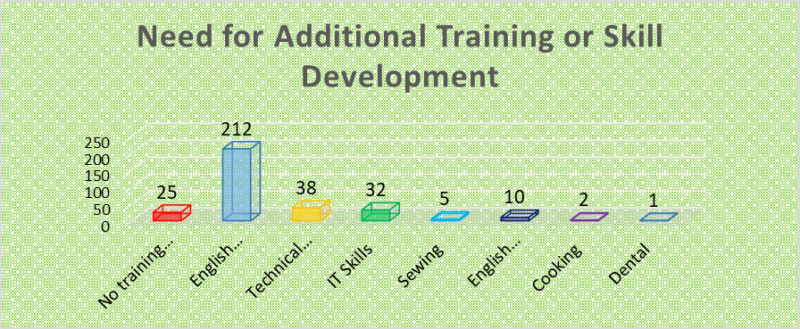
Key findings:
Overwhelming demand for English language training. 65.2% (n = 212) of respondents identified English language as their most pressing training need. This emphasizes the need for continued investment in ESOL provision in the context of employment
Technical skills (11.7%) and IT skills (9.8%) also ranked notably. A smaller group (3.1%) indicated needing a combination of English, technical, and IT skills, pointing to a multidimensional gap that may hinder professional mobility or integration.
2.8.7 Skills Needing Improvement For Educational Opportunities
1. Technical and Trade Skills
In our group discussion, participants were asked to share the skills they felt they needed to develop or enhance in order to access better opportunities in the UK. Many migrants, particularly those who arrived through the Ukraine and Afghan resettlement programs, emphasized the importance of gaining practical, in-demand skills to secure stable employment and integrate into society. Participants highlighted the following areas for improvement:
Many participants expressed a strong interest in learning hands-on technical skills, as these professions often offer job security and do not always require high-level English proficiency. These included:
- Car mechanics. Many participants, particularly men, noted that car repair is a valuable trade in the UK, but they lack access to formal training or apprenticeships.
- Plumbing. Some participants mentioned that plumbing courses could help them find well-paid work, but they were unsure of how to gain proper certification in the UK.
- Electrical work. A few participants, especially men, mentioned an interest in electrical courses, as they saw this as a promising career with good pay and job security, but faced challenges with accessing affordable training programs.
- Construction. Several individuals from Ukraine and Afghanistan expressed a desire to work in the construction industry, but they needed specific qualifications and training, such as health and safety courses, to enter this field.
2. Driving and Transportation Skills
Many migrants highlighted the importance of driving qualifications to increase job opportunities, particularly for roles that do not require advanced English skills. These included:
- Driving courses for buses, lorries, and trailers. With a shortage of HGV (Heavy Goods Vehicle) drivers in the UK, many participants saw this as a valuable career path but were unaware of how to get licenses or secure funding for training.
- Taxi and private hire vehicle driving. Some migrants expressed interest in becoming taxi drivers or private hire vehicle drivers, seeing this as a flexible job option, but they were unsure about licensing requirements and training availability.
- Forklift operator training. Many participants with experience in manual labour were interested in forklift operation but needed certification and hands-on experience.
3. Digital and IT Skills
Several participants, particularly younger ones, recognized the need to improve their IT skills to access modern job markets. Specific areas of interest included:
- Cybersecurity courses (CISSP, CEH). Some participants had prior experience in IT or wanted to enter the cybersecurity field but found it difficult to access affordable, accredited courses in the UK.
- Web development and coding. Several individuals were interested in learning programming languages and web development skills, but they lacked affordable access to these courses.
- Data analysis and management. Some participants wanted to improve their data management skills to work in various sectors, including finance and healthcare, but didn’t know where to find suitable training.
4. Practical and Vocational Skills
Participants, particularly women, highlighted skills that could help them gain employment or start their own businesses, such as:
- Sewing courses. Many Afghan and Ukrainian women expressed interest in sewing and tailoring, either for employment in textile industries or to start home-based businesses.
- Cooking. Some participants wanted to improve their cooking skills to work in restaurants or start catering businesses, particularly those familiar with Afghan and Ukrainian cuisine.
- Hotel management. Given the large hospitality industry in the UK, some participants saw hotel management training as a way to secure stable employment.
- Hairdressing and beauty therapy. Some women, especially from Afghanistan and Ukraine, expressed an interest in learning hairdressing or beauty therapy as a way to become self-employed or find work in the beauty industry.
- Nail technician courses. In addition to hairdressing, some participants wanted to learn about nail technology, which they saw as a high-demand skill in the UK, particularly for those looking to run their own business.
5. Educational and Community Support Skills
Some participants were interested in careers that would allow them to contribute to their communities and help other migrants. These included:
- Teaching. Some Afghan and Ukrainian migrants had prior experience as teachers but struggled to transfer their qualifications to the UK system. They wanted guidance on retraining and certification pathways.
- Childcare. Several women expressed interest in working in nurseries or as childminders but were unsure how to obtain the necessary qualifications.
- Translation and interpretation. Given the language barriers many migrants face, some wanted to become community interpreters but needed access to accredited courses and certification programs.
- Social work and community support. A few participants, particularly those with backgrounds in psychology or social services, expressed interest in social work and community support roles but needed guidance on UK-specific qualifications and pathways.
- Elderly care. Some participants, particularly women, showed an interest in caregiving and elderly care roles but found it difficult to access training or certifications, which are required to work in care homes or provide home care.
Challenges and Barriers
While participants were eager to develop these skills, they also highlighted key challenges, including:
- Limited awareness of training programs. Many did not know where to find high-quality courses or apprenticeships.
- High costs of professional training. Some courses, particularly in driving and IT, were too expensive for migrants without financial support.
- Language barriers. Many vocational courses require a good level of English, making it difficult for those still improving their language skills.
- Inflexible course schedules. Parents, particularly single mothers, found it difficult to attend courses that did not offer evening or weekend options.
- Recognition of prior learning. Several participants mentioned that their skills and qualifications from their home countries were not recognized in the UK, and they felt discouraged by the lack of opportunities to transfer their knowledge into meaningful work.
2.8.8 ESOL And Other Skills Needs: Recommendations
- Work with all ESOL providers to continue expanding Devon’s ESOL offer. With a large majority citing English training as a need, there is a clear mandate for accessible, affordable, and job-focused English courses.
- Targeted outreach. While the majority are engaging in English classes, the large minority who are not should be a focal point for intervention. Policymakers and service providers should investigate and address the barriers preventing participation, particularly in rural or underserved districts.
- Integration and employability. Given that English proficiency is a strong predictor of employment success, increasing participation in language classes is critical. Tailored programs, including job-specific or industry-targeted English instruction, could further support migrants in accessing meaningful employment.
- Curriculum development. The data strongly support the development and expansion of job-specific English training programs, especially in sectors where migrant workers are concentrated (e.g., healthcare, construction, hospitality, and agriculture).
- Employer involvement. Partnerships with employers could help tailor these programs to meet actual workplace communication needs, improving both worker performance and employer satisfaction.
- Access and delivery. Given the high demand, local authorities and training providers should prioritize accessible and flexible delivery formats, such as evening or online classes, multilingual support staff, and childcare services, to ensure uptake.
- Hybrid course design. Given the dominant preference for both modalities, institutions should prioritize the development of hybrid English language programs, which allow learners to choose formats based on their preferences.
- Cultural and emotional considerations. As well as teaching English, in-person classes often also fulfill important social and emotional needs which are particularly important for migrants adjusting to new environments.
- Scheduling anad accessibility. Flexibility in class times and formats can further enhance participation, especially for migrants juggling work, family responsibilities, or other barriers to consistent attendance.
- Targeted language support. The prominence of writing and speaking difficulties indicates a need for job-specific English training, focusing on oral fluency, written communication, and workplace terminology.
- Holistic learning programs. The 14.8% facing all-round language difficulties would benefit from intensive, multi-skill ESOL programs and potentially wraparound support services (e.g., mentorship, confidence-building, translation tools).
- Employment services and advocacy. Employers and job support services should be trained to recognize how language barriers intersect with employment outcomes, and be encouraged to provide reasonable accommodations or additional support for applicants with limited English proficiency.
- Meeting-oriented training. Soft-skills workshops focusing on participation in meetings, presentations, and negotiations could be highly beneficial for the largest group of concerned individuals.
- Functional writing skills. Email writing and vocabulary development should be embedded into ESL programs to better align with professional needs.
- Cultural competency integration. Communication training should also address workplace etiquette and culture, providing insights into unwritten norms and expectations.
- Supportive workplaces. Employers should consider onboarding practices, mentorship programs, and peer-led communication workshops that address these concerns.
- Integrated skills training. Programs should consider bundling language learning with vocational and digital skill development, especially for those with aspirations in technical fields.
- Career guidance services. Tailored career planning could help individuals who seek niche skills (like sewing or dental) find appropriate pathways, apprenticeships, or certifications.
Chapter Three: Discussion, Conclusion and Recommendations
3.1 Discussion
The findings of this study provide a comprehensive view of the multifaceted challenges that migrants face in the United Kingdom, specifically in Devon, as they navigate the labour market, access essential services, and seek long term integration. These challenges, deeply embedded in structural inequalities and compounded by personal, social, and economic factors, underscore the need for targeted, context sensitive policy interventions.
3.1.1 Labour Market Integration And Employment Barriers
The quantitative data clearly show that despite the majority of migrants (88.9%) having employment experience in their countries of origin, only 52% have successfully transitioned into the UK labour market. This is consistent with the findings of the Migration Observatory (2024), which highlight the underutilization of migrant skills due to systemic barriers, including the non-recognition of foreign qualifications and the absence of professional networks (Home Office, 2025b). Many respondents reported being unable to secure jobs commensurate with their qualifications, with only 0.9% holding permanent contracts and 14.2% working full-time, while a significant 48.0% were in precarious, non-contractual positions. These employment patterns reflect the broader trend of migrant deskilling identified in prior research (Devlin, 2023).
Qualitative insights reinforce these findings, revealing deep frustrations among highly skilled migrants unable to access positions that match their expertise. For instance, a PhD holder in our focus groups expressed dismay at being repeatedly offered only low-skilled roles by job centers. This echoes Berry’s (1997) acculturation theory, which emphasizes the psychological distress caused by a loss of professional identity and status during the migration process.
3.1.2 Skills Gaps And Language Barriers
Language proficiency remains a critical barrier to employment, with 61.8% of migrants identifying it as a primary obstacle. The high demand for work-oriented English training (91.4%) further supports this point, aligning with findings by the Home Office (2025a) that language barriers significantly impede migrant labour market integration. Despite this demand, only 32.0% of participants reported receiving any career development support, highlighting a significant gap in available training programs.
Moreover, the need for technical skills remains pressing, with 54.8% lacking specific technical competencies, reflecting the challenges of aligning migrant skill sets with UK labour market demands (Home Office, 2025b). This gap underscores the importance of targeted vocational training and credential recognition, as emphasized by Devon County Council’s (2023) Skills and Employment Strategy.
3.1.3 Healthcare Access And Wellbeing
Healthcare access remains a critical concern, with 31.7% of migrants reporting unmet dental needs and 24.6% lacking general medical support. This is consistent with the broader challenges identified in national reports (Home Office, 2025a), which note that complex healthcare systems, high costs, and language barriers significantly hinder migrant access to essential services. Mental health issues are also prevalent, with 30.8% of respondents indicating that emotional distress significantly impedes their job search. These findings align with Berry’s (1997) theory of acculturative stress, which links poor mental health to the pressures of cultural adaptation and economic insecurity.
3.1.4 Housing Instability
Housing remains another critical area of concern. While 44.6% of respondents reported adequate housing, 29.5% cited high rent as a significant barrier, and 13.2% indicated active housing instability. This aligns with the Migration Observatory (2024), which has documented the disproportionate housing challenges faced by migrants in high-cost regions like Devon. Housing insecurity not only impacts physical wellbeing but also hinders labour market participation, as unstable living conditions reduce job search effectiveness and increase financial vulnerability (Home Office, 2025a).
3.1.5 Recognition of Foreign Qualifications and Professional Networks
A significant barrier to employment for many migrants is the non-recognition of foreign qualifications. With 61.5% of respondents lacking professional references, this issue severely limits their employability. Crenshaw’s (1989) intersectionality framework helps explain this challenge, as migrants often face overlapping disadvantages, including racial and ethnic bias, that compound their difficulties in gaining professional recognition.
3.1.6 Social Integration And Long-Term Stability
The desire for long-term stability is evident, with 68.0% of respondents intending to remain in their current location. However, this stability is often undermined by employment insecurity and housing challenges, reinforcing the need for comprehensive integration policies that address both economic and social dimensions (Home Office, 2025a).
3.1.7 Policy Implications And Recommendations
These findings point to several critical areas for policy intervention:
- Credential recognition. Establish streamlined pathways for the recognition of foreign qualifications, including fast-track assessment services (Home Office, 2025b).
- Targeted language training. Expand job-specific English training to address the high demand for workplace communication skills (Devon County Council, 2023).
- Integrated support systems. Link healthcare, employment, and housing services to provide holistic support for migrant integration (Home Office, 2025a).
- Professional network development. Foster mentorship programs and networking opportunities to bridge the social capital gap faced by many migrants (Berry, 1997).
- Employment rights education. Provide targeted information on worker rights and anti-discrimination laws to empower migrants and reduce workplace exploitation (Crenshaw, 1989).
By addressing these critical areas, policymakers can significantly improve the integration experiences of migrants in Devon, promoting both economic productivity and social cohesion.
3.2. Conclusion
The comprehensive findings of this study underscore the complex and interconnected challenges faced by migrants in integrating into the local labour market. From demographic characteristics to cultural, social, economic, and health-related obstacles, each aspect reveals critical insights into the multifaceted barriers that hinder successful employment and broader societal inclusion. The data highlights the importance of targeted support measures, including skills recognition, language training, culturally sensitive healthcare, and affordable housing, as essential components for enhancing migrant well-being and economic contribution. By addressing these systemic challenges, policymakers and local governments can create more inclusive and supportive environments, fostering both individual success and regional economic growth. The following sections provide a detailed synthesis of these findings, offering practical recommendations to bridge the gaps identified and promote a more equitable and prosperous society for all.
3.2.1 Demographic Analysis
The demographic analysis from Section 1 provides critical insights into the migrant population in Devon and surrounding counties, highlighting key characteristics that directly influence employment outcomes and integration challenges. The data reveals a predominantly female migrant population (81.5%), with most respondents falling within the 30-49 age range (77.9%), reflecting a workforce primarily in its productive years. This gender and age profile suggests a strong potential for economic contribution but also indicates potential barriers related to family care responsibilities and mid-career transition challenges. Additionally, the overwhelming majority of respondents are Ukrainian (93.5%), often recent arrivals under the “Home for Ukraine” visa scheme, which profoundly shapes their employment experiences and support needs.
Given this demographic context, it is crucial to examine the cultural and work-cultural challenges that further shape the employment experiences of this group.
3.2.2 Cultural And Work-Cultural Challenges And Discrimination
The analysis of cultural and work-cultural challenges faced by migrants in the UK highlights critical barriers to effective workplace integration and career progression. Key challenges include language and accent differences (18.2%), dealing with cultural biases or stereotypes (15.7%), and managing work-life balance (10.8%). These findings reveal that many migrants struggle not just with language proficiency, but also with deeper issues of social acceptance, cultural misunderstanding, and emotional strain. For instance, the need to conform to unfamiliar workplace norms, such as maintaining a consistently positive demeanor, can contribute to mental health strain, as highlighted in the focus group discussions. Additionally, a significant portion of respondents (45.5%) reported experiencing discrimination in the job market, indicating that biases related to nationality, gender, and visa status remain substantial barriers to fair employment opportunities.
As these cultural challenges often extend beyond the workplace, the social and integration experiences of migrants must also be considered.
3.2.3 Social And Integration Challenges
The findings from Section 3 reveal that social and integration challenges remain significant barriers to the full participation of migrants in Devon. A striking 61.5% of respondents reported having no social or network support, highlighting widespread isolation that can hinder long-term integration and mental health. This isolation is often compounded by language barriers, unfamiliarity with local customs, and a lack of culturally relevant social programs. Many participants described difficulties in forming meaningful connections, citing mistrust from local communities and limited opportunities for social engagement as key obstacles.
However, social challenges are closely intertwined with economic factors, making it essential to explore the financial pressures faced by migrants as they seek stability and security.
3.2.4 Economic Challenges
The economic challenges faced by migrants in Devon, as revealed in this section, highlight significant barriers to achieving financial stability and career growth. Key issues include transportation problems, high council taxes, elevated utility costs, low wages, and difficulties securing stable housing. Many migrants also reported challenges in finding reliable employment, with 83.1% having applied for jobs but only 52% currently employed. This gap reflects systemic obstacles such as lack of UK work experience, credential recognition issues, and language barriers. Additionally, many migrants struggle with job satisfaction, with only 14.5% expressing positive satisfaction with their current employment, while 48.0% remain unemployed.
Economic stability is closely linked to overall wellbeing, making it important to also consider the health and psychological challenges that can impact labour market integration.
3.2.5 Health And Wellbeing Challenges
The analysis of health and wellbeing challenges among migrants in Devon reveals critical gaps in healthcare access and mental health support. While 39.4% of respondents reported that their mental or emotional state did not impact their job search, a substantial 30.8% indicated significant psychological barriers, highlighting the emotional strain faced by many migrants. This mental health burden, often linked to loss of professional status, cultural isolation, and language challenges, presents a major obstacle to effective labour market integration. Additionally, the data reveals a pronounced unmet need for healthcare services, particularly dental care (31.7%) and general medical support (24.6%), with only 27.7% stating they receive all the healthcare services they need. Language barriers (24.6%), high costs (11.1%), and long waiting times (11.7%) further compound these challenges, restricting access to critical medical care and potentially exacerbating long-term health issues.
Beyond personal wellbeing, stable and secure housing is another essential factor in achieving successful integration.
3.2.6 Housing And Accommodation Challenges
The analysis of housing challenges faced by migrants in Devon reveals significant concerns related to affordability, housing quality, and stability. While 44.6% of participants reported their housing as adequate, a notable 29.5% identified high rent as a major issue, reflecting the financial pressures that many migrants face. Poor building conditions (5.8%), distance from work or school (4.9%), and lack of basic amenities (1.5%) were also highlighted as critical barriers to stable living conditions. Additionally, 13.2% of respondents are actively seeking new housing, indicating a substantial level of housing instability within this population.
Housing stability is closely tied to employment opportunities, which often depend on the recognition and application of professional skills.
3.2.7 Skills Challenges
The analysis of skills challenges among migrants in the UK reveals significant barriers to labour market integration. Despite the fact that 88.9% of participants were employed in their home countries and 56.3% possess work-related qualifications, many face challenges in transferring their skills to the UK context. The lack of recognized qualifications, limited English proficiency, and absence of professional networks contribute to persistent underemployment.
To address these skill-related gaps, it is important to focus on specific educational needs that can enhance employability.
3.2.8 Skills Needing Improvement For Educational Opportunities
The analysis of skills needing improvement among migrants reveals a critical gap in foundational competencies, particularly in English language proficiency (65.2%), technical skills (11.7%), and IT skills (9.8%). These gaps not only limit employment opportunities but also hinder broader social integration.
3.3. Recommendations
The following recommendations aim to address the diverse and interconnected challenges identified throughout the study, providing a comprehensive framework for supporting migrant integration in the UK. These proposals emphasize the need for targeted, context-specific interventions that address the unique demographic, cultural, social, economic, health, housing, and skill related needs of migrant populations. By prioritizing gender sensitive employment support, credential recognition, culturally competent healthcare, affordable housing, and professional skill development, these recommendations aim to enhance the long term economic stability and social inclusion of migrants. Effective implementation of these strategies will not only improve individual outcomes but also contribute to broader regional economic growth and social cohesion, fostering a more inclusive, resilient, and prosperous society for all.
3.3.1 General Information
- Gender Sensitive Employment Support
- Develop flexible work programs and childcare support to address the unique challenges faced by female migrants, who form the majority of this population.
- Encourage male participation in integration programs to ensure balanced representation and support.
- Age Specific Employment Strategies
- Focus on mid-career retraining and upskilling for the dominant 30-49 age group, including professional licensing support and industry specific training.
- Create targeted outreach for younger migrants (17-29) and older adults (50+) to improve labour market access.
- Credential Recognition and Professional Integration
- Implement fast-track systems for foreign degree recognition, particularly for the highly educated Ukrainian population, to prevent skill underutilization.
- Establish partnerships with local employers to match skilled migrants with appropriate job opportunities.
- Mobility and Transportation Support
- Provide subsidized driving lessons, translation support for theory tests, and access to affordable vehicle options to overcome transportation barriers.
- Develop local transport support schemes, including community car shares and subsidized travel passes.
- Language and Digital Skills Enhancement
- Leverage the high internet penetration rate to offer online language courses, digital training, and virtual career counseling.
- Focus on sector-specific language programs (e.g., medical, engineering) to enhance professional communication skills.
- Personal Data Utilization for Employment Matching
- Use the strong data-sharing consent to build individualized employment pathways, ensuring data security and GDPR compliance.
- Develop multilingual digital platforms for job matching, training resources, and career support.
- Culturally Sensitive Integration Programs
- Recognize the diverse linguistic backgrounds in service design, including support for smaller language groups like Dari, Pashto, and Polish.
- Employ peer mentors from major migrant communities to strengthen community engagement and trust.
3.3.2 Economic Challenges
- Employment Support and Career Pathways
- Expand targeted job placement services, mentorship programs, and skill development workshops to bridge the gap between migrants’ qualifications and UK labour market demands.
- Provide sector-specific training, particularly in high-demand areas such as healthcare, engineering, and technology.
- Credential Recognition and Sakill Validation
- Establish faster, more affordable pathways for recognizing foreign qualifications to reduce underemployment and skill underutilization.
- Promote partnerships with local employers to support credential recognition and work experience placements.
- Transportation and Mobility Support
- Develop affordable transportation options, including subsidized public transport passes and support for obtaining UK driving licenses.
- Address regional transport gaps that limit employment opportunities for migrants living in more isolated areas.
- Financial Literacy and Stability Programs
- Offer financial literacy courses to help migrants manage high living costs, council taxes, and utility bills.
- Create financial support schemes to assist with housing stability and long-term financial planning.
- Entrepreneurship and Self-Employment Support
- Provide access to small business loans, training, and mentorship for migrants interested in starting their own businesses.
- Foster networks of migrant entrepreneurs to share resources, support, and opportunities.
- Job Satisfaction and Career Progression
- Implement initiatives to improve job quality, including fair pay, career progression pathways, and better working conditions.
- Promote workplace inclusivity and employee support to reduce turnover and improve job satisfaction.
3.3.3 Cultural And Work-Cultural Challenges And Discrimination
- Enhanced Cultural Competency Training
- Develop comprehensive cultural adaptation programs for both employers and migrant employees, focusing on communication styles, workplace etiquette, and managing cultural biases.
- Provide sector-specific training to address the unique cultural dynamics in high-demand industries like healthcare, construction, and education.
- Bias Reduction and Inclusive Workplace Policies
- Implement anti-discrimination training and awareness programs to reduce bias in hiring and workplace interactions.
- Encourage anonymous reporting mechanisms and support networks for those experiencing discrimination or exclusion.
- Mental Health and Emotional Support
- Recognize the psychological strain associated with cultural adaptation and provide mental health resources, including counseling and peer support groups, to reduce isolation and workplace stress.
- Tailored Language and Communication Support
- Expand access to language training that addresses not just grammar, but also tone, workplace jargon, and cultural nuances.
- Develop mentorship programs to help migrants navigate workplace communication and social integration.
- Promoting Diverse Team Dynamics
- Foster diverse work environments through team-building activities, cross-cultural exchanges, and leadership training for migrants to reduce isolation and promote collaboration.
- Ongoing Research and Feedback Mechanisms
- Regularly assess the effectiveness of cultural adaptation programs and incorporate migrant feedback to refine support services.
- Promote community-led initiatives that provide a platform for migrants to share their experiences and contribute to policy development.
3.3.4 Social And Integration Challenges
- Community Network Development
- Establish centralized resource hubs to connect migrants with local support networks, including cultural associations, social groups, and mentorship programs.
- Promote initiatives that foster meaningful, long-term relationships, such as intercultural dialogue forums, community events, and volunteer opportunities.
- Capacity Building for Support Organizations
- Strengthen the capacity of local charities and community organizations to provide more consistent, culturally responsive support to migrants.
- Offer training for community leaders to enhance their ability to address the unique challenges faced by diverse migrant populations.
- Reducing Social Isolation
- Implement programs aimed at reducing social isolation, including peer support networks, language exchange groups, and interest-based clubs that encourage social interaction.
- Improving Trust and Social Cohaesion
- Design public awareness campaigns to reduce stigma and promote understanding between migrants and local residents.
- Encourage collaborative projects that bring together diverse groups to work toward shared community goals.
- Monitoring and Continuous Improvement
- Regularly assess the effectiveness of social integration programs and adapt them based on migrant feedback and emerging needs.
- Use data-driven approaches to track integration progress and identify areas for improvement.
3.3.5 Health And Wellbeing Challenges
- Improved Healthcare Access
- Increase funding for NHS dental services and general medical care to reduce waiting times and address cost barriers.
- Simplify healthcare registration processes and provide clear, multilingual guidance to improve service accessibility.
- Mental Health Support
- Establish trauma-informed mental health services specifically for migrants, including counseling, peer support, and group therapy.
- Create resilience-building programs that address the unique psychological challenges of displacement and professional transition.
- Integrated Health and Employment Support
- Link employment services with healthcare providers to ensure that mental health and physical wellbeing are integrated into job readiness programs.
- Provide mental health training for job counselors and employers to promote supportive workplace environments.
- Continuous Monitoring and Feedback
- Regularly assess healthcare access and satisfaction among migrant populations to identify gaps and adapt services accordingly.
- Use data-driven approaches to monitor the long-term health outcomes of migrants and guide public health planning.
3.3.6 Housing And Accommodation Challenges
- Affordable Housing Initiatives
- Increase the availability of affordable housing units specifically for migrants and low-income families.
- Develop rent assistance programs to reduce financial burdens and improve housing stability.
- Housing Quality and Safety Improvements
- Implement stricter regulations and regular inspections to ensure rental properties meet basic health and safety standards.
- Provide support for landlords to improve building conditions, particularly in older housing stock.
- Proximity to Employment and Education
- Promote the development of affordable housing near major employment centers and educational institutions to reduce transportation barriers.
- Create incentives for employers to provide housing support or travel allowances for migrant workers.
- Long-Term Housing Security
- Provide pathways to permanent residency and long-term housing stability for migrants, reducing the stress of temporary or insecure housing arrangements.
- Collaborate with housing associations to create flexible, long-term rental options that cater to the diverse needs of migrant families.
- Community-Based Housing Support
- Develop localized housing support services that connect migrants with available resources, including legal aid, financial planning, and tenant rights education.
- Foster partnerships between local councils, NGOs, and private landlords to create more inclusive housing solutions for migrants.
3.3.7 Skills Challenge
- Credential Recognition and Validation
- Establish streamlined pathways for recognizing foreign qualifications and skills, including fast-track assessment services and bridging programs.
- Develop industry-specific certification programs that align migrant skills with UK labour market needs.
- Language and Communication Training
- Provide intensive English language training focused on workplace communication and technical terminology.
- Offer sector-specific language support for professionals in high-demand fields like healthcare, engineering, and IT.
- Technical Skills Development
- Invest in vocational training and apprenticeships to close technical skills gaps and improve employability.
- Partner with local businesses to offer practical, hands-on experience through internships and work placements.
- Career Development Support
- Provide personalized career counseling, CV writing support, and interview preparation services to enhance job readiness.
- Develop digital literacy programs to ensure migrants can access online job markets and application platforms.
- Inclusive Employment Policies
- Encourage employers to adopt diversity-sensitive recruitment practices that recognize non-traditional career pathways.
- Promote the use of skills-based assessments as alternatives to conventional reference checks.
3.3.8 Skills Needing Improvement For Educational Opportunities
- Language Proficiency Support
- Expand access to advanced English language courses focused on professional and technical terminology.
- Provide workplace-oriented language training to bridge communication gaps in specific industries.
- Technical and Vocational Training
- Develop targeted training programs in high-demand sectors like construction, healthcare, IT, and logistics.
- Offer financial support and scholarships to reduce the cost barrier for professional certifications.
- Digital Skills Enhancement
- Promote digital literacy programs to enhance employability in tech-driven industries.
- Provide practical IT training, including cybersecurity, data analysis, and coding, to meet labour market needs.
- Flexible Learning Options
- Create hybrid training models that combine online and in-person learning to accommodate diverse schedules.
- Offer modular courses that allow migrants to build skills progressively over time.
- Career Pathway Support
- Provide career counseling, mentorship, and apprenticeship opportunities to guide migrants in their professional development.
- Facilitate the recognition of prior learning and work experience to accelerate career transitions.
3.3.9 Stability And Family-Related Goals
Migrants increasingly view success as a balance between career goals and personal growth gaining new skills, achieving language mastery, advancing education, and nurturing hobbies.
Such holistic aspirations reflect a mature and integrative vision of life in the UK.
- Finding stable jobs related to previous experience
- Building a stable career close to home
- Flexibility and mobility for work (getting driving license and car)
- Establishing community-based careers
References
- Berry, J. W. (1997). Immigration, acculturation, and adaptation. Applied Psychology, 46(1), 5-34.
- Crenshaw, K. (1989). Demarginalizing the Intersection of Race and Sex: A Black Feminist Critique of Antidiscrimination Doctrine, Feminist Theory and Antiracist Politics. University of Chicago Legal Forum, 1989(1), 139-167.
- Devlin, C. (2023). Employment Barriers for Migrants in the UK: A Comprehensive Review of Language and Skills Gaps. Migration Policy Journal, 15(3), 243-259.
- Devon County Council. (2023). Migration and resettlement.
- Devon County Council. (2023). Skills and Employment Strategy for the Devon Region. Devon County Government Publications.
- Home Office. (2025a). Immigration white paper to reduce migration and strengthen border.
- Home Office. (2025a). Migrant Integration in the United Kingdom: Challenges and Opportunities. Home Office Research Report.
- Home Office. (2025b). New English language and UK citizenship requirements for migrants as part of government crackdown.
- Home Office. (2025b). Recognizing Foreign Qualifications in the UK: Policy Review and Recommendations. Home Office Policy Brief.
- Migration Observatory. (2024). Migrants in the UK Labour Market: Employment, Skills, and Wages. University of Oxford, Migration Observatory Reports.
- Migration Observatory. (2024). Work visas and migrant workers in the UK. Retrieved from
- Rawls, J. (1971). A Theory of Justice. Harvard University Press.