Apprenticeships combine practical training in a job with study. They can take between 1 and 4 years to complete depending on their level. As an apprentice, you will be working at least 30 hours per week and will receive pay at National Minimum Wage.
You will be studying for a national qualification either in your place of work or classroom-based, this can be for one day a week or perhaps on a block release basis.
Levels of apprenticeship
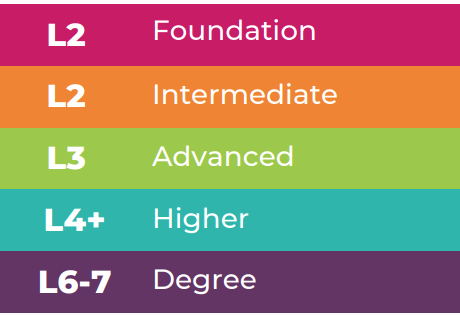
- Foundation apprenticeships
Foundation apprenticeships are qualifications for young people starting their careers.
These are designed for 16 to 21-year-olds (or up to 24 if you have an EHCP, are a care leaver, or have been in prison) who have little work experience or want to explore different career options.
- Intermediate apprenticeships
Intermediate apprenticeships are typically considered to be the same level as GCSEs. They are a fantastic way to get started with your career in an entry level role within an organisation.
- Advanced apprenticeships
Advanced apprenticeships are considered to be the same level as A-levels, T Levels or other level 3 qualifications Many individuals who have completed a level 3 qualification will progress to an advanced apprenticeship to gain workplace experience and knowledge.
- Higher apprenticeships
Higher apprenticeships include qualifications at levels 4 and above. They can be suitable for those looking to progress from level 3 qualifications, including advanced apprenticeships and T Levels.
- Degree apprenticeships
Degree apprenticeships are offered by universities and other Higher Education providers. They contain either a full degree, or a degree-level qualification and go up to master’s level (which is post-graduate).
Who can apply?
You can apply for an apprenticeship while you’re still at school. To start one, you’ll need to be:
- 16 or over
- not in full-time education
- living in England
The key points about apprenticeships
- You’ll work alongside experienced staff
- You gain job-specific skills
- You earn a wage and get holiday pay
- You study towards a related qualification (usually one day a week)
- Apprenticeships are not the same as going to university
- Some careers do not have apprenticeship pathways
Find an apprenticeship
Colleges
Several colleges in Devon offer apprenticeship courses. You can find out more on your local college’s website
- Bicton College apprenticeships
- Exeter and North Devon Colleges Group (ENDC) – Exeter apprenticeships
- Exeter and North Devon Colleges Group (ENDC) – North Devon apprenticeships
- South Devon College apprenticeships
Other training providers
The Devon and Cornwall Training Providers Network (DCTPN) are a not-for-profit organisation with charitable status that operates across Devon, Cornwall and the wider South West peninsula. They aim to promote the value of vocational and technical education, supporting people into work or further study, via education, training and skills.
Lots of information about different training opportunities – including apprenticeships – is available on their website: Devon & Cornwall Training Provider Network – Find Skills and Training Support.
DCPTN work with a diverse group of training providers, including six FE Colleges, three universities, and more than 30 independent training providers. Their Which Way, Your Way provider directory (pages 28–93) lists all the training providers offering in Devon, including those offering apprenticeships).

Which Way, Your Way flipbook

Scan for a map showing apprenticeship vacancies across Devon, Cornwall and further afield.
More information
The Amazing Apprenticeships website has lots of information about apprenticeships, including vacancies in your area.
You can also use the GOV.UK apprenticeship search tool (just add your postcode).
Visit the Devon County Council apprenticeship scheme webpage to find out more about the apprenticeships that we offer.
A guide for disabled people is available at Disability Rights UK – Into Apprenticeships.