Pupils plant 700 trees at their local primary school
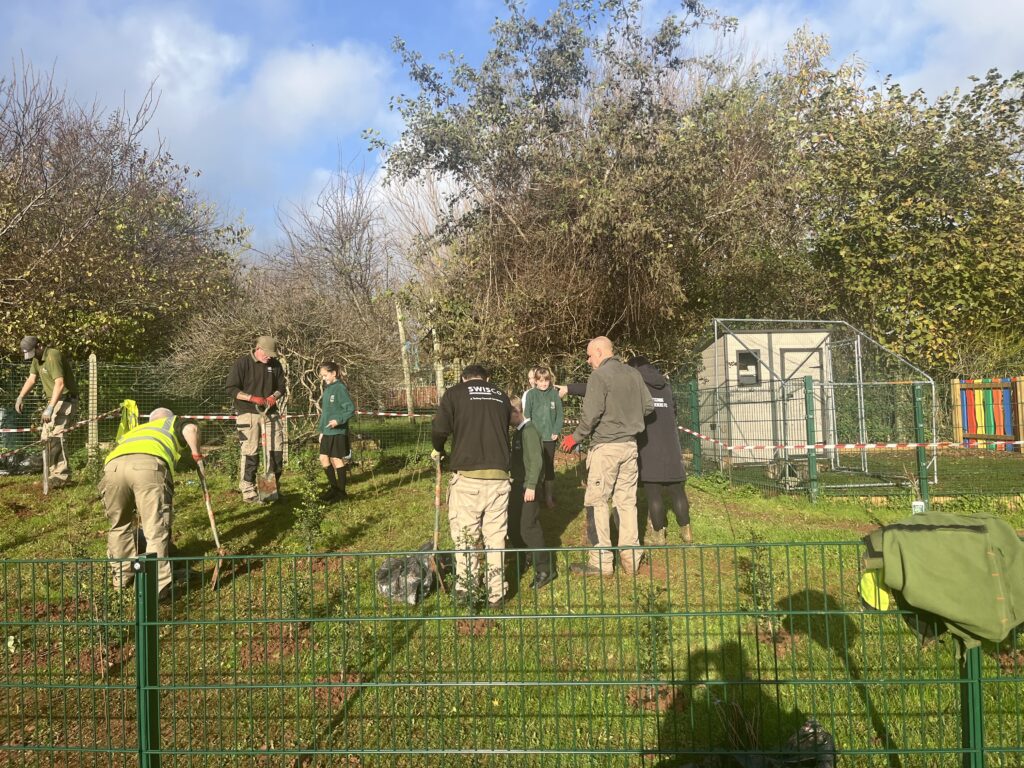

Torbay Council, SWISCo, and pupils at Watcombe Primary School have teamed up to plant 700 trees across 20 native species at the school, converting part of the school grounds into a Miyawaki Forest. Miyawaki Forests are dense, fast-growing woodland patches designed to enhance climate resilience and local biodiversity. This project provided pupils with a hands-on, outdoor learning experience that strengthened their connection to nature, and will transform the school grounds into a vibrant green space rich in wildlife. Pupils really enjoyed taking part in the planting and discovering how Miyawaki Forests play a key role in tackling climate challenges – what a fantastic outcome!
The Miyawaki method is an innovative approach that recreates natural forest conditions in a compact space and short timeframe, making it ideal for urban areas. By planting trees closely together, the method encourages plants to compete for resources, accelerating their growth and resulting in a thriving, flourishing mini-forest.
The benefits of Miyawaki Forests are extensive and include:
- Improved flood resilience through greater water uptake by tree roots and soil
- Greater biodiversity and habitats for wildlife
- Cleaner air quality
- Carbon capture
- Improved health and well-being through increased greenery on school grounds.
DRIP is proud to be supporting this exciting initiative in Torbay as part of our ongoing commitment to driving innovation in flood and climate resilience across Devon. Projects like this demonstrate the power of nature-based solutions in helping communities adapt to climate change, while also inspiring young people to take meaningful environmental action and ensure efforts continue into the future.
We look forward to watching this forest grow and for our partners, Torbay Council, to deliver a second Miyawaki scheme at another local school. We are excited to see the positive impact these mini-forests will have on local communities, school grounds and users, and the natural environment.
Take a look at this video showing the Miyawaki project in action, hear from those involved, and get inspired to support more nature-based activity in our communities.
The DRIP project is funded by DEFRA as part of the £150 million Flood and Coastal Resilience Innovation Programme (FCRIP) which is managed by the Environment Agency to develop and test new approaches to help communities become more resilient to the effects of flooding and climate change.