Introduction
The 2025 Joint Strategic Needs Assessment (JSNA) for Children and Young People with Special Educational Needs and Disabilities (SEND) in Devon provides a comprehensive and evidence-based overview of the current landscape, challenges, and opportunities facing this population. It builds upon previous assessments (2017 and 2021) and reflects the evolving demographic, social, and educational context across the county.
This document is designed to inform strategic planning, commissioning, and service delivery by highlighting key trends in population growth, deprivation, health inequalities, educational outcomes, and access to support services. It draws on a wide range of local and national data sources, including the Office for National Statistics (ONS), NHS England, the Department for Education, and Devon County Council.
The JSNA aims to support a shared understanding among partners across education, health, and social care, ensuring that children and young people with SEND – and their families -receive the right support, at the right time, in the right place. It also identifies areas where targeted interventions and system-wide improvements are needed to reduce inequalities and improve outcomes.
Devon SEND: at a glance
Devon’s children and young people
- 842,000 people live in Devon
- Around 222,000 children and young people are aged 0 to 25 (26% of the population)
- The 0 to 25 population has grown by 6.9% since 2015
- Around 6,000 babies are currently born in Devon every year which is lower than in previous years.
A changing population
- There are 10.4% fewer children aged 0 to 4 than in 2015
- There are 19.9% more young people aged 20 to 25
- Devon has one of the lowest proportions of children in England, with an ageing population increasing demand on public services.
Inequalities shape outcomes
- There is a 15 year difference in life expectancy between Devon’s most and least deprived communities
- 18% to 20% of pupils are eligible for Free School Meals
- Around 18,000 families are on the housing register
- House prices are 8 to 10 times average earnings
- Significant rural and coastal communities experience poorer access to services
- Around 1 in 8 children live in relative poverty, rising to over 1 in 3 in some neighbourhoods.
The scale of SEND in Devon
- Around 1 in 5 pupils in Devon receives additional SEND support
- 15% of all pupils receive SEND support, above the England average of 13.6%
- 6% of all pupils have an Education Health and Care Plan (EHCP) compared with 4.75% nationally, placing Devon significantly above the national average
- More than 10,000 children currently have an EHCP in Devon
- There has been a 117% increase in EHCPs since 2018, compared with 80% nationally
- By 2030 Devon is forecast to have more than 12,000 children and young people with EHCPs, representing a further 24% increase.
- Three areas account for most future growth:
- Neurodiversity
- Speech, Language and Communications Needs
- Social, Emotional and Mental Health.
Together these are expected to account for around 80% of future EHCP growth in Devon.
Neurodiversity
- 67% of children on Devon’s Disability Register have neurodivergent needs
- 27% of EHCPs identify Autism as the primary need
- More than 3,000 children have waited over 52 weeks for an autism assessment
- More than 1,500 have waited over 104 weeks
- Average autism assessment wait: 86 weeks
- 65% of all pupils achieve the expected standard in reading, writing and maths, compared with 12% of pupils with Autism.
- Autism is now the largest single reason for new adult social care enquiries.
Speech, Language and Communication Needs (SLCN)
- 26% of EHCPs identify SLCN as the primary need
- Around 10% of children have persistent speech, language or communication needs
- 90% of early language difficulties are associated with social disadvantage
- More than 2,000 children are waiting over 18 weeks for Speech and Language Therapy
- Around 1,400 have waited over 104 weeks
- 65% of all pupils achieve the expected standard compared with 18% of pupils with SLCN
- Around 1 in 3 mainstream EHCPs identify SLCN as their primary need.
Social, Emotional and Mental Health (SEMH)
- Around 55,500 children and young people in Devon are estimated to have a possible or probable mental health need
- 8% of children on Devon’s Disability Register have SEMH as their primary SEND need
- Nearly 70% of school-aged children have access to a Mental Health Support Team through school
- The number of children waiting over 18 weeks for mental health support increased by 46% between December 2025 and March 2026
- 17% absence among pupils with SEMH
- SEMH accounts for 48% of all EHCP suspensions
- 38% of pupils educated other than at school have SEMH as their primary need.
Education and Inclusion
- Devon has expanded special school capacity by around 70% since 2018, yet almost all special schools are now full
- More than 10% of children with EHCPs attend independent or out-of-county provision, compared with around 6% nationally
- Independent placements have tripled since 2018, increasing transport costs and pressure on the High Needs budget
- Around 1,200 young people with EHCPs are now in further education, an increase of around 50% since 2019
- More children than ever are being supported in mainstream schools, reinforcing the importance of inclusive education and early intervention.
SEND across the life course (0 to 25 years)
SEND begins long before children enter school and continues well beyond compulsory education. The evidence in this JSNA demonstrates that opportunities for prevention, early identification and intervention are greatest in the first five years of life, while successful preparation for adulthood determines whether young people achieve independence, employment, good health and community participation.
Across Devon, demand is increasing at both ends of the pathway: developmental vulnerabilities are evident before school age, whilst increasing numbers of young people with complex needs are remaining in education, progressing into adult health and social care, and requiring support through transition. A whole-system 0 to 25 approach is therefore essential.
What the JSNA tells us about needs in Devon
The evidence shows clear pressures and inequalities across Devon across education, health and social care.
- Early developmental vulnerability is becoming increasingly visible. Communication, social development and emotional regulation difficulties are identifiable before school age, yet Devon receives proportionately fewer early years EHCP requests (22.9%) than England (31.9%), suggesting opportunities for earlier identification and intervention.
- SEND need is rising, particularly Autism, Speech, Language and Communication Needs (SLCN), and Social, Emotional and Mental Health (SEMH), with increasing complexity and overlap between needs.
- Health needs are increasing, with rising demand for neurodevelopmental assessments, children’s mental health support, speech and language therapy, community paediatrics and therapies, placing significant pressure on NHS and community services.
- Needs do not end at age 16. Increasing numbers of young people require coordinated support into further education, employment, housing, adult health and adult social care, making successful transition a critical determinant of long-term outcomes.
- Needs are not evenly distributed. Rural communities, coastal towns and more deprived areas experience higher rates of SEND, poorer health outcomes, school exclusion, persistent absence, Elective Home Education (EHE) and reduced access to services.
- Children experience long waits for autism and ADHD assessments, speech and language therapy, and other specialist health services, delaying support and increasing pressure on education, families and social care.
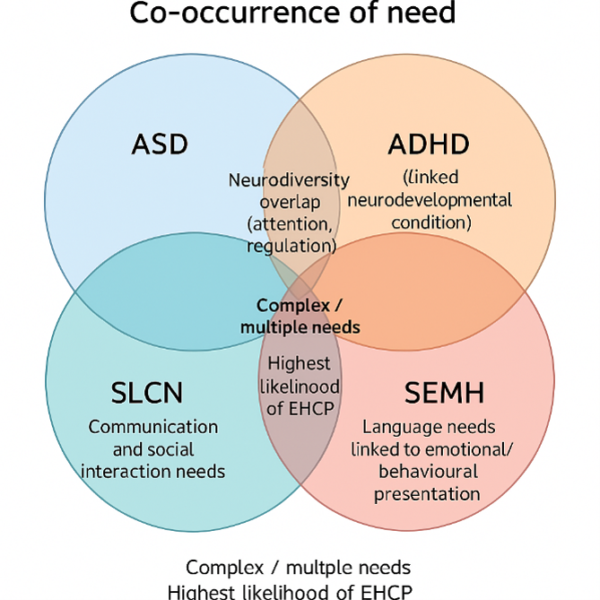
- Children rarely experience a single need. Neurodiversity, speech and language needs, mental health, physical health and wider social factors frequently overlap, requiring joined-up, multi-agency support rather than isolated services.
- System responses have not always kept pace with rising demand, resulting in increasing reliance on statutory processes, rising EHCP numbers, greater demand for specialist provision, and increasing pressure across health, education and care services.
- Adolescent boys are a priority cohort within Devon’s SEND system. Boys are significantly more likely than girls to have an Education, Health and Care Plan (EHCP), with the greatest disparity seen across the three largest areas of SEND need. Devon’s SEND Sufficiency evidence further identifies boys aged 11 to 15, often presenting with combinations of autism, severe learning difficulties and SEMH, as being disproportionately represented within the special school population, highlighting the increasing challenge for mainstream schools in meeting the needs of this group.
How Devon is responding
Devon has developed a connected programme of transformation across education, health, social care and partner organisations, with a shared ambition to identify needs earlier, improve outcomes, strengthen inclusion and reduce crisis-driven escalation.
This includes:
- Devon SEND Strategy (2024–2027)
- SEND Sufficiency Strategy (2025–2030)
- Neurodiversity Strategy (2025–2030)
- Speech, Language and Communication Needs (SLCN) Strategy (2025–2030)
- Children and Young People’s Emotional Wellbeing and Mental Health Strategy
- Early Years Strategy (2024–2034)
- Inclusion & Learning Strategy (2025–2030)
- Preparing for Adulthood Framework
- Families First Partnership Programme
- SEND Transformation Programme
Together these strategies promote:
- Earlier identification and intervention
- Joined-up education, health and care pathways
- Stronger support in mainstream schools and communities
- Better access to health, therapy and specialist services
- Reduced inequalities through place-based, needs-led planning
- Greater partnership with children, young people and families
Early Years: building the foundations
The earliest years offer the greatest opportunity to improve lifelong outcomes.
Evidence within this JSNA shows developmental differences emerging well before school entry, particularly in communication, language, social interaction and emotional regulation. Developmental screening identifies substantial numbers of children below expected thresholds, while Early Language Identification Measure (ELIM) screening demonstrates communication to be one of Devon’s earliest and most common developmental vulnerabilities. Despite this, Devon receives proportionately fewer early years EHCP requests than the national average, suggesting that many children are identified only once they reach school.
The Early Years Strategy, Family Hubs, health visiting, speech and language pathways and inclusive early years settings therefore play a critical role in reducing inequalities, supporting school readiness and preventing later escalation into statutory SEND processes.
Preparing for Adulthood
Preparing for Adulthood is not a transition that begins at 16 but an approach that should underpin support throughout childhood.
Devon is supporting growing numbers of young people into adulthood, with around 1,200 young people with EHCPs now studying in further education: an increase of approximately 50% since 2019.
The Reaching for Independence service currently supports 1,268 young people, 648 young adults receive adult social care, and over 10,800 young people aged 16 to 24 receive Personal Independence Payment (PIP).
However, outcomes remain poor, with only 21 young people (3.2%) known to adult services in paid employment and just five (0.8%) working 16 hours or more each week. These figures reinforce the need to strengthen pathways into employment, independent living, good health, housing and community participation so that young people achieve fulfilling adult lives rather than simply transitioning between services.
The SEND Transformation Programme
The SEND Transformation Programme is the principal delivery mechanism for improving outcomes across the local area. Following a programme reset in 2025, it is focused on four priorities:
- Investing in Devon schools – strengthening inclusive practice and building mainstream capacity so more children receive the right support locally.
- Improving experiences – delivering clearer communication, improved EHCP quality and timeliness, better partnership working, and greater confidence for children, young people and families.
- Reshaping services around localities – bringing education, health, social care and community services together to provide coordinated support closer to where children and families live.
- Building inclusive learning communities – strengthening early intervention, ordinarily available provision, integrated health and therapy support, and collaborative working across schools, health services and local communities.
The programme brings together education, health and care partners to translate strategy into practical delivery, measurable outcomes and long-term improvements for children and young people with SEND across Devon.
Devon’s demographics and inequalities
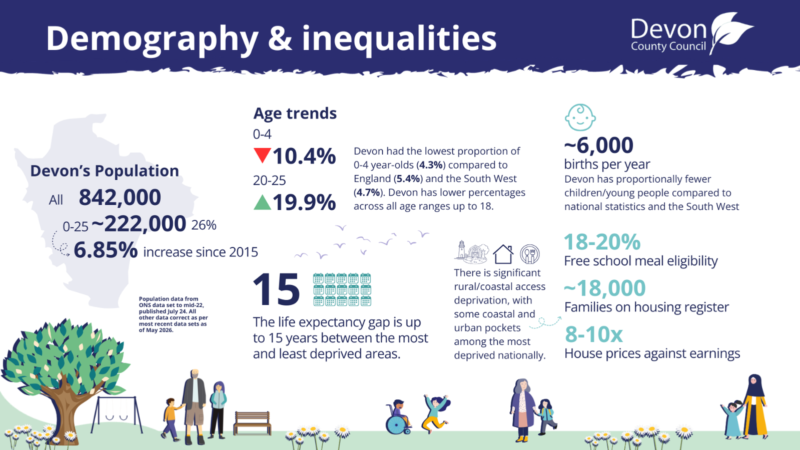
Devon is home to a large and diverse population of children and young people aged 0 to 25, with 221,847 residents in this age group recorded in 2021. This represents a 6.85% increase since 2015, yet this growth masks deep demographic shifts.
The county is experiencing a marked decline in its youngest children: the 0 to 4 population has fallen by 10.43%, reflecting both lower birth rates and young families moving out of the area. At the same time, older children and young adults are increasing, those aged 10 to 14 have risen by 17.52%, and 20 to 25 by nearly 20% (see Table One).
These shifts matter, because they shape the pattern of educational and health demand. Devon is an ageing county overall, and this puts additional pressure on housing and family life, with 75,000 new dwellings planned to accommodate wider growth.
| ONS estimate 2015 | ONS estimate 2021 | % change | |
|---|---|---|---|
| age 0 to 4 | 38,601 | 34,575 | -10.43% |
| age 5 to 9 | 40,769 | 41,164 | 0.97% |
| age 10 to 14 | 38,386 | 45,110 | 17.52% |
| age 15 to 19 | 43,992 | 45,973 | 4.50% |
| age 20 to 25 | 45,876 | 55,025 | 19.94% |
| 0 to 25 Population | 207,624 | 221,847 | 6.85% |
Alongside these demographic changes sits a stark landscape of inequality. Around one in eight children live in poverty, with levels rising above 30% in particular neighbourhoods such as Forches (Barnstaple) and Ilfracombe.
Poverty intersects with rural isolation, meaning that families face long travel distances, reduced service access and higher costs to reach support. Child poverty is highest in northern and coastal districts, with a clear social gradient across Devon. Inequality within districts is extreme (1% to 33%).
- Highest rates: Torridge, North Devon, Exeter
- Mid-range: Teignbridge, Mid Devon, East Devon
- Lowest rates: South Hams, West Devon
These patterns feed into health and educational disparities: life expectancy varies by 15 years between the most and least advantaged communities, ranging from 75 years in Central Ilfracombe to 90 in Exmouth. For children with SEND, these context pressures compound everyday challenges, widening developmental gaps and making early identification harder.
The prevalence of disability and SEND is correspondingly significant. Census data shows that 7,270 children and young people (3.59%) reporting being ‘limited a little or lot by a long term health problem or disability’, with the highest levels in Torridge (4.15%) and the lowest in Exeter (3.06%). These headline figures are only a starting point, because more detailed indicators reveal a far larger cohort with substantial functional need.
By February 2025, 11,312 children in Devon were receiving Disability Living Allowance (DLA), and approximately 80% of these (around 9,050) are estimated to have SEND related needs. These children are overwhelmingly school aged, with 88% between 5 and 15. Patterns are broadly consistent across Devon’s learning localities
- North/Mid Devon accounts for 3,699 cases
- South/West for 3,747
- Exeter/East for 3,866.
| Local authority: district | Count | Population 0-24 | % Population |
|---|---|---|---|
| East Devon | 1,210 | 34,035 | 3.56% |
| Exeter | 1,380 | 45,155 | 3.06% |
| Mid Devon | 710 | 20,910 | 3.40% |
| North Devon | 905 | 23,790 | 3.80% |
| South Hams | 755 | 19,750 | 3.82% |
| Teignbridge | 1,195 | 30,815 | 3.88% |
| Torridge | 635 | 15,285 | 4.15% |
| West Devon | 480 | 12,690 | 3.78% |
| Total | 7,270 | 202,430 | 3.59% |
| Source: 🔗 Disability in England and Wales, 2021 – Office for National StatisticsSource: 🔗 Disability in England and Wales, 2021 – Office for National Statistics |
At locality level:
- North/Mid shows elevated prevalence (3.75%), driven by Torridge and North Devon.
- South/West has the highest prevalence (3.84%), despite a moderate population size.
- Exeter/East has the lowest prevalence (3.27%), potentially reflecting demographic mix, student population effects, and earlier access to support.
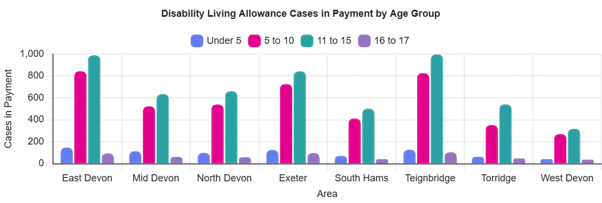
Based on the DWP Disability Living Allowance cases in payment data (February 2025), the highest numbers of children and young people receiving DLA were in East Devon (2,074 cases) and Teignbridge (2,054 cases), while West Devon had the lowest number of recipients (668 cases); across all districts, the largest proportion of claimants were aged 11 to 15 years. (Source: DWP Benefits Statistics, February 2025).
| Under 5 | 5 to 10 | 11 to 15 | 16 to 17 | 18 to 24 | Total | |
|---|---|---|---|---|---|---|
| East Devon | 148 | 843 | 988 | 95 | .. | 2074 |
| Mid Devon | 114 | 523 | 634 | 63 | .. | 1334 |
| North Devon | 99 | 540 | 660 | 60 | .. | 1359 |
| Exeter | 126 | 726 | 842 | 98 | .. | 1792 |
| South Hams | 71 | 412 | 501 | 41 | .. | 1025 |
| Teignbridge | 128 | 825 | 996 | 105 | .. | 2054 |
| Torridge | 63 | 353 | 541 | 49 | .. | 1006 |
| West Devon | 41 | 271 | 318 | 38 | .. | 668 |
| Source: 🔗 DWP benefits statistics: February 2025 – GOV.UK |
Beyond age 16, need does not drop away. In October 2025, 10,872 young people aged 16 to 24 in Devon were in receipt of PIP, and 65 to 70% of these (roughly 7,070 to 7,610 young people) likely have neurodevelopmental or enduring SEND needs requiring sustained support. At the higher complexity end of the spectrum, Devon’s Disabled Children’s Services were working with 1,496 children in March 2025, most commonly with autism, speech, language and communication needs, sensory/physical needs and learning disabilities.
Unsurprisingly, areas with higher child poverty and rural deprivation also tend to show higher SEND need and EHCP prevalence, reinforcing the link between inequality and additional needs.
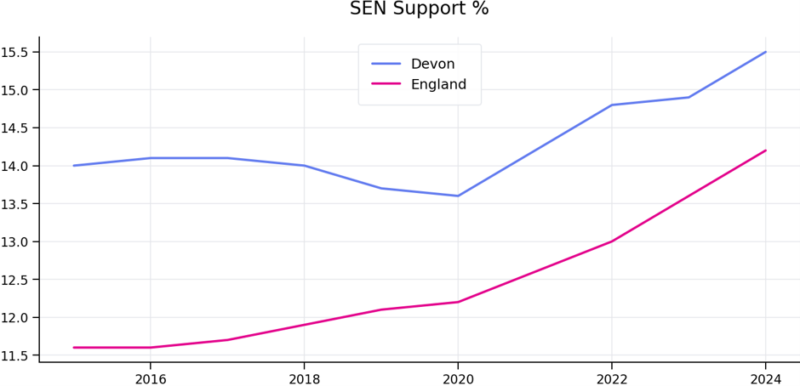
Against this backdrop, demand in schools has risen sharply. SEN Support now accounts for 15.5% of Devon pupils, higher than the 14.2% national average, and has been on an upward trend for a decade. Statutory plans have expanded even more rapidly. Devon runs higher than England across the entire decade, rising to 15.5% vs 14.2% nationally by 2025.
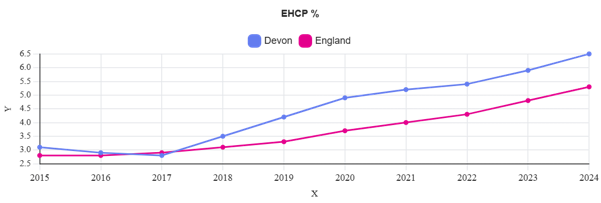
Devon’s EHCP prevalence has reached 6.5%, compared with 5.3% nationally, and the rate of increase since 2018 has been steep: a 117% rise compared with 80% nationally. By December 2025, 10,048 children and young people in Devon had an EHCP.
EHCP requests (gender, age)
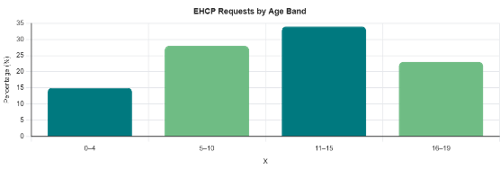
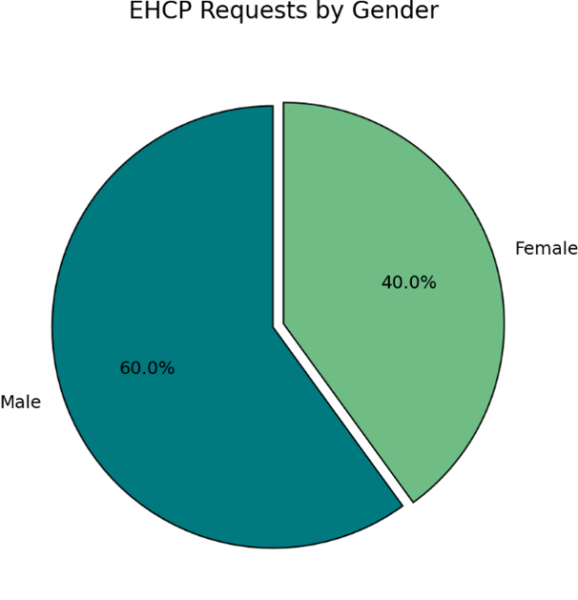
The story is about late identification, gender imbalance, and ethnic underrepresentation.
The types of needs identified within these plans also tell an important story as alluded to above. The majority fall into three areas: autism (27.4%), social, emotional and mental health (26.6%), and speech, language and communication needs (25.8%). Together these categories constitute nearly 80% of all EHCPs.
Devon’s pattern differs slightly from national averages: it has lower proportions of autism but substantially higher proportions of SEMH and SLCN, indicating both later identification and the cumulative emotional impact of unmet need, disadvantage and service gaps.
The demand entering the statutory system is also increasing. In 2024, Devon received 2,265 requests for EHC needs assessments — an amount equivalent to 1.02% of the 0 to 25 population, notably above the national rate of 0.88%. The profile of these requests reveals further variation. Early years requests (0 to 5) make up 22.9%, significantly below the national 31.9%, suggesting that children’s needs are identified later in Devon. Requests peak sharply in the secondary years, with 34% relating to 11 to 15 year olds (compared with 27.5% nationally). This late emerging curve reflects pressures in mainstream settings, rising adolescent mental health need, and delays in early support. Gender patterns are also marked: 60% of requests came for boys, 40% for girls, yet paradoxically, girls are over represented in elective home education, indicating unmet or masked needs before crisis.
Forecasts show continued and significant growth in Devon’s EHCP population over the rest of the decade. The revised forecast projects an increase from 9,866 children and young people with an EHCP in 2025 to 12,235 by 2030 — an increase of 2,369 plans or 24% growth.
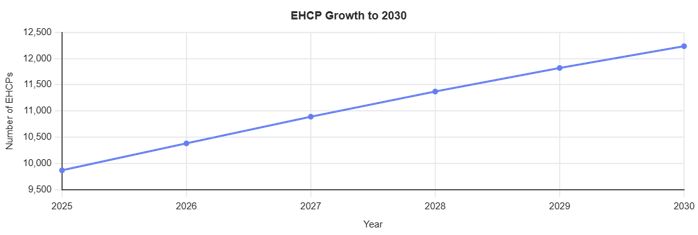
Growth is not evenly distributed across age groups. It is concentrated most heavily in the 11 to 15 age bracket, which rises from 4,119 to 5,646 over the period, reinforcing that pressure will be greatest in the secondary phase.
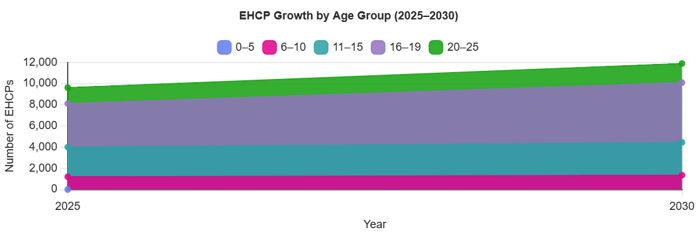
The 11 to 15 age group drives the largest increase (+1,527) with gradual increases across all other age groups.
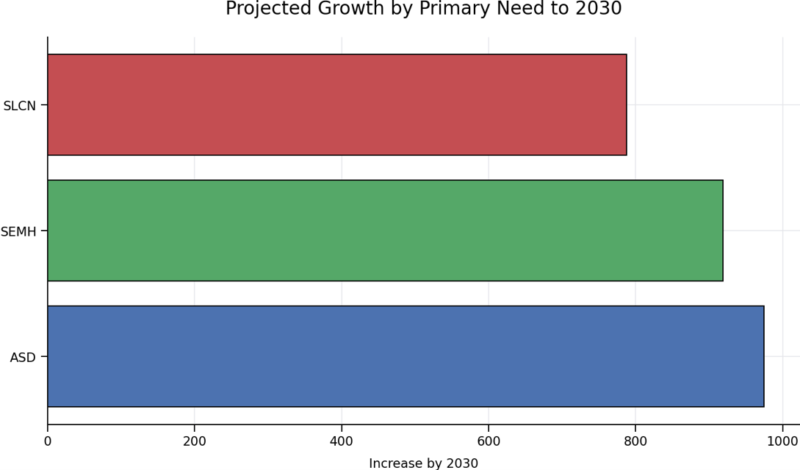
The projected growth is also concentrated in a small number of primary need types. By 2030, Autism Spectrum Disorder (ASD) is projected to rise from 2,700 to 3,675 (+975), Social, Emotional and Mental Health (SEMH) from 2,626 to 3,545 (+919), and Speech, Language and Communication Needs (SLCN) from 2,546 to 3,334 (+788). Together, these three categories continue to account for the overwhelming majority of future demand.
Placement patterns reveal additional strain. While 42.9% of Devon’s EHCP cohort remains in mainstream schools and 28.3% attend special schools, a significant 13.7% are educated elsewhere: almost double the England rate of 7.8%. This reflects rising levels of emotionally based school avoidance, placement breakdowns, and reduced confidence in mainstream inclusion. Further education settings account for 14.4%, in line with growth in post-16 statutory support.
Educated elsewhere: 13.7% (Devon) vs 7.8% (England): Nearly double the national rate.
Education outcomes
Educational outcomes reflect these pressures.
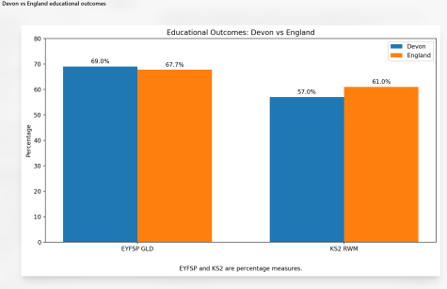
- In early years, Devon performs slightly above national averages overall — 69% of children achieve a good level of development, compared with 67.7% nationally — but outcomes for children with SEND are much lower.
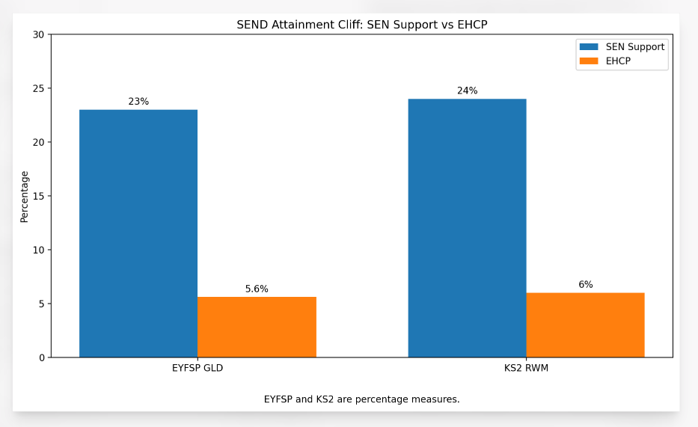
- Only 23% of SEN Support children and 5.6% of those with an EHCP reach GLD. This gap widens through primary and secondary school.
- By Key Stage 2, 57% of Devon pupils achieve expected standards in reading, writing and maths (national 61%), but this falls to 24% for SEN Support and 6% for EHCP pupils.
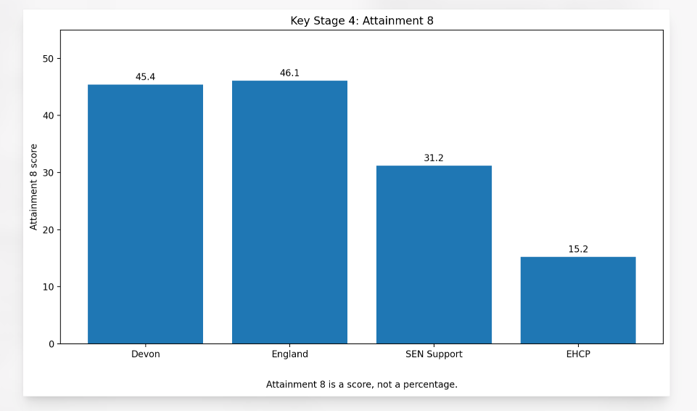
- By Key Stage 4, Devon’s Attainment 8 score is 45.4, slightly below the national 46.1; pupils on SEN Support score 31.2, while EHCP pupils score 15.2.
SEND attainment cliff: SEN Support vs EHCP
SEND attainment cliff: Educational attainment falls sharply between children receiving SEN Support and those with an Education, Health and Care Plan (EHCP). In Devon, around 23 to 24% of pupils receiving SEN Support achieve expected outcomes in the Early Years Foundation Stage and at Key Stage 2, compared with only 5.6 to 6% of pupils with EHCPs. This “attainment cliff” illustrates the substantial educational disadvantage experienced by children with the most complex needs and reinforces the importance of earlier intervention, inclusive mainstream practice and timely, coordinated support to improve outcomes.
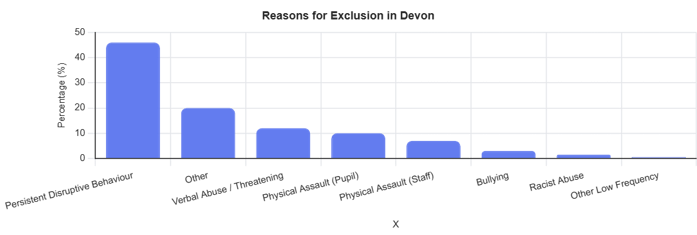
Behavioural and attendance patterns reinforce the picture of strain. Devon recorded 146 permanent exclusions in 2023/24; 72.6% were boys, and 45.96% were for persistent disruptive behaviour, higher than the national 39.17%.
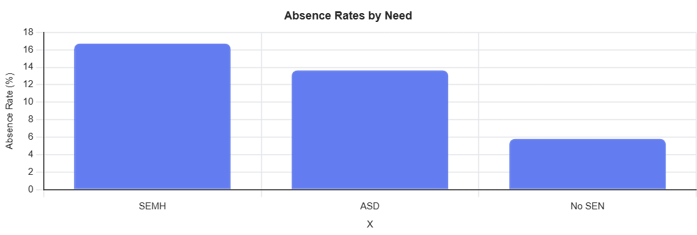
Suspensions involve SEND in 56.7% of cases. Attendance rates for pupils with SEMH plans are particularly poor (16.72% absence), followed by autism (13.65%), both significantly higher than rates for children with no SEND (5.8%)
Beyond school, as young people move into adulthood, the system continues to carry pressure. Devon’s 16 to 25 Preparing for Adulthood cohort includes 1,268 young people supported via the Reaching For Independence service, and 648 receiving adult social care. Yet employment outcomes remain extremely low: only 21 young people (3.2%) are in paid work, and just five (0.8%) work 16 hours or more. Around 185 young adults (28.5%) receive formal housing or in home support. Health inequalities persist: there are 6,853 people on Devon’s learning disability register (0.55% of the population), and Annual Health Check uptake is 66.7%, better than national averages but below the 75% ambition. Access to dentistry illustrates geographic inequality starkly — between 59% and 77% of residents in parts of North, Mid and West Devon have not seen an NHS dentist in a year.
Finally, service quality concerns have intensified. SEND specific complaints rose from 273 to 314 between 2023/24 and 2024/25. Education related complaints to the LGSCO jumped from 59 to 165, although financial remedies fell from £72,000 to £54,000. 32.5% of complaints relate to EHCP delays, with missed provision rising by 20%. Despite focused work, over 1,043 annual reviews remained overdue in March 2025.
Social, Emotional and Mental Health (SEMH) — including ADHD
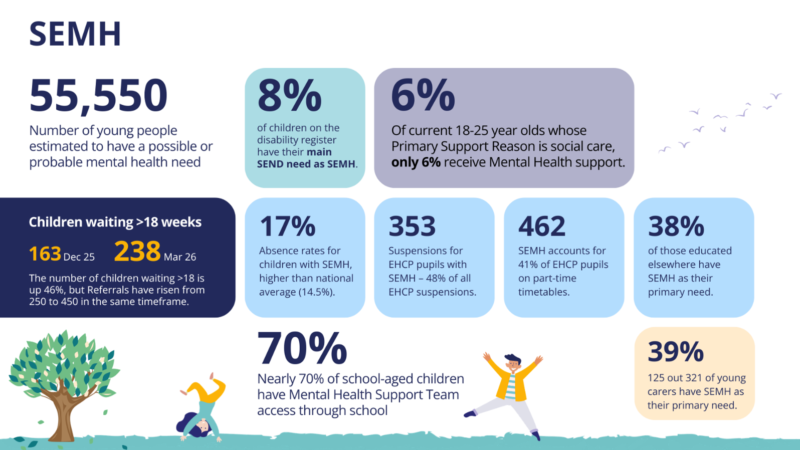
SEMH is Devon’s fastest growing and most complex area of need, affecting more than 5,400 children and young people from the earliest years through to adulthood.
Difficulties with anxiety, emotional regulation, attachment, behaviour, friendships and wellbeing often start before school age, shaped by early relationships, caregiving stress, disrupted routines and challenging environments.
Early Years
Early childhood screening shows SEMH pressures starting very early:
- ASQ results show 34.5% of children are in the ‘below’ or ‘monitoring’ range for personal–social development, compared with a national expected 8.8% below.
- These early delays strongly predict later SEMH needs and school age mental health difficulties.
- Health visiting and School Nursing report that a third of all contacts relate to child or parent mental health, domestic abuse, substance misuse or family stress — all of which shape children’s emotional wellbeing.
- Pre school children are particularly affected by post pandemic disruption: around 1,600 children aged 2 to 4 may be experiencing significant emotional or behavioural difficulties.
- The evidence is clear: SEMH begins early, long before formal schooling.
School Years
Devon supports:
- 2,766 pupils at SEN Support for SEMH, and
- 2,673 pupils with SEMH as their primary EHCP need.
SEMH is closely linked with:
- higher absence and emotionally based school avoidance
- increased suspensions and exclusions
- higher use of reduced timetables
- a strong pattern of children moving into Elective Home Education (EHE) as a result of anxiety or distress, not preference (SEMH = 26.7% of EHCP in EHE).
ADHD is deeply intertwined: 50 to 70% of SEMH profiles likely involve ADHD, meaning 2,700 to 3,800 learners across SEN Support and EHCP.
Preparing for Adulthood (PfA)
SEMH needs do not lessen with age. For many, they peak between 16 to 25:
- 26.7% of all EHCPs in further education relate to SEMH.
- Young people with SEMH are at highest risk of becoming Not in Education, Employment or Training (NEET), particularly where early attendance difficulties, exclusion or EBSA disrupted learning.
- In adult services, 171 young adults (aged 17+) receive mental health related support through RFI.
- Self harm and crisis presentations remain high into early adulthood.
For this cohort, lifelong SEMH support — from early childhood to adulthood — is essential.
Neurodiversity (Autism, ADHD, DLD, Learning Disability)
Whenever I talk to someone who doesn’t know I’m autistic, when they find out I’m autistic, they start talking to me like I’m a young child — like my mental age development is two years younger, when I feel, myself, like I’m mentally older. Because when I was on a phone call with a mental health worker, they were really patronising. They explained every single word to me, and I was like, “I know these things.” Even when I said, “I know” and “That’s not something I do,” they kept on asking me again and again until I got really annoyed — because they really were really patronising. It was really annoying, because they treated me like a small child.
They said that all autistic people suffer from it, and said it was a disorder, and I’m like, “No, it’s just a funny little mix-up with the brain neuron thingamajiggy things.” I told him and he said, “No, that’s the right term, that’s what I’ve been asked to do.” And I was just thinking, “How old is that paragraph?” Because I’m just going to bank on that being at least 10 years old.
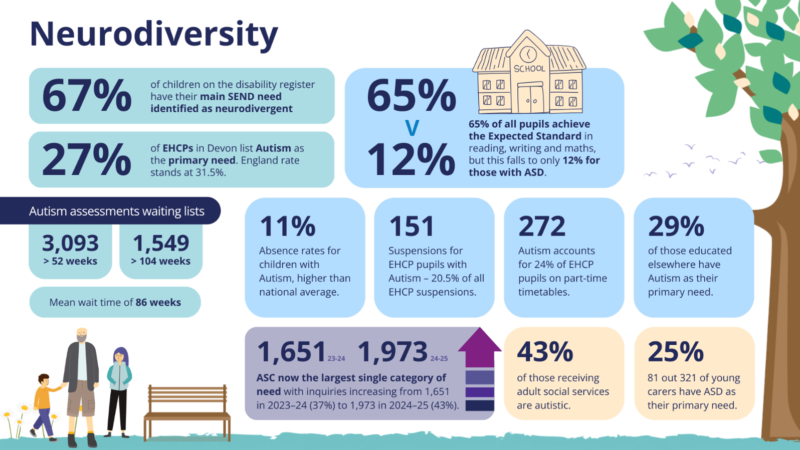
Neurodiversity is one of Devon’s largest SEND cohorts, spanning autism, ADHD, DLD and learning disability, with lifelong impact and needs visible from infancy through adulthood.
Early Years
Early childhood developmental screening provides clear indicators of neurodivergent profiles long before diagnosis:
- 16.07% of children score below expected levels in Communication and 13.05% in Personal–Social skills on ASQ — early markers linked with autism, DLD, ADHD and learning disability.
- Risks increase where multiple ASQ domains are below expected levels, particularly Communication + Problem Solving + Fine Motor.
- ELIM (Early Language Identification Measure) found 4,338 assessments in 2025, confirming communication as one of Devon’s earliest, most common vulnerabilities.
- Many neurodivergent children show differences in attention, sensory processing and communication from ages 1 to 3 — well before diagnostic pathways open.
School Years
- Autism: 2,258 SEN Support + 2,753 EHCP = 5,011 formally identified children.
- ADHD: Estimated 6,464 to 8,618 young people, but hidden within SEMH data; only a fraction are formally assessed.
- Learning Disability: 7,348 children supported across SEN and EHCP.
Demand pressures include very long waits:
- Autism assessment waits average 87 weeks, with a longest wait of 233 weeks.
Preparing for Adulthood (PfA)
Neurodiversity strongly shapes young people’s futures:
- Autism is the largest EHCP group in FE (29.8%).
- ADHD related needs remain high but are often masked by SEMH labels.
- Learning disability is enduring, with Devon forecasting a 34% rise in MLD/SLD/PMLD EHCPs by 2030.
- In adult social care, 552 young adults have autism recorded as their primary health condition, and 308 have learning disability.
- Neurodivergent young people need support to transition into stable employment, independent living, social participation and accessible healthcare.
Early identification plus consistent support into adulthood gives this cohort the best chance to thrive.
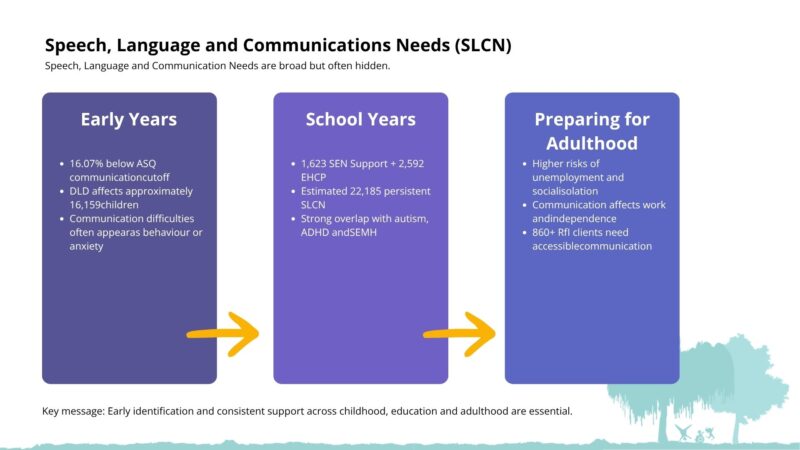
Speech, Language and Communication Needs (SLCN)
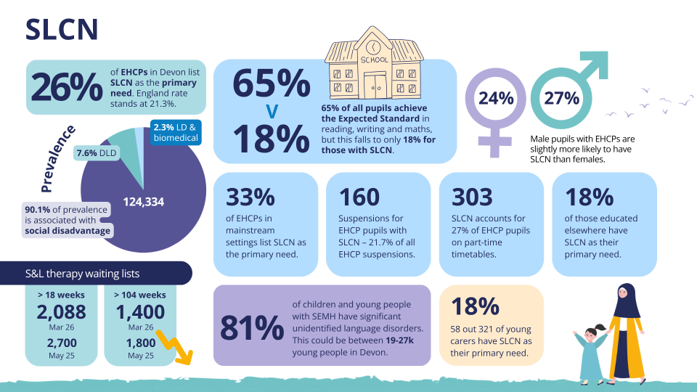
SLCN is one of Devon’s broadest but least visible SEND cohorts — affecting far more children than current SEN or EHCP totals capture — and its impact begins in the earliest months of life.
Early Years
Language and communication difficulties are often the first developmental vulnerabilities to appear:
- ASQ shows 16.07% of children below cutoff in Communication — double national expectations.
- These difficulties are highly predictive of later SLCN, SEMH and learning needs.
- ELIM screening confirms communication as the most common early developmental challenge across Devon’s 0 to 5s, with 4,338 assessments completed in 2025.
- DLD (Developmental Language Disorder) affects 7.5% of children — around 16,159 in Devon — but only a small proportion ever reach SEN or EHCP status.
Early communication challenges often manifest as behaviour, frustration, anxiety, or limited play and social interaction — frequently mislabelled as “behaviour problems”.
School Years
Devon formally identifies:
- 1,623 pupils with SLCN at SEN Support, and
- 2,592 pupils with SLCN as their primary EHCP need.
But compared with the estimated 22,185 children with persistent SLCN, this means the majority are not yet recognised in SEND systems.
SLCN overlaps strongly with autism, ADHD and SEMH.
- 70–80% of autistic learners
- 45–55% of ADHD learners
- 40–50% of SEMH learners
have communication needs at the core of their challenges.
Preparing for Adulthood (PfA)
Communication needs continue to shape outcomes across adolescence and adulthood:
- Young people with DLD have higher risks of unemployment, social isolation and mental health needs.
- Communication is central to interviews, relationships, work readiness, independent living and navigating services.
- In adult services, young people with autism and learning disability (who together make up 860+ RFI clients) frequently need communication accessible environments.
- Vulnerable groups — including young carers — are at risk of “post 16 invisibility” where unrecognised communication needs prevent engagement with education or support.
For this cohort, early language support and communication friendly environments across all settings are fundamental to long term outcomes.
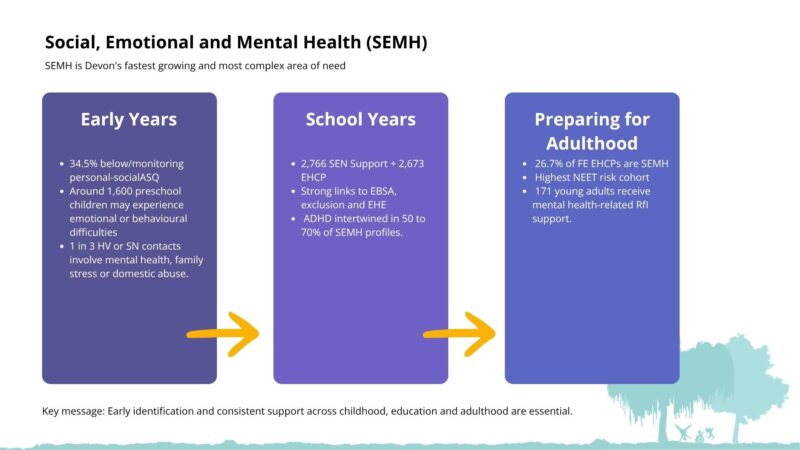
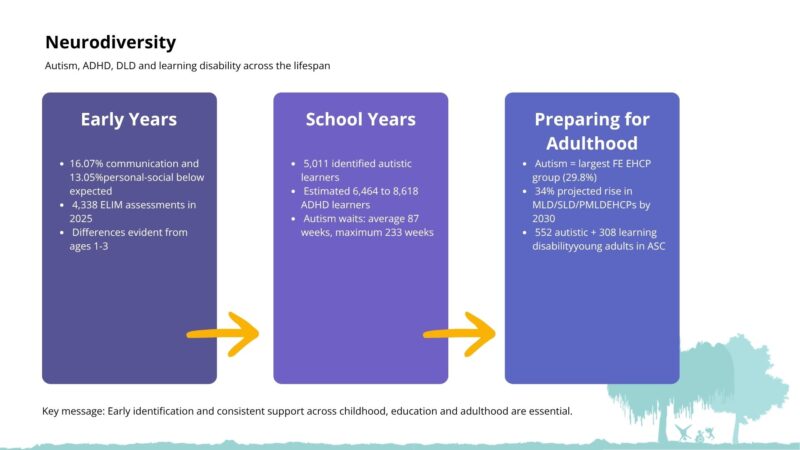
The Devon SEND journey: supporting children and young people from 0 to 25
The evidence presented throughout this JSNA shows that SEND is not confined to school-age education.
Needs emerge in the earliest years of life, evolve throughout childhood and adolescence, and continue into adulthood. Children and young people require different types of support at different stages of their lives, but the ambition remains constant: to identify needs early, provide timely and coordinated support, and enable every child and young person to thrive.
A life-course approach recognises that improving outcomes is not achieved through isolated interventions at individual points in time, but through consistent support that builds resilience, independence and opportunity from birth through to adulthood.
| Early Years (0–5) | School Years (5–16) | Preparing for Adulthood (16–25) |
|---|---|---|
| Secure attachment and healthy development | Inclusive education and belonging | Independence and adult life |
| School readiness | Good attendance and participation | Employment, training and higher education |
| Speech, language and communication development | Emotional wellbeing and mental health | Independent living and suitable housing |
| Family support and parenting | Neurodiversity, SEND and specialist support | Access to adult health and social care |
| Early identification and intervention | High-quality inclusive mainstream education | Community participation, friendships and citizenship |
| Health visiting, early years settings and Family Hubs | Joined-up education, health and care | Coordinated transition planning and lifelong support |
The evidence throughout this JSNA demonstrates that developmental differences often emerge before children start school, particularly in communication, language, social interaction and emotional regulation. Timely identification and effective early support can improve school readiness, reduce inequalities and prevent escalation into more complex needs later in childhood.
As children move through education, the greatest pressures are seen in autism, speech, language and communication needs, and social, emotional and mental health. Increasing complexity, longer waits for assessment and therapy, and growing demand for specialist provision reinforce the importance of inclusive mainstream education, coordinated multi-agency support and earlier intervention.
Preparing for adulthood is not a transition that begins at age 16. It should be embedded throughout childhood, enabling young people to develop the knowledge, confidence and skills needed to achieve good health, meaningful employment, independent living, strong relationships and active participation in their communities. As increasing numbers of young people with SEND continue into further education and adult services, effective preparation for adulthood is essential to improving long-term outcomes and reducing reliance on specialist support.
The evidence throughout the JSNA demonstrates that improving outcomes depends on acting early, providing coordinated support throughout childhood and adolescence, and planning proactively for adulthood rather than treating transition as a single event. A genuinely life-course approach ensures that children, young people and families experience one connected system of support from birth through to adulthood, with the right help, at the right time, in the right place.
What good looks like and our recommendations
Why this part matters
Part three of Devon’s JSNA brings together everything we know about children and young people with Special Educational Needs and Disabilities (SEND) in Devon. It explains:
- what the evidence tells us about need and inequality
- how Devon is responding through its SEND strategies and transformation programme
- where gaps remain
- what “good” should look like for children, families and services.
The aim is simple: to ensure every child gets the right support at the right time, no matter where they live or who they are.
How Devon is responding
Devon already has a clear set of strategies that share one ambition: meet needs earlier, in inclusive settings, and reduce crisis-driven escalation.
These include:
- Devon SEND Strategy (2024–2027)
- Neurodiversity Strategy (2025–2030)
- Emotional Wellbeing and Mental Health Strategy
- Early Years Strategy and Preparing for Adulthood Framework.
The SEND Transformation Programme
This is the main delivery mechanism. After a 2025 reset, it now focuses on four key areas:
- Investing in Devon schools – building inclusive capacity so more needs are met locally.
- Improving experiences – clearer communication, better EHCP timeliness and decision-making.
- Reshaping services around localities – joined-up support closer to communities.
- Building inclusive learning communities – strengthening early help and ordinarily available provision.
The programme connects strategy to delivery and measurable outcomes.
What good looks like for Devon
Based on national policy (including the government’s Every Child Achieving and Thriving white paper) and local evidence, a high-performing SEND system in Devon should be one where:
Children and Young People
- Have needs identified early
- Receive support quickly, without needing a diagnosis
- Attend school regularly and feel safe and included
- Experience smooth transitions into adulthood, with increasing independence, access to further education, employment, housing, good health and community participation.
Families
- Understand how to access support.
- Receive clear communication and feel listened to.
- Do not need to fight for help.
The System
- Mainstream schools feel confident meeting diverse needs.
- EHCP demand slows because early help is working.
- Specialist places are used for those with the most complex needs.
- Inequalities reduce across geography, gender, ethnicity, and identity.
The most significant inequality gaps
The JSNA highlights several critical areas Devon must address:
1. Elective Home Education (EHE)
- Devon’s rate is significantly higher than England, particularly for children with SEMH needs, girls, and those facing emotional distress.
- EHE is often used as a last resort and not a positive choice.
2. Ethnicity and cultural barriers
- Some minority ethnic groups, including Gypsy, Roma and Traveller communities, appear under represented in EHCPs.
- Language and cultural barriers can delay identification or limit access.
3. Gender identity and neurodiversity
- A small but highly vulnerable group of transgender and gender-diverse young people experience higher rates of anxiety, school distress and SEMH needs, especially when autism/ADHD overlap.
4. ADHD as an under-recognised driver
- Undiagnosed ADHD contributes to exclusion, absence and poor attainment.
5. Waiting times
- Long waits for ND assessments and therapies push children into crisis and statutory routes
6. What children and families told us
Young people said they want:
- adults to listen and treat them with respect
- safe, neuroaffirming environments
- better mental health support
- more accessible transport
- help with transitions and pathways to work.
Families said they need:
- timely communication
- joined-up working between agencies
- better early support
- reduced trauma in EHCP and assessment processes.
Key recommendations
Based on the JSNA evidence, strategic commitments and gaps, the recommended priorities for Devon are:
A. Strengthen early help and inclusive practice
- Strengthen developmental surveillance, communication screening and neurodevelopmental identification during the first five years of life.
- Ensure every school can deliver consistent, high‑quality ordinarily available provision.
- Embed ADHD‑aware, trauma‑informed and neuroaffirming practice.
- Expand early language and communication support.
B. Reduce inequalities
- Make equity (gender, ethnicity, geography, identity) a core performance metric.
- Improve recording and analysis of ethnicity and EAL.
- Develop targeted approaches for GRT communities and girls experiencing EBSA.
C. Improve access and reduce waiting times
- Strengthen multi‑agency ND pathways.
- Improve meaningful first contact and triage transparency.
- Increase therapy capacity where backlogs exist.
D. Stabilise the system
- Use data to track attendance, exclusion, EHE and placement stability as core SEND indicators.
- Reduce reliance on independent placements through strengthened mainstream and local specialist options.
E. Improve experience and co‑production
- Fully embed the Four Cornerstones (Welcome and Care, Value and Include, Communicate, Work Together).
- Increase consistency in family communication and case coordination.
- Begin Preparing for Adulthood planning from early adolescence, with coordinated pathways across education, health, social care, employment and housing.
Final message
Devon has a clear ambition and strong foundations. The JSNA shows where progress is being made and where the system must continue to improve. A good SEND system is one where:
- fewer children reach crisis,
- more support is delivered early,
- families feel included,
- mainstream schools are confident and equipped
- and inequalities reduce across Devon.