Capturing Natural Flood Management in Action
The start of 2026 has brought relentless rainfall to Devon, putting pressure on our rivers and surrounding landscapes. These wet conditions have put our Natural Flood Management (NFM) interventions to the test, and our trail cameras have captured some powerful snapshots of NFM responding to the recent heavy rainfall. Read on to discover exactly what our cameras reveal about catchments across Devon, and to learn how NFM features, such as leaky dams, scrapes, contour trenches, and more, work to slow, store, and manage water within the landscape. By storing floodwater on the land, slowing the flow across surfaces, and creating valuable habitats for wildlife, NFM helps build resilient communities, support biodiverse ecosystems, and restore more natural watercourses – all of which strengthens catchments during periods of heavy rainfall.
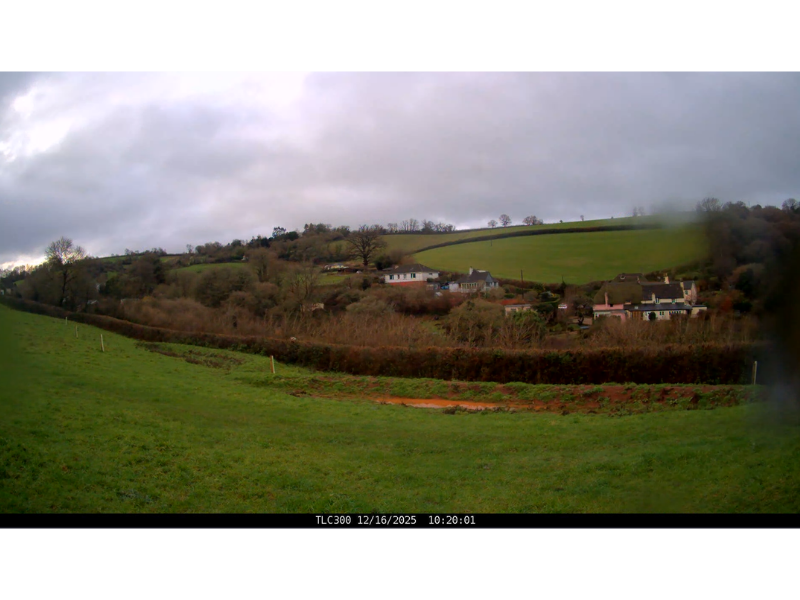
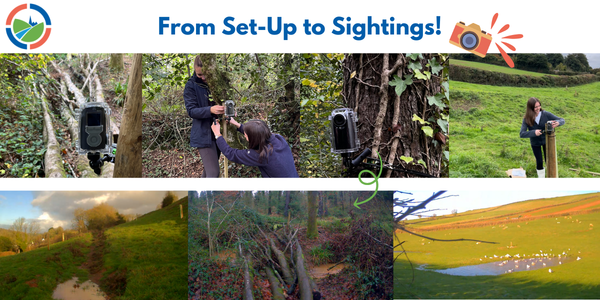
At the end of last year, we installed a series of trail cameras across several DRIP catchments. After some refinements to our original set‑up (some of our early camera mounts lost the battle to the wind and weather!), we established a more robust arrangement for eight cameras, aiming to capture the performance of our NFM features through the winter months. They did not disappoint.
Flashy catchment conditions
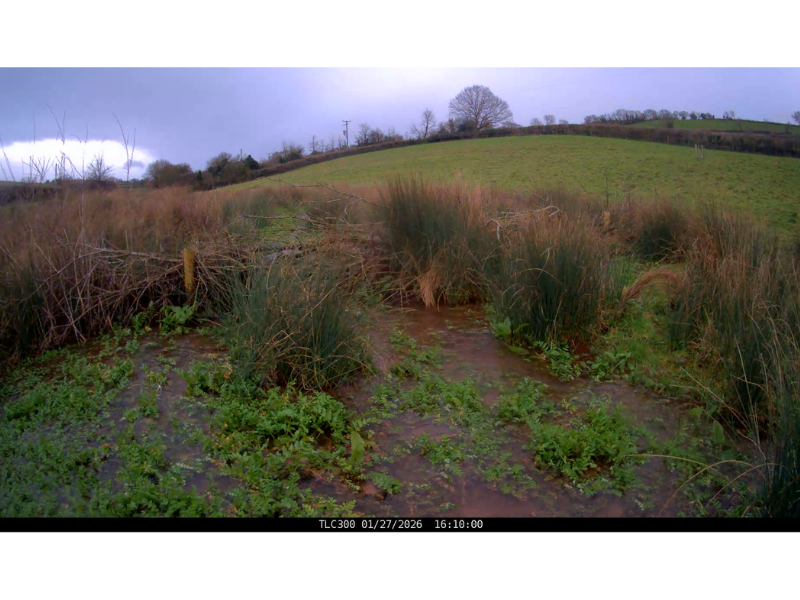
The timestamps on the footage reveal just how quickly rainwater enters these catchment systems, highlighting how prone these steep-sided landscapes are to flash flooding. Very quickly, water collects in scrapes and contour trenches, as well as building up behind leaky dams and spreading out into wider habitat and across adjacent floodplains. The timestamps show just how little time local communities have to prepare and respond to a flood, underscoring the importance of slowing the movement of water within these rapid‑response catchments through NFM.
Wildlife and biodiversity
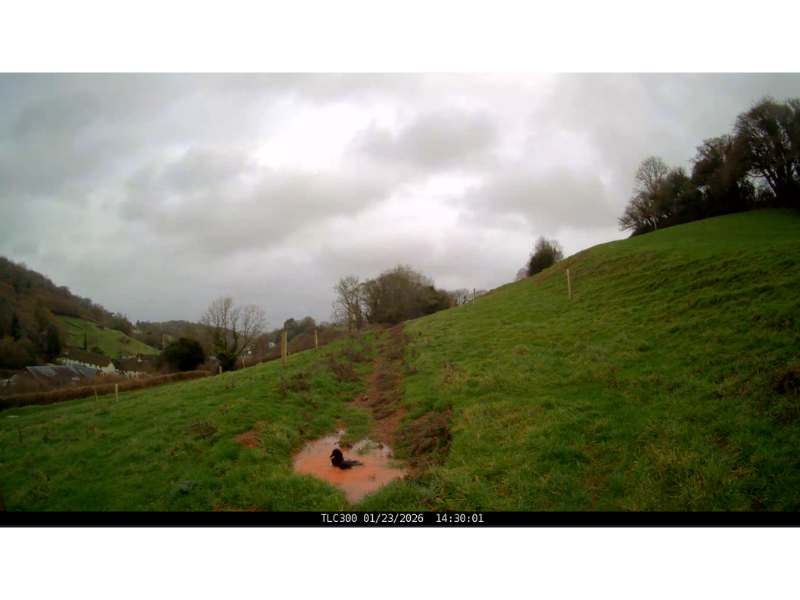
NFM doubles as wildlife havens, attracting birds and diverse riparian and wetland species to the landscape that forage, feed, rest, and take shelter in scrapes, contour trenches, wetland pools, and other features. As NFM works to hold back water, these features not only slow runoff and reduce downstream flood peaks downstream, but also create valuable pockets of habitat that support biodiversity throughout the year.
In the stream, features such as leaky dams, create ideal conditions for silt to settle on the river bed as water flow is slowed. This natural process of silt deposition forms nutrient rich pockets where plants and vegetation can establish within the channel, varying flow speeds further and providing critical refuges, feeding grounds, and spawning areas for fish, invertebrates, and other aquatic life.
By enhancing both in‑stream habitat and the surrounding land, NFM supports a wide range of wildlife, highlighting the full extent to which these interventions boost biodiversity across the landscape.
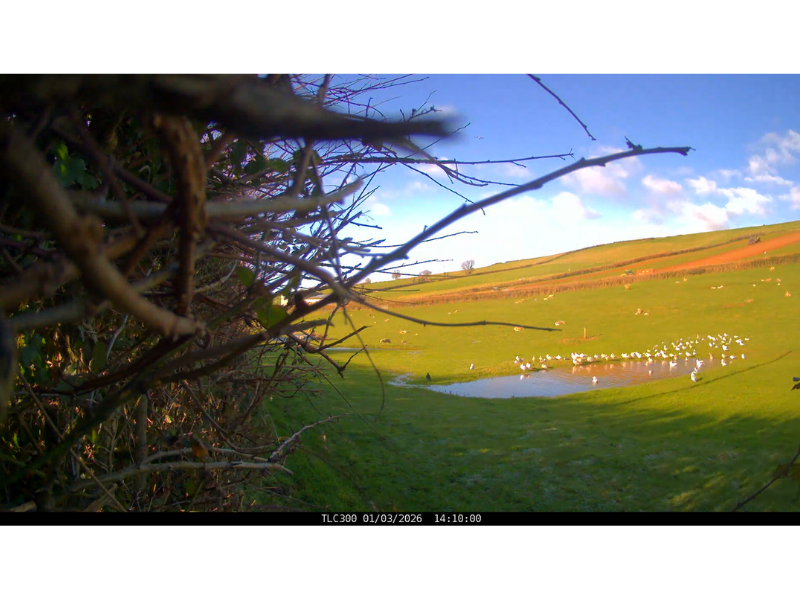
Water storage
NFM helps hold more water in the landscape, rather than allowing it to run quickly over the ground and overwhelm river systems and local communities. By temporarily storing water and then releasing it slowly, flood peaks and peak river flows are reduced, and communities gain more time to prepare and take action during heavy rainfall events. Much of the stored water gradually soaks into the soil or is taken up by tree and plant root systems, which reduces both the volume and speed of surface water runoff. Increased retention of water also stops the landscape drying out in hotter summer months. This stored moisture improves drought resilience, providing a resilience benefit all year round.