Ticks are tiny spider-like parasites which live in grass, bracken and brambles, especially near the edges of woodland and on rough grassland.
Some ticks can pass on very nasty infectious diseases like Lyme disease when they bite you or your pets.
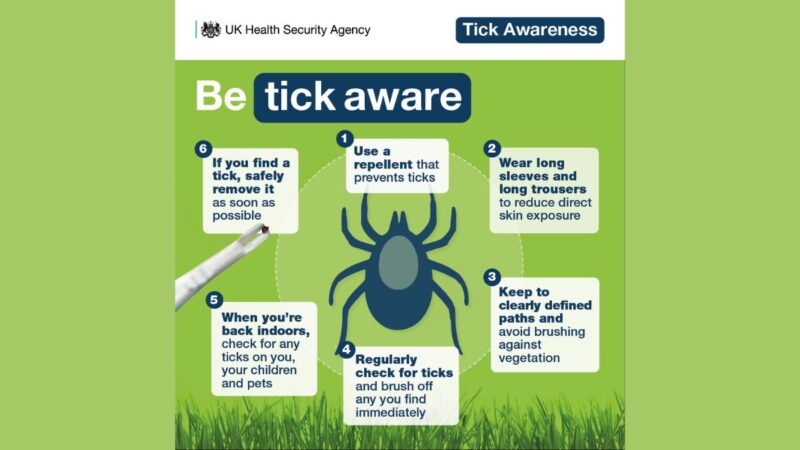
It’s easy to take measures to protect yourself, and reduce the risk of being seriously unwell, by taking these simple steps when out in the countryside;
- Wear light-coloured clothing so at ticks can be spotted and regularly check clothing and exposed skin for ticks that might be crawling on you and brush them off immediately
- Wear long trousers tucked in to socks/boots and long-sleeved tops, to reduce the chance of ticks getting at your skin to bite
- Use an insect repellent (always follow the manufacturer’s guidance, check it is effective for ticks)
- Walk on clearly defined paths if possible, to avoid brushing against vegetation where ticks may be present
- If bitten, remove the tick as quickly as possible. Try not to squeeze the body of the tick as this increases the risk of infection – so use a tick removal tool or fine tweezers (or fingernails if you don’t have a tool) to get underneath the ticks body and get it off quickly
How ticks behave
Ticks wait on foliage for humans and other animals to brush past, then they climb on. They can take from ten minutes to two hours to find an area of skin to bite, and they bury their curved teeth deeply into the skin, remaining securely attached for days to feed on blood.
Most ticks are plain brown or reddish brown and have six or eight legs depending on their life-cycle stage. Young ticks can be as small as a poppy seed but mature ticks, when fully fed can get up to 1cm in size.
Checking for ticks after being outdoors
After you have been walking in the countryside, check yourself, children, and pets for ticks. Brush them off if not attached, but if they have bitten, it is important to remove safely and quickly. Doing so will reduce the chance of becoming ill as it can take several hours for infections to be passed on as the tick feeds.
If you find a tick:
- Use a tick removal tool (or fine-tipped tweezers) to grasp the tick as close to the your skin’s surface as possible.
- Take care not to squeeze or crush the tick as this could increase infection risk.
- Pull upward with steady, even pressure.
- Clean the bite area with antiseptic or soap and water
Watch this short film from the HNS about how to remove a tick.
Dispose of the tick when you have removed it, or you can send it into the UKHSA Tick surveillance scheme.
Where ticks are found
Ticks that may cause Lyme disease and other infections, are found all over the UK, but high-risk areas include grassy and wooded areas, especially in Southwest England. They can also be found in some parks and gardens.
Ticks can be active all year round, but they are most active in the UK from April to July, and into the autumn. Climate change with milder winters, only short cold spells, and more humid summers, mean more ticks survive and can be active throughout the year.
What illnesses can ticks cause?
Only about 5% of ticks carry diseases but they can cause severe illness. Symptoms can be non-specific or caused by more than one pathogen (e.g. virus or bacteria), which can delay recognition and treatment of illness.
Lyme disease is a bacterial infection that can be spread to humans by infected ticks which is usually easier to treat if it’s diagnosed early.
Some people get a “bullseye” rash around the bite, but this does not occur in all cases. Symptoms appear on average 14 days after the tick bite, however, they can occur between 2 days and 3 months and can be flu-like such as:
- High temperature, or feeling hot and shivery
- Headaches
- Aching joints and muscles
- Tiredness, weakness and loss of energy
Please see your GP if you/your child experience any of these symptoms after a tick bite. You will need to inform your GP that you/your child had a tick bite.
Treatment for Lyme disease is with antibiotics and is most effective if started as early as possible (but antibiotics are not needed if you have a bite without symptoms).
Do not worry if all of the tick has not been removed. Please do not try to dig out any retained tick mouth parts as this will increase the risk of skin infection. Retained parts will usually work their way out naturally as the skin repairs/grows.
Most bites are harmless but it’s best to know about the risks.
Stay active — and stay safe
Exercise is great for your health, so get outdoors and explore, but “be tick aware” and if you find a tick, remove it quick!
More information
For further advice on ticks, tick‑bite prevention and Lyme disease, the following resources may be helpful:
- UKHSA poster: Enjoy the outdoors but ‘be tick aware’
- UKHSA leaflet: Enjoy the outdoors but ‘be tick aware’