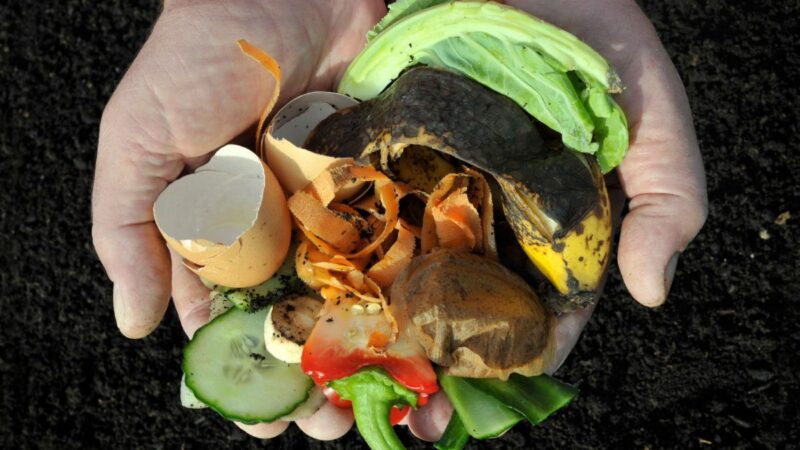
Making compost at home is a natural and affordable way of adding moisture, structure and nutrients back into the soil which supports the growth of healthy plants and increases biodiversity in gardens of all sizes.
As costs increase, making compost at home puts kitchen and garden waste, such as fruit and vegetable peelings and prunings, to good use and avoids the need to spend money on store bought compost.
A 2022 study in Devon found that households are still throwing away huge amounts of food waste. Nearly a third (28.2%) of black bin waste is made up of food waste, and a further 6.8% comes from garden waste. Some of that waste, such as uncooked fruit and vegetable peelings, flowers, twigs and dead leaves, could be composted at home.
Home composting isn’t just for experienced gardeners and large gardens. Even households with only patio tubs, hanging baskets or window boxes will benefit from having a free source of nutritious soil improver to boost soil and plant health.
Making compost is like baking a cake – add the right ingredients, cook at the right temperature and hey presto! Perfect results every time!
Top tips for successful composting:
Embrace your space
Compost bins are available in a range of different sizes to suit all spaces. Big or small, sleek or rustic, they all do the same job and that’s to create a warm environment for organic matter such as grass cuttings, plant prunings and vegetable peelings to rot down into a nutrient rich compost. You can buy reduced priced compost bins (Devon residents only) or make your own from old pallets[LJ1] [NB2] [LJ3] [NB4] . If you don’t have the space for a compost bin, there are plenty of other space saving options such as a wormery, tumbler, hot bin or even an indoor Bokashi system. Find out how they all work here.
Understand the basics
Ideally, a compost bin will have a 50/50 mix of greens and browns:
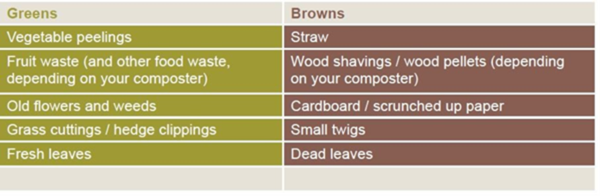
It’s important to only compost uncooked food scraps and avoid adding meat or fish as you may end up attracting unwanted visitors to your garden. This handy step by step guide will help you get started and includes some insightful video tutorials by Devon composting guru Nicky Scott.
Regular maintenance
Once you’ve got the right balance of green and brown materials, maintenance is fairly simple.
Turning your compost once a week will help to keep it aerated and disturb any unwanted visitors, dissuading them from hanging around.
Quick and regular maintenance will keep your compost bin healthy and saves time and money in the long run, as it avoids the need to travel to a garden centre the next time you need compost.
Councillor Jacqi Hodgson, Cabinet Member for Climate Change and Biodiversity, said:
“Composting at home is a great way to save money, boost your plants, and help the environment. There are lots of options available, to suit even the smallest of spaces. It’s well worth doing, even if you have a food waste collection. What could be better than taking the waste we create at home and using it as a valuable resource in our own gardens and outdoor spaces?”

To find out more about composting at home, visit www.recycledevon.org.