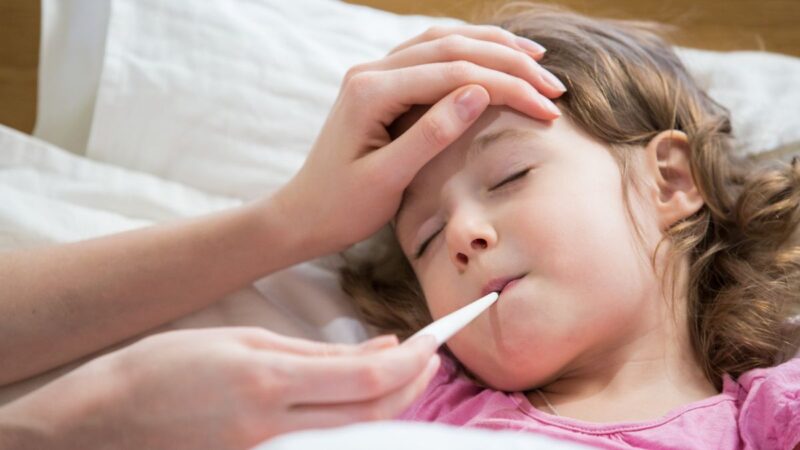
Public Health Devon is urging parents and carers not to send their children back to school in January if they are feeling poorly or showing symptoms of flu or winter sickness bugs.
Schools have seen heightened levels of flu among pupils and staff so far this winter, with higher numbers of outbreaks than usual reported to health professionals.
Dr Radha Modgil, NHS GP and broadcaster, said:
“Parents and carers understandably want to make sure their child is well enough for school and that they’re not passing any illness or infection onto classmates. But it can sometimes be difficult to know when to send them, or not.
“The NHS has some really useful guidance to help you. It’s usually fine to send your child to school if they have mild cold symptoms such as a runny nose or a slight cough as long as they don’t have a high temperature (38C degrees or above) and are otherwise well.”
There are however times when children are unwell and to ensure infections don’t spread to others, it is important they stay at home for a short period of time. Some of these include:
- Fever: If your child has a high temperature, keep them at home until the fever has passed and they feel well
- Diarrhoea and/or Vomiting: Children should stay home for at least 48 hours after symptoms have stopped
- For other infectious illnesses this checklist can help know the advised times How long should you keep your child off school – checklist
The NHS has online guidance about when to keep your child off school when faced with common winter illnesses. Visit https://www.nhs.uk/live-well/is-my-child-too-ill-for-school/ or search ‘Is my child too ill for school?’
Steve Brown, Director of Public Health Devon, said:
“We know that children are keen to return to school after the holidays, but if they feel unwell and have a high temperature, diarrhoea or vomiting, please keep them at home until any temperature has gone and for 48 hours after diarrhoea or vomiting symptoms have passed. This helps protect their classmates, teachers, and the wider community from unnecessary illness, and also speeds up their own recovery.”
Parents are also reminded to encourage good hygiene practices, such as regular handwashing and covering coughs and sneezes, to help prevent the spread of seasonal viruses.
Vaccination is the best way to protect individuals and their families from winter illnesses. For more information, visit Winter vaccinations and winter health – NHS
The Department for Education has published a blog with links to advice Top tips on how to keep your child healthy at school – The Education Hub
Pain-free flu protection for 2- and 3-year-olds, and school-aged children
Children are often described as ‘superspreaders’ of flu, as they pick up and transmit the virus easily, frequently passing it on to grandparents and other vulnerable family members. That’s why it’s important to vaccinate school-aged children, and children aged 2 and 3.
The free flu vaccine does not only protect them from serious illness, but also helps reduce the spread to those around them. Furthermore, the vaccine to children is delivered as a simple nasal spray rather than an injection, making it quick and pain-free.
The immunisation programme for school-aged-children is still underway – with catch up clinics running for those who may have missed or been unwell during school visits, or children who are home educated.
These free clinics are available throughout December and January, and parents and guardians can contact the School Immunisation Service on 01392 342678 for more information.
Parents and carers of 2- and 3-year-old children should visit the NHS website and book a flu vaccination appointment at their local pharmacy, or contact their GP surgery for an appointment.