


Devon County Council has welcomed a major new report from England’s Chief Medical Officer which says the health challenges facing rural communities must be treated as a national, not simply a local, issue.
Professor Sir Chris Whitty’s annual report highlights the way that rural poverty can be hidden, while longer distances, limited public transport and difficulties accessing health services can deepen inequalities.
The report calls on government and the NHS to recognise these challenges as a national responsibility and support locally designed services.
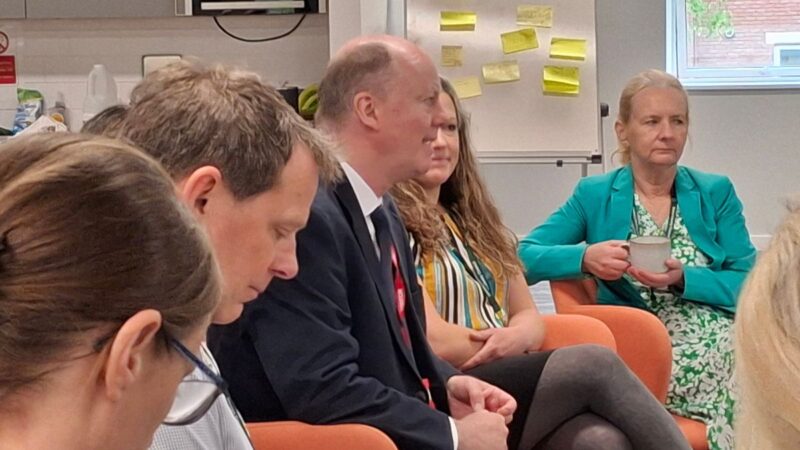
The findings echo many of the issues Sir Chris heard about when he visited Devon in May, meeting Devon County Council’s public health team and professional partners before travelling to Buckfastleigh to hear directly from the community.
Devon features prominently in the report. More than 842,000 people live in the county and 26.3% are aged 65 or over, compared with 18.7% nationally.
The report also highlights Devon’s hidden pockets of rural deprivation, limited public transport, shortage of affordable housing and difficulties accessing services.
Devon County Council now is calling on government and the NHS to put rural need at the heart of funding and service planning, including better ways of measuring rural deprivation so that small pockets of need are not hidden by wider averages.
The report also recommends improving national measures of rural deprivation so public health resources reach those who need them most.
Councillor Cheryl Cottle-Hunkin, the council’s Cabinet Member for Rural Affairs, said:
“I want to thank Sir Chris Whitty for taking the time to come to Devon to see and hear first-hand some of the challenges our rural communities face.
“We are by no means unique in being a rural county, but Devon’s geography, our location in the South West peninsula and our older population bring particular challenges.
“Rurality brings additional costs that we do not believe are properly recognised in the funding we receive. Poorer transport links, housing pressures and long distances to services can make everyday life harder, while younger people can find there are fewer opportunities for education, training and good jobs close to home.
“There is a real concern here about the erosion of health services in rural areas due to inadequate funding. We are seeing services being increasingly centralised, including in North Devon where some services are being moved towards Exeter, meaning patients and their families are having to travel even further for care. That is simply not acceptable.
“Devon is a wonderful county, and we have so much to be proud of. But living in a rural community must not mean poorer access to the things that help people lead healthy lives.
“National decisionmakers must fully understand the lived reality of rural life, where distance, transport challenges and an ageing population can make access to healthcare far more difficult than in urban areas. Sir Chris Whitty’s report is an important step towards improving that understanding.
“We now need Government and the NHS to act on this report, recognise the true cost of delivering services in rural areas and make sure funding reflects the needs of counties like Devon.
“Rural communities deserve fair access to healthcare and other essential services, and that will only happen when funding and service planning properly reflect the realities of rural living.”


Steve Brown, Director of Public Health Devon, said:
“This report is important because it gives national recognition to the health challenges faced by people living in rural areas.
“In Devon we know that good health is shaped by much more than access to healthcare. Transport, decent housing, digital connectivity, education, employment and being able to reach services all make a difference.
“Rural deprivation can also be difficult to see in the data, which means some communities experiencing poorer health can easily be overlooked.
“This report helps shine a light on those inequalities and will help us continue working with communities and partners to find solutions that work for rural Devon.”
Nora Corkery, CEO of Devon Communities Together and Chair of the Devon Rural Deprivation Partnership said:
“Rural deprivation is often hidden. The challenge now is to turn the evidence and recommendations in this report into meaningful action in Devon.
“We need a more joined-up approach across health, local government, the voluntary and community sector and other partners, with a clear commitment to rural proofing of key policies and services to address the underlying causes of rural inequality.
“As a Rural Deprivation Partnership Group, we are committed to ensuring that rural disadvantage is recognised, that the voices of our communities are heard and that solutions are shaped around the realities of rural life.
“Ultimately, a person’s postcode or where they live should never determine their opportunity to live a long, healthy and fulfilling life.”