


Residents are being called on to make their voices heard as the major public consultation on the future of the county’s 50 libraries enters its final week.
The consultation, which closes on Sunday, 22 February 2026, has so far received more than 17,000 responses – and every view will be reviewed, considered, and will help shape the future of local library services.
The consultation, launched in December, asks residents to give feedback on proposals to explore new technology, standardise opening hours, and consider greater community involvement. It also invites people to share their views on how libraries can remain accessible, flexible, and fit for purpose in the years ahead.
Importantly, a key reason for this consultation is the significant financial pressures faced by Libraries Unlimited and Devon County Council following year on year funding cuts, and the need to ensure that the service is now resilient, flexible and is able to adapt to the changing ways people are using libraries.
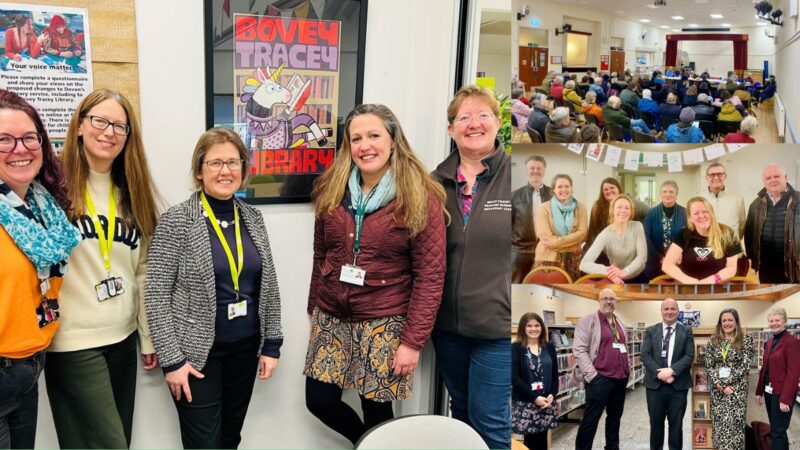
Over the past two months, Devon County Council’s Cabinet Member for Libraries, Cheryl Cottle-Hunkin, has answered questions and spoken at numerous events and meetings, listening to a wide range of views from library users and staff.
Many people she has spoken to have understood the challenges and recognise the need to find locally-led sustainable solutions for the future.
Councillor Cheryl Cottle-Hunkin, Cabinet Member for Rural Affairs and Broadband said:
“Each library is unique, they are used in different ways, by different people serving different needs in different communities, and the solutions to ensure their future resilience may also be different as well,” she said.
“I recognise that the people who know best about their local library service, who have the ideas and an insight into how they can be better used are those who use and work in them.”


She acknowledged that concerns have been raised about rural access, the use of open access technology, and the impact on smaller libraries, but she assured residents that any changes would be shaped by those who use them and will be evidence-led.
“I want people to know I’m listening to their concerns,” she said. “We are talking to other authorities who have undergone changes within their library service, including from those who use open access technology, and those with increased collaboration with town and parish councils, finding out about what works and what doesn’t.”
Crucially, she pledged, no libraries would close as a result of this consultation: “We are one of the few authorities over the last 20 years that hasn’t closed any of our library branches and we are committed to keeping every single one open,” she added. “These proposals are about making sure local libraries are resilient and are able to deliver the services that people want.”
She added: “The consultation sets out proposals for opening hours and that has concerned some people; but community involvement, technology and alternative funding streams can open doors to extend a library’s opening hours far beyond the proposed statutory hours in the consultation.
“I have spoken to dozens of groups, parish councils, and Town Halls over the past few months who all want to be involved in various ways. These proposals are not a final offer- far from it. This consultation is just the start of the conversation and a chance to rethink and update the service, providing greater flexibility for the future.
“It’s an opportunity to shape your local library for your community and I encourage people to take it.”
With the deadline fast approaching, residents, including children, are encouraged to take part online, at their local library, or by post. All responses will be reviewed before revised proposals are presented to Cabinet in spring 2026.
For more information and to have your say, visit Devon County Council’s consultation page.