

Members were invited this week to a screening of The People’s Emergency Briefing – a film bringing together leading scientists to set out the latest evidence on the worsening extent of the climate and nature crisis.
The film describes the impact that climate change is already having on infrastructure, public health, food systems and the economy.
The session provided an opportunity for discussion about what these risks mean locally for Devon, helping Members to understand the challenges and how communities and decision-makers can respond.
It aligns closely with the Devon Climate Emergency partnership’s focus on coordinated, partnership-led action to reach net zero, and the Devon, Cornwall and Isles of Scilly Climate Adaptation Strategy, which identifies the priorities for building resilience to increasing risks such as flooding, extreme weather and impacts on communities and services.
Work is underway across Devon to reduce emissions and prepare for unavoidable climate impacts. This includes investment in renewable energy, expansion of electric vehicle infrastructure, delivery of the Local Nature Recovery Strategy, and action to reduce flood risk and improve resilience to extreme weather.
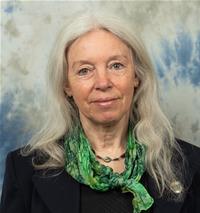
Councillor Jacqi Hodgson, Cabinet Member with responsibility for Climate Change and Biodiversity, said:
“I thought it was a very well-made film. I saw it about three weeks ago in Totnes and I thought it was just exactly what we needed to bring to County Council.
“We’re going to be having lunchtime briefings once a month on the different elements of the carbon plan.
“There are a lot of people who I think are really concerned that we’re not doing enough (about the climate emergency) and we could easily do an awful lot more to start taking real action and encouraging the people that represent us to take more action right to the top.
“That’s when we’ll see that we can make a big difference. We should be taking a sort of like a wartime attitude to this where we don’t wait to see what happens next. We know the facts are there. We need to be proactive rather than reactive. It’s about let’s do it, not just keep talking about it.”